Bouncy castle hire software
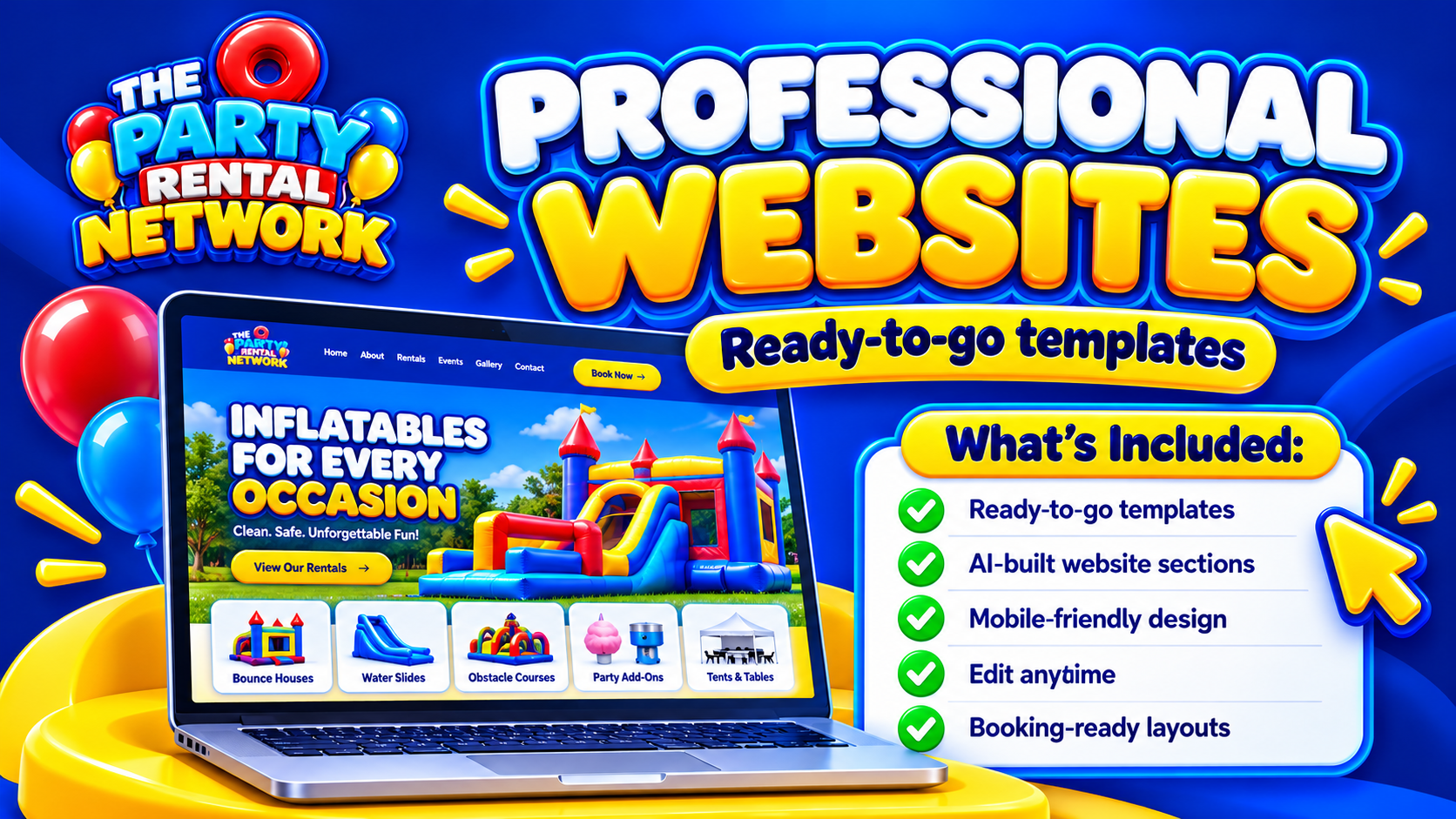
What Is The Party Rental Network?
A connected booking, website and AI-powered business platform built around party rentals and event hire, with tools for your equipment, customers, team and wider industry network.
What Type of Party Rental Business Do You Run?
Equipment records, safety documents, delivery planning and artwork tools help keep inflatable hire jobs organised.
A bouncy castle can be back in the yard without being ready for its next hire. It might be wet, awaiting inspection or missing an accessory. That gap between “returned” and “ready” is a useful starting point for choosing bouncy castle hire software. A calendar matters, but so does the information that tells you whether a booking is practical.
For Party Rental Network users, the sensible starting point is your actual equipment and working day, rather than switching on every available tool.
See what's possible
Start with one awkward Saturday
Use an illustrative weekend to assess the software: two similar castles, a morning village-hall booking, an afternoon garden party and a unit returning wet. Can your team establish which physical inflatable is assigned, what each customer expects and what needs attention before another hire?
A system is the wider way your business operates; software should help people follow it. Before choosing a package, identify where your current process loses information. Missed access details call for a different setup priority from confused stock records or overloaded delivery rounds.
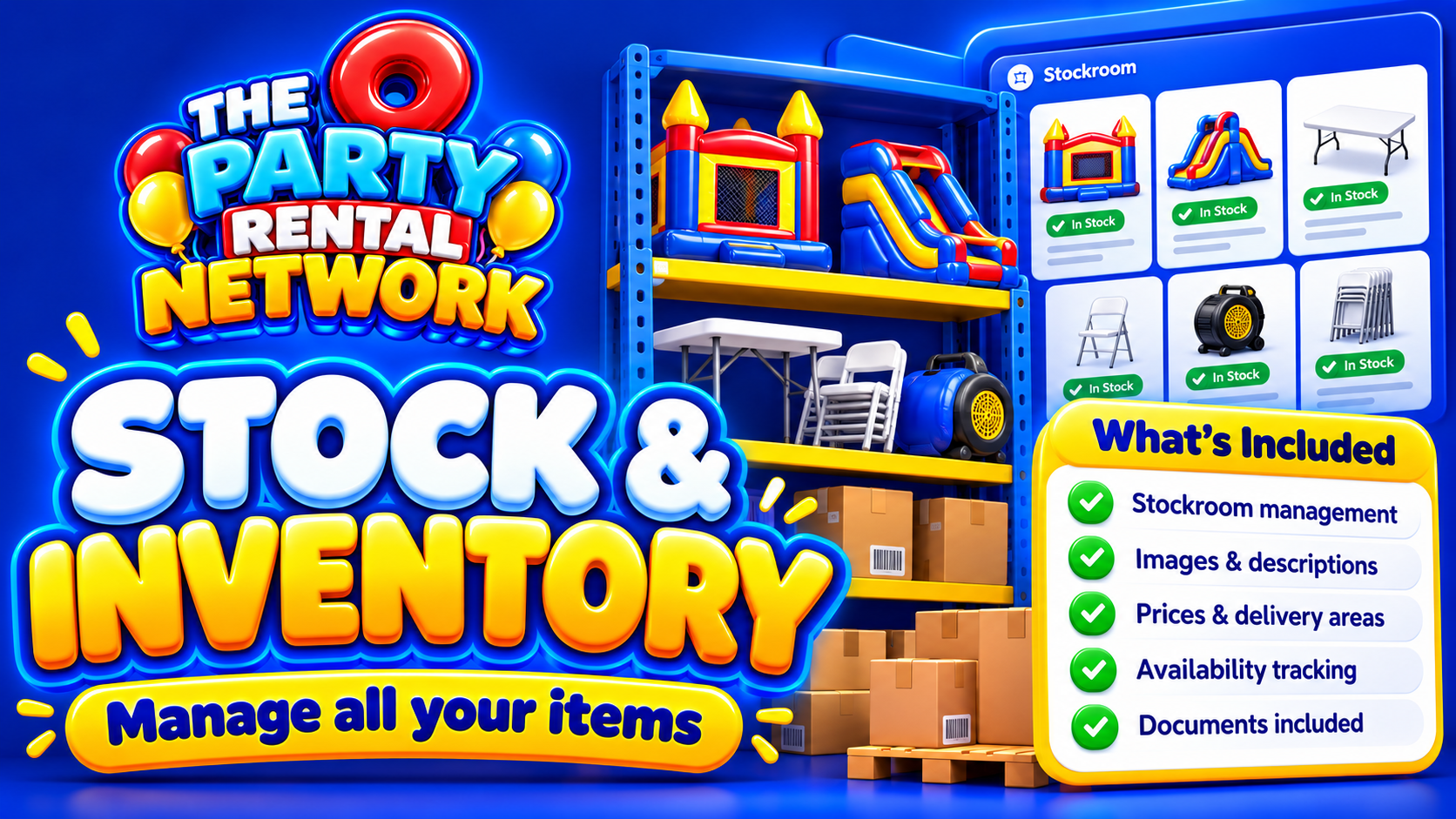
Build a stockroom that reflects physical equipment
Give individual units recognisable names and record the details needed to distinguish them. Customer-facing descriptions and operational records serve different purposes: a theme helps someone choose, while dimensions, accessories and condition help your team prepare.
Party Rental Network includes an equipment stockroom alongside repairs and wet-equipment tools. Explore Stock & Inventory when planning how to represent your fleet. Decide who updates equipment condition after collection and who authorises its return to use. Software records support that process; they do not certify an inflatable as safe.
Capture the details that change a booking
A date and postcode rarely tell the whole story. For a garden booking, access width, surface and available space may affect suitability. For a hall, setup access and the venue’s booked hours may differ from the party’s advertised start and finish.
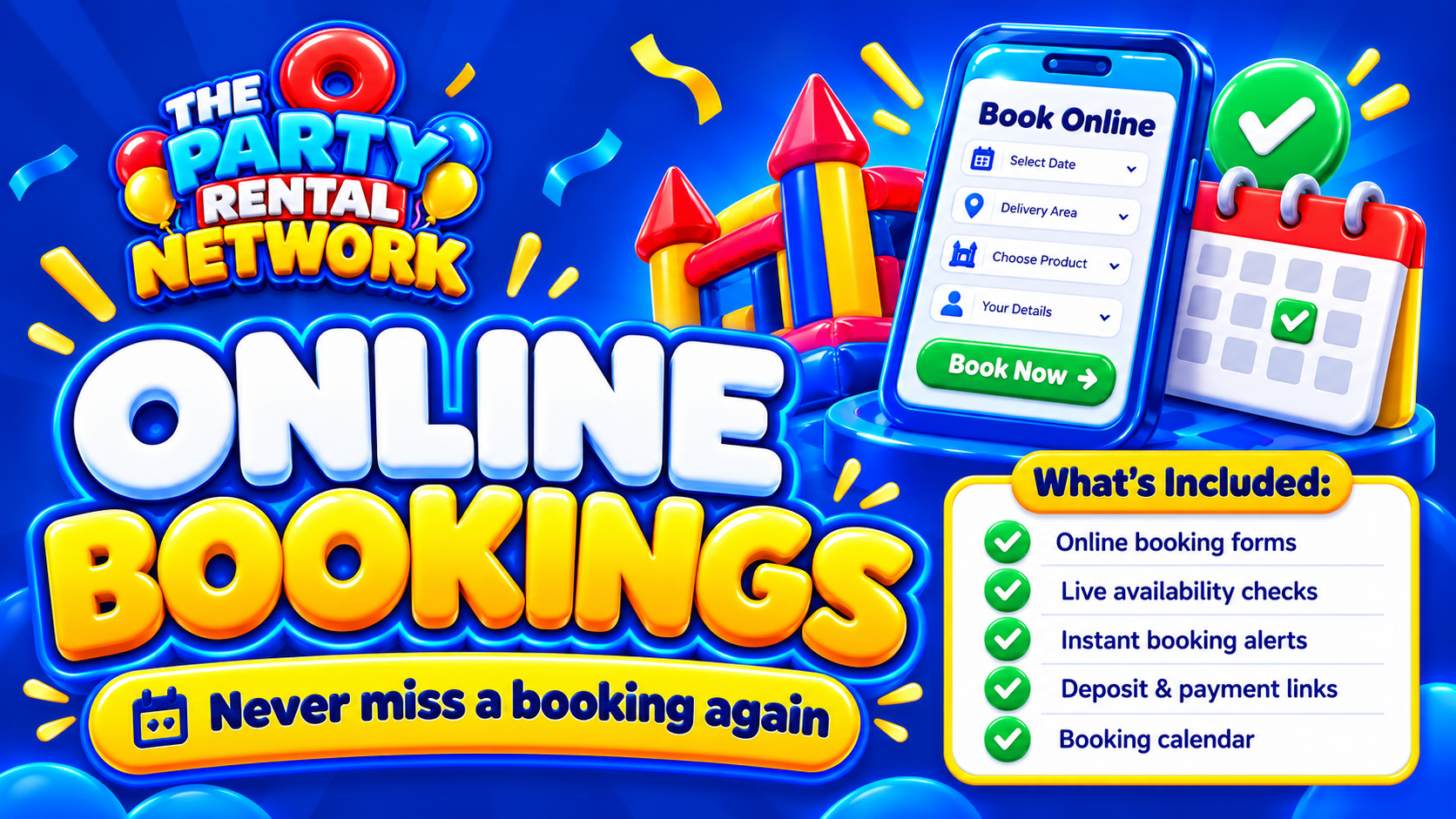
When evaluating Online Bookings, check how your chosen setup captures essential information and what still needs a conversation. Decide which details must be resolved before acceptance, rather than treating every enquiry as ready to deliver.
Your website should explain these expectations clearly. The related guide to party hire website design considers that customer-facing part of the journey.
Plan the van, not just the calendar
Three bookings on one day may look manageable until their access windows overlap. Assess delivery and collection together, allowing for loading, installation, travel and the people needed at each stop. A tidy calendar cannot remove a physical scheduling conflict.
Party Rental Network offers transport planning, staff planning and 3D van loading. Use Route Planning & Loading to explore those capabilities against a representative working day. Route and driver planning are not the same as live GPS vehicle tracking; do not assume a planned journey provides a live van location.
Give customer information a clear home
Consider a parent who changes the venue after discussing access by phone. The important question is not simply whether you have their number, but whether the person preparing the job can find the latest agreed details.
Use Customer Management as a starting point for organising customer records, and establish who records changes. The party rental CRM software guide explores that relationship-focused requirement in more depth.
Work Mode also supports confirmed booking voice actions. These require appropriate permissions and confirmation; voice control should not be understood as covering every dashboard action.
Choose a package, then introduce it in stages
Free network accounts can list equipment and become eligible for opportunities. Paid subscriptions provide business tools according to package. A free account is therefore not a promise of the complete operational software suite, and neither account type guarantees bookings or income. Where network opportunities apply, the supplier sets the agreed hire price and the network adds its margin.
Before committing, check package scope, staff permissions and payment configuration. Payment availability depends on configuration and launch safeguards. A focused software demo can help you examine your own workflow. Start setup with stock records, then booking details and responsibilities, before adding further processes.
Questions about bouncy castle hire software
Is a free account enough to manage my business?
Free accounts support equipment listings and eligibility for opportunities. Check the paid package requirements for the business tools you need; do not assume free membership includes full booking operations.
What should I prepare before setting up the software?
Gather your equipment names, current bookings, customer details and operating rules. Resolve duplicate or unclear records first, so the new setup does not inherit avoidable confusion.
Can software decide whether an inflatable is safe?
No. Risk assessments, documents and maintenance records can support your procedures, but software cannot certify equipment or replace competent inspection and qualified safety advice.
Will customers always be able to pay online?
Do not assume so. Confirm the payment options available for your configuration and launch safeguards before advertising them or changing your customer payment instructions.
Does the platform work completely offline?
Backup copies do not mean the whole platform works offline. Establish what information your team can access during connectivity problems and agree a suitable contingency process.
How should I compare software costs?
Compare package scope against the work you actually need to manage. Assess setup effort, staff access and operational fit alongside subscription cost, without assuming guaranteed savings.