Event rental website builder
What Is The Party Rental Network?
A connected booking, website and AI-powered business platform built around party rentals and event hire, with tools for your equipment, customers, team and wider industry network.
What Type of Party Rental Business Do You Run?
Equipment records, safety documents, delivery planning and artwork tools help keep inflatable hire jobs organised.
An event hire website has to answer a question that an ordinary online shop rarely faces: can this equipment be at this venue, on this date, under these conditions? A beautiful product gallery is only the beginning. The useful part is helping customers understand what they can hire and what needs checking before anyone commits.
Choose an event rental website builder around those decisions. For a chair supplier, that might mean quantities and delivery access. For a marquee company, it could mean site suitability and installation time. The website should make the next conversation shorter and better informed.
See what's possible
Build around the customer's event, not your catalogue
Visitors may know their guest count before they know which tables they need. Organise your proposed navigation around recognisable equipment categories, then use page copy to explain suitable uses and practical differences.
An illustrative wedding enquiry might involve chairs for Saturday, delivery on Friday and collection on Monday. Those are three separate planning requirements. Make clear whether advertised hire periods cover the event itself or a wider delivery window, rather than leaving customers to infer it from a photograph and price.
Give every hire page a practical job
A useful equipment page helps someone assess suitability without pretending to replace an inspection or professional advice. Include dimensions, capacity where relevant, what is supplied, and anything the customer must arrange. Explain power, access or surface requirements when they affect the hire.
Photographs should show scale and details, not just atmosphere. A close-up of a table finish may answer a styling question; a photograph of an assembled structure may still need written clearance requirements.
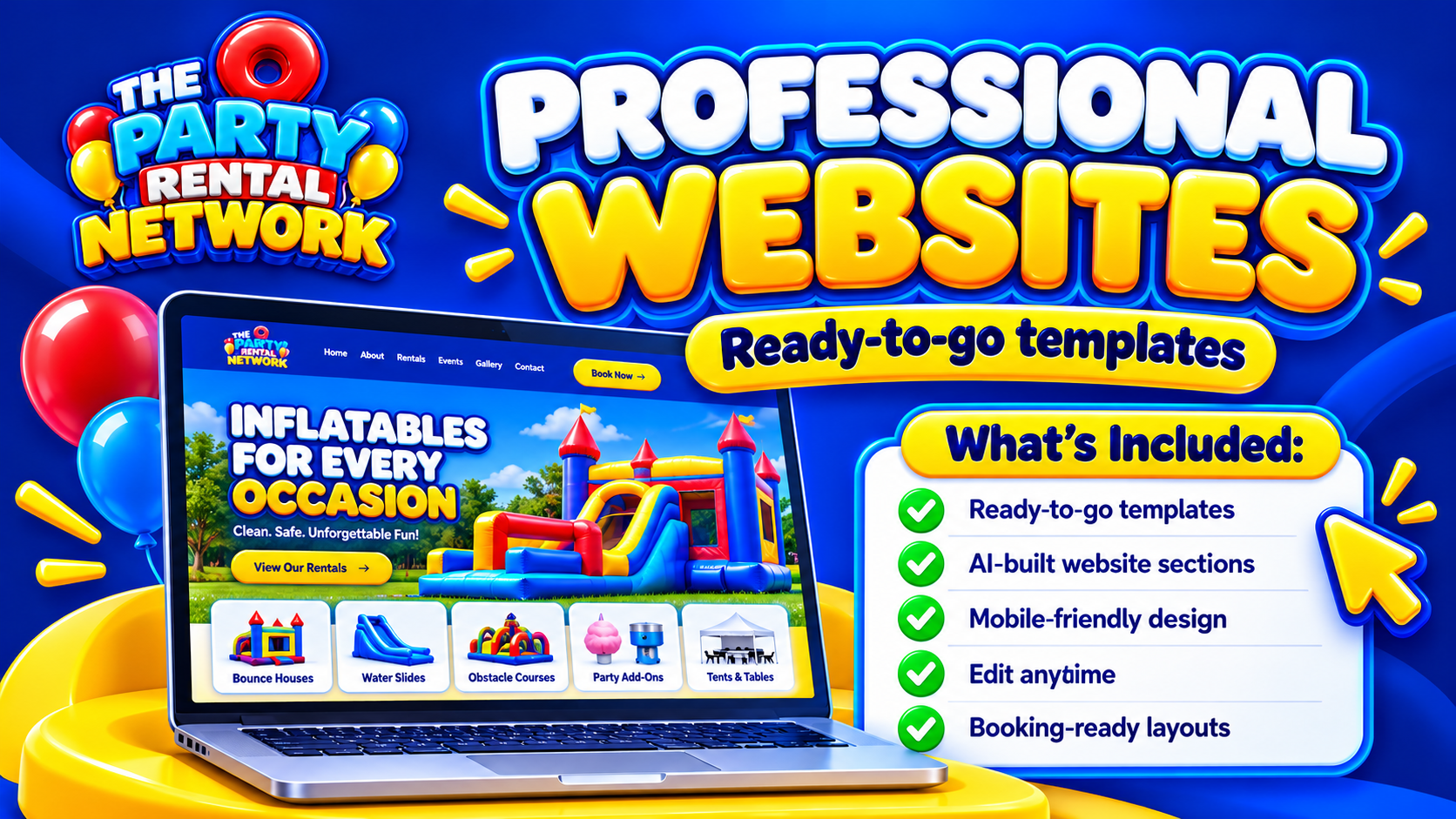
When reviewing Professional Websites, consider how your content will present these details on a phone. Essential conditions should remain easy to find beneath the visual design.
Decide where an enquiry becomes a booking
Not every item needs the same customer journey. Straightforward equipment hire may suit an online booking process, while a large installation may need a quotation following a site discussion. Define that distinction before choosing page layouts or button wording.
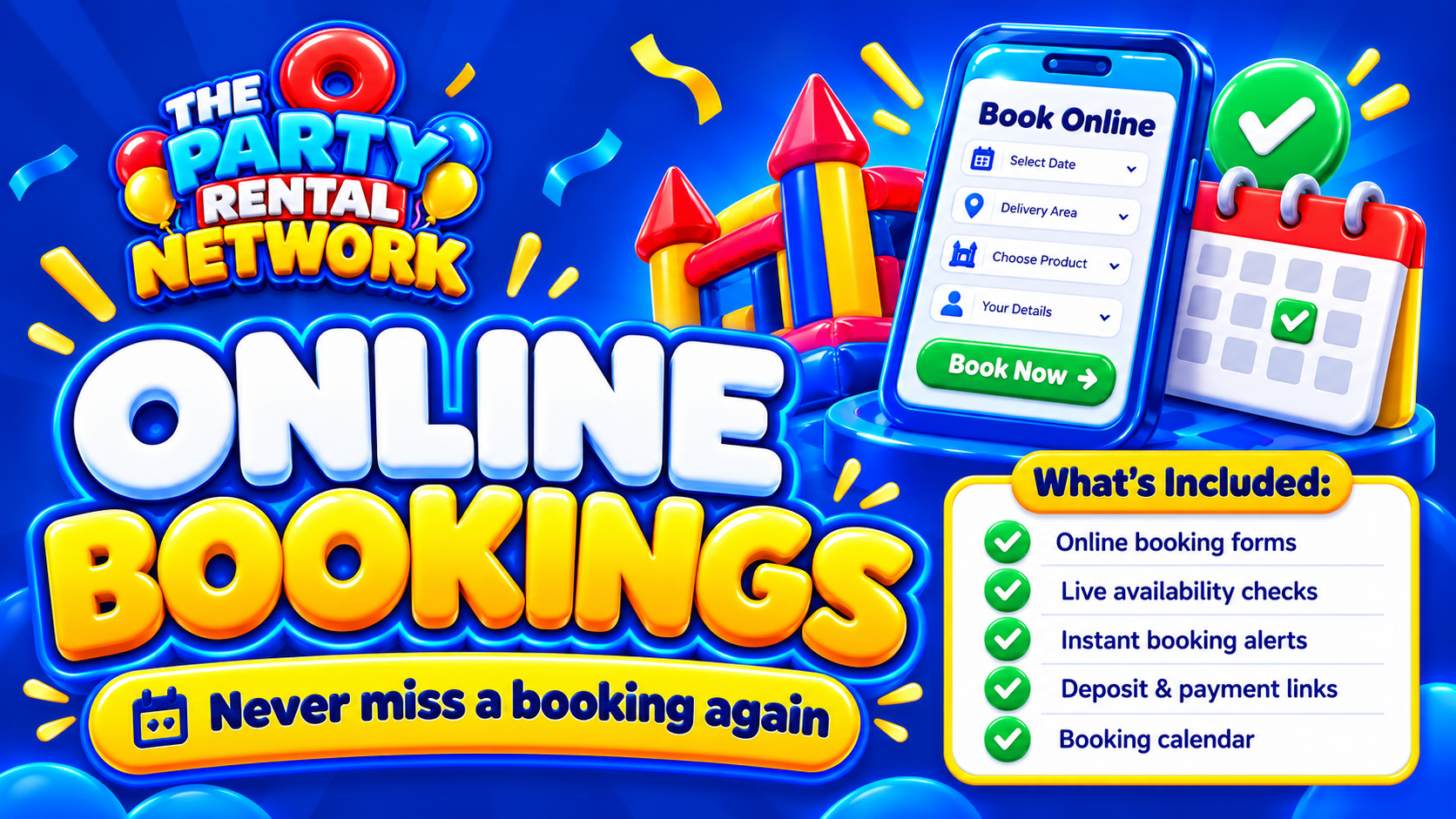
Review Online Bookings against your actual acceptance process. Identify which information you need initially and which checks must happen before a booking is confirmed. Avoid language that makes an enquiry sound like a secured reservation.
Payment availability depends on configuration and launch safeguards. Do not design the customer journey around assumed live checkout functionality without confirming what is available for your setup.
Separate the website editor from the operating system
Website-builder selection is about practical publishing: how you update descriptions, organise categories and maintain consistent information. System setup is about what happens behind those pages: booking records, equipment quantities and the people responsible for checking them.
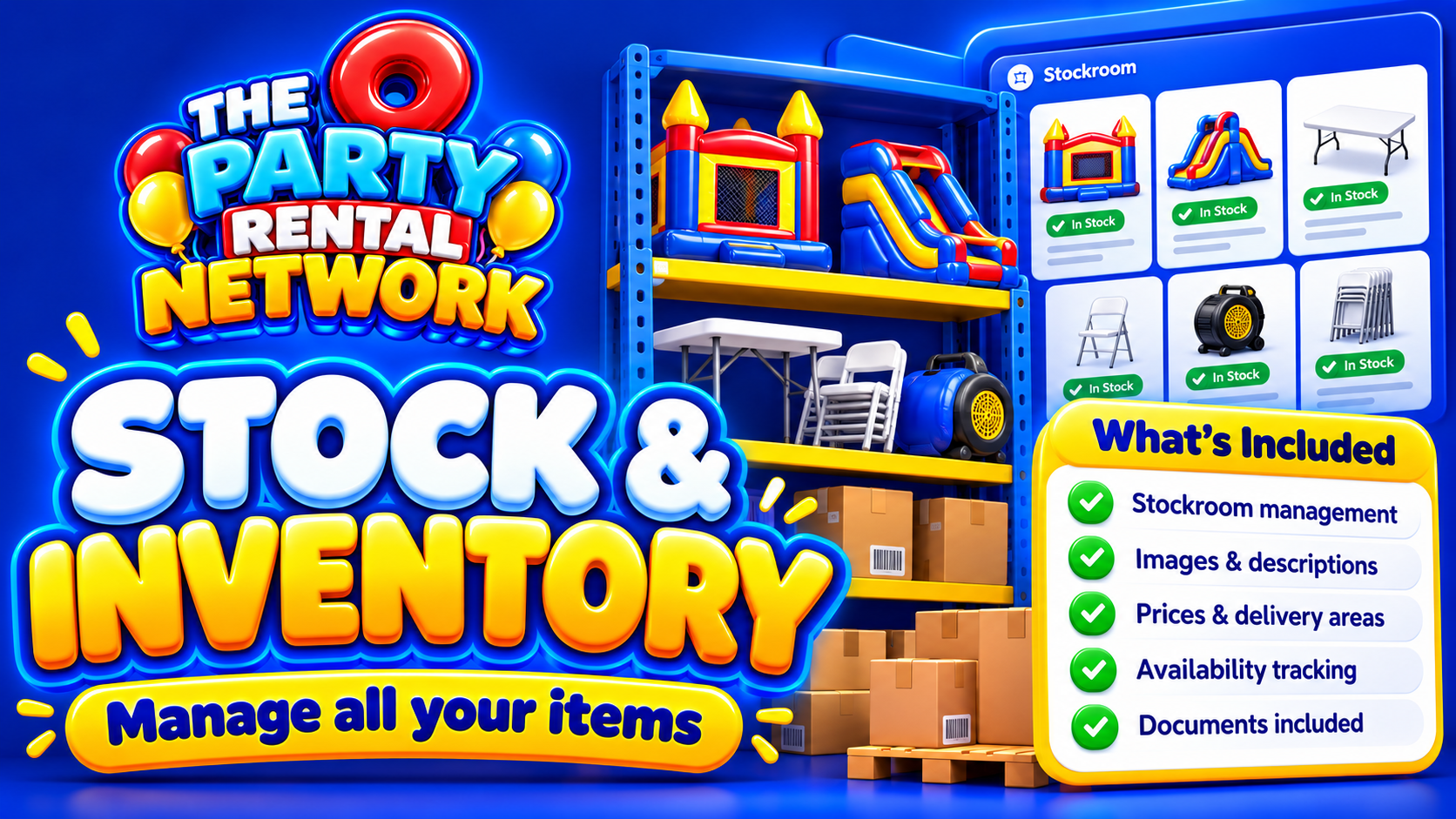
These are connected decisions, but they are not interchangeable. A well-written page cannot correct inaccurate stock records. Review Stock & Inventory alongside the website requirements, particularly where several enquiries might involve the same equipment over overlapping dates.
Before launch, nominate who owns product information and who approves changes. That simple responsibility matters as much as the initial design.
Plan useful search pages before adding more pages
Start with genuine services and delivery areas. A page about conference furniture should explain quantities, layout considerations and delivery arrangements, rather than merely repeating a town name beside a generic hire description.
The Auto SEO feature is relevant when reviewing search support, but no software can assure Google indexing or rankings. Accurate, distinctive content remains worth preparing.
If your existing site has useful pages, map what should be retained before rebuilding. The guide to party rental website development provides a related planning perspective beyond choosing a builder.
Understand free access and paid website requirements
A free Party Rental Network account can list equipment and become eligible for opportunities. It should not be confused with an entitlement to every website or business tool. Paid subscriptions provide business tools according to package, so confirm the website scope, editing arrangements and support included before committing.
For network opportunities, the supplier sets the agreed hire price and the network adds a margin. Bookings and income are not guaranteed. You can join the network while separately assessing the paid tools your business needs.
Questions about event rental website builders
Can I keep my existing domain?
Check domain connection and migration arrangements before making changes. Record who controls the domain, email service and renewal account so a website move does not accidentally disrupt business communications.
How should I present equipment packages?
Describe exactly what each package includes, its intended use and any exclusions. If individual items also appear elsewhere, establish how you will keep descriptions and quantities consistent across both presentations.
What should I test on mobile?
Test a complete enquiry using an ordinary phone. Check whether photographs obscure essential details, contact options are visible, and customers can understand hire conditions without repeatedly zooming or scrolling backwards.
Can AI handle enquiries from the website?
Explore the AI email responder for hire companies alongside your inbox rules. Define what assistance may cover and which pricing, suitability or availability questions need human review.
Does route planning mean live vehicle tracking?
No. Route and driver planning help organise transport, but they are different from live vehicle tracking. Do not promise customers a live delivery map on the strength of planning tools alone.
What should I bring to a website demonstration?
Bring one typical hire enquiry, a complicated delivery example and a representative equipment page. Use those scenarios when you book a demo to assess the proposed setup against your working day.