Hire company job exchange
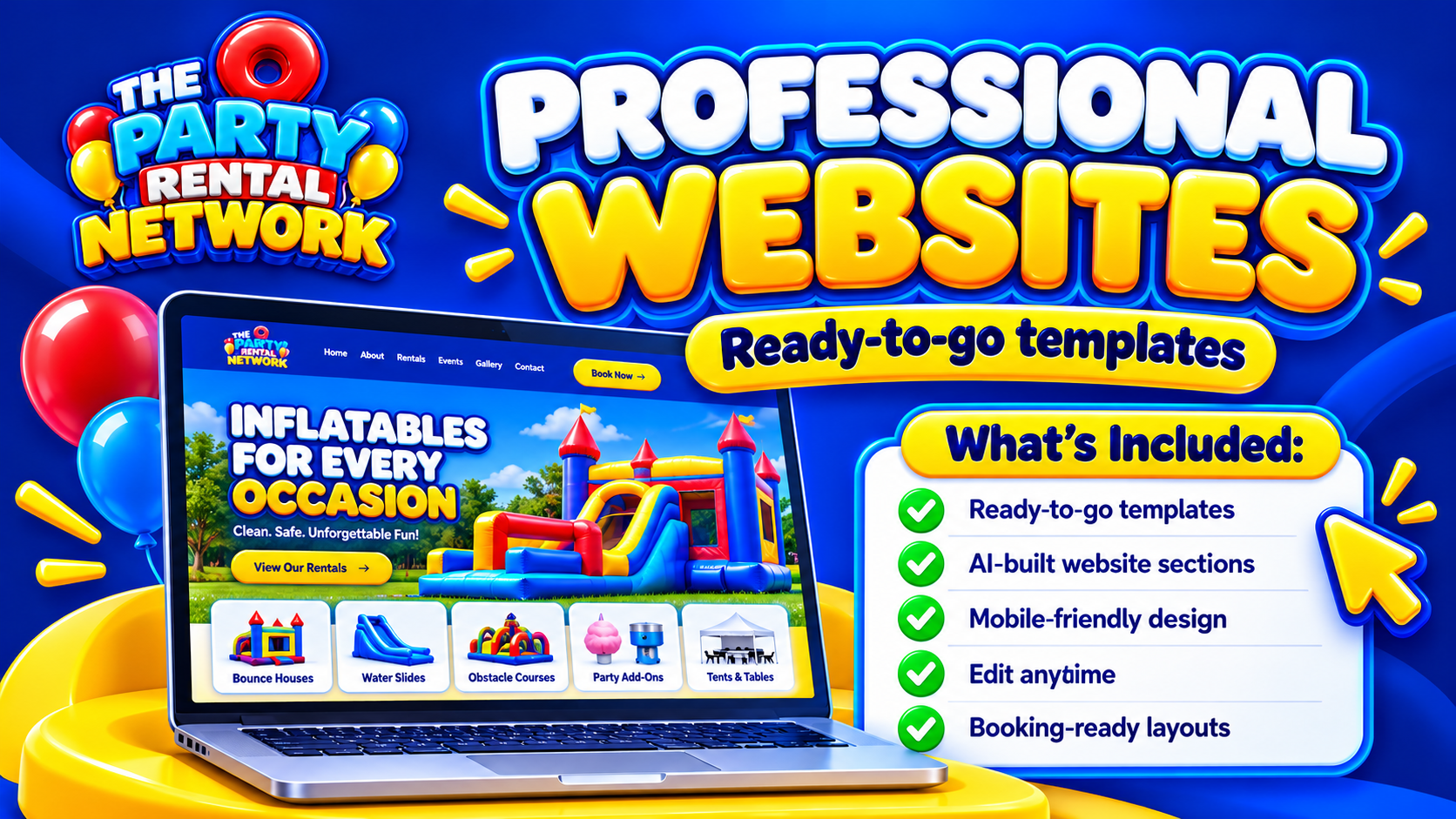
What Is The Party Rental Network?
A connected booking, website and AI-powered business platform built around party rentals and event hire, with tools for your equipment, customers, team and wider industry network.
What Type of Party Rental Business Do You Run?
Equipment records, safety documents, delivery planning and artwork tools help keep inflatable hire jobs organised.
A spare castle is not the same as spare capacity. A hire company might have the equipment but no delivery slot, or an available driver but nothing suitable for a narrow garden entrance. A hire company job exchange is most useful when it helps businesses consider the whole job, rather than simply finding another supplier with stock.
Party Rental Network connects UK hire companies. Free network accounts can list equipment and become eligible for opportunities. The practical question is whether an opportunity fits your equipment, people, geography and agreed price.
See what's possible
Start with the job you cannot fulfil
Consider an illustrative Saturday enquiry: a customer needs an inflatable delivered before a village hall opens, but your morning route is already full. Passing on the equipment description alone leaves the next supplier guessing about access, timing and collection.
A useful exchange brief should explain what is needed, where it is going, the event date, delivery and collection windows, and any known restrictions. Separate firm requirements from preferences. A specific footprint may be essential; a particular colour might not be.
That distinction helps another hire company judge whether it can fulfil the actual requirement, rather than offer a superficially similar item.
Separate referrals, extra equipment and backup
Not every shared opportunity involves the same arrangement. Referring an enquiry to another supplier is different from hiring in equipment while remaining responsible for the customer's booking. Emergency backup is different again: the priority may be replacing an unavailable item without changing the event's essential requirements.
Agree who contracts with the customer, who delivers, who collects and who handles questions or complaints. Where two businesses contribute equipment, establish responsibility for each part before either side commits.
Party Rental Network also includes a private backup Safety Net. Keep that contingency purpose distinct from ordinary job opportunities: preparing for disruption is not a promise that replacement equipment or a supplier will always be available.
Check stock against real delivery capacity
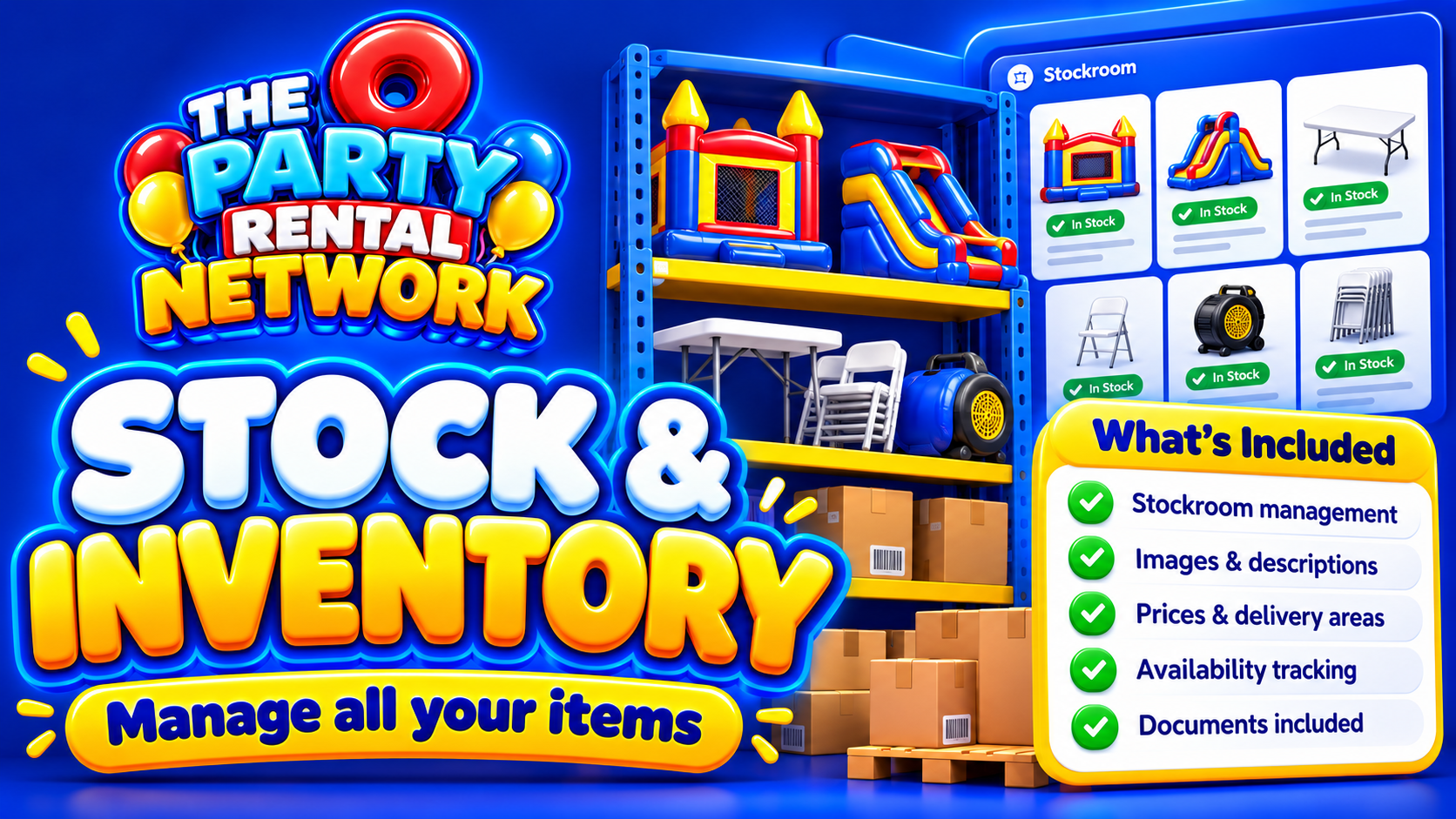
An item can be physically present yet unsuitable for another booking. It might be awaiting repair, still wet after collection, or needed too soon afterwards for a workable turnaround. Accurate Stock & Inventory records support more informed availability decisions.
Transport deserves a separate check. An apparently nearby venue may involve a restricted unloading window, difficult access or a collection that conflicts with existing work. Review those constraints alongside Route Planning & Loading, including transport planning and 3D van loading where relevant to your operation.
Route and driver planning should not be confused with live vehicle tracking. Assess the proposed journey and workload; do not assume a planning tool provides live GPS positions.
Agree the price and the handover
The supplier sets the agreed hire price, and the network adds a margin. Before accepting work, establish exactly what the supplier's price covers, including delivery, collection, setup and any agreed extras. Clarify the customer's total and each party's responsibilities rather than assuming everyone is discussing the same figure.
A handover should also identify who receives payment, what happens if the customer cancels, and how changes are approved. Payments & Accounts provides relevant context for payment and accounting tools, but payment availability depends on configuration and launch safeguards.
Do not treat an enquiry as confirmed work until the necessary agreement is in place. Eligibility for opportunities does not guarantee bookings or income.
Choose tools around your exchange workload
Free network participation and paid business management serve different needs. A free network account can list equipment and become eligible for opportunities. Paid subscriptions provide business tools according to package; they should be assessed against your operational requirements, not an expectation of guaranteed work.
If shared enquiries become regular, consider how you will maintain consistent contact details and booking notes. Customer Management is relevant to that record-keeping need.
For inflatable-specific selection, compare the practical requirements in Bouncy castle booking software. For setup across a broader hire business, use Hire company booking system to consider booking processes alongside exchange participation.
Questions about a hire company job exchange
Can I participate without a paid subscription?
Yes. Free network accounts can list equipment and become eligible for opportunities. Paid subscriptions offer business tools according to package; participation does not guarantee work.
Who decides the supplier's hire price?
The supplier sets the agreed hire price, and the network adds a margin. Confirm inclusions and responsibilities before accepting the arrangement.
Is an equipment listing proof of availability?
No. Check the date, equipment condition, turnaround time, staffing and transport capacity before making a commitment. A listing alone cannot settle those practical questions.
Who should communicate with the customer?
Agree a clear lead contact for each job. The customer should know whom to approach about delivery, changes and problems, especially when multiple suppliers are involved.
Does the exchange replace safety checks?
No. Equipment suitability, inspections, documentation and safe operation still need appropriate attention. Software cannot certify equipment or replace qualified safety or legal advice.
Should I accept every opportunity within my area?
No. Assess the complete job, including access, deadlines, collection arrangements and your agreed price. Declining work that does not fit is better than committing to an unworkable delivery.