Inflatable hire website design
What Is The Party Rental Network?
A connected booking, website and AI-powered business platform built around party rentals and event hire, with tools for your equipment, customers, team and wider industry network.
What Type of Party Rental Business Do You Run?
Equipment records, safety documents, delivery planning and artwork tools help keep inflatable hire jobs organised.
A customer can love the look of an inflatable and still be unable to hire it. The garden may be too narrow, the hall ceiling too low or the access route unsuitable. Good inflatable hire website design brings those checks forward, before an attractive photograph becomes an unsuitable enquiry.
Your website should help people choose equipment that fits their event, understand the hire conditions and take the next sensible step. That requires more than a colourful catalogue.
See what's possible
Design around the space, not just the theme
Imagine a parent browsing on a phone beside the garden fence. They need dimensions, clearance requirements and access information more urgently than a paragraph about unforgettable parties.
Give each product page a predictable layout: photographs, equipment dimensions, required operating space, suitable settings and relevant hire conditions. Distinguish the inflatable’s footprint from the total space required, using verified information for that item.
Age and usage guidance should be equally visible. Website copy must reflect your equipment documentation and operating procedures; it cannot establish safety requirements or certify equipment.
Make photographs answer practical questions
A tightly cropped picture can make a small inflatable look enormous and conceal an entrance or slide exit. Use images that show the whole unit, its entry points and details customers need to recognise.
Keep specifications beside the photographs rather than hidden beneath lengthy promotional text. On mobile, customers should be able to move between images and measurements without losing their place.
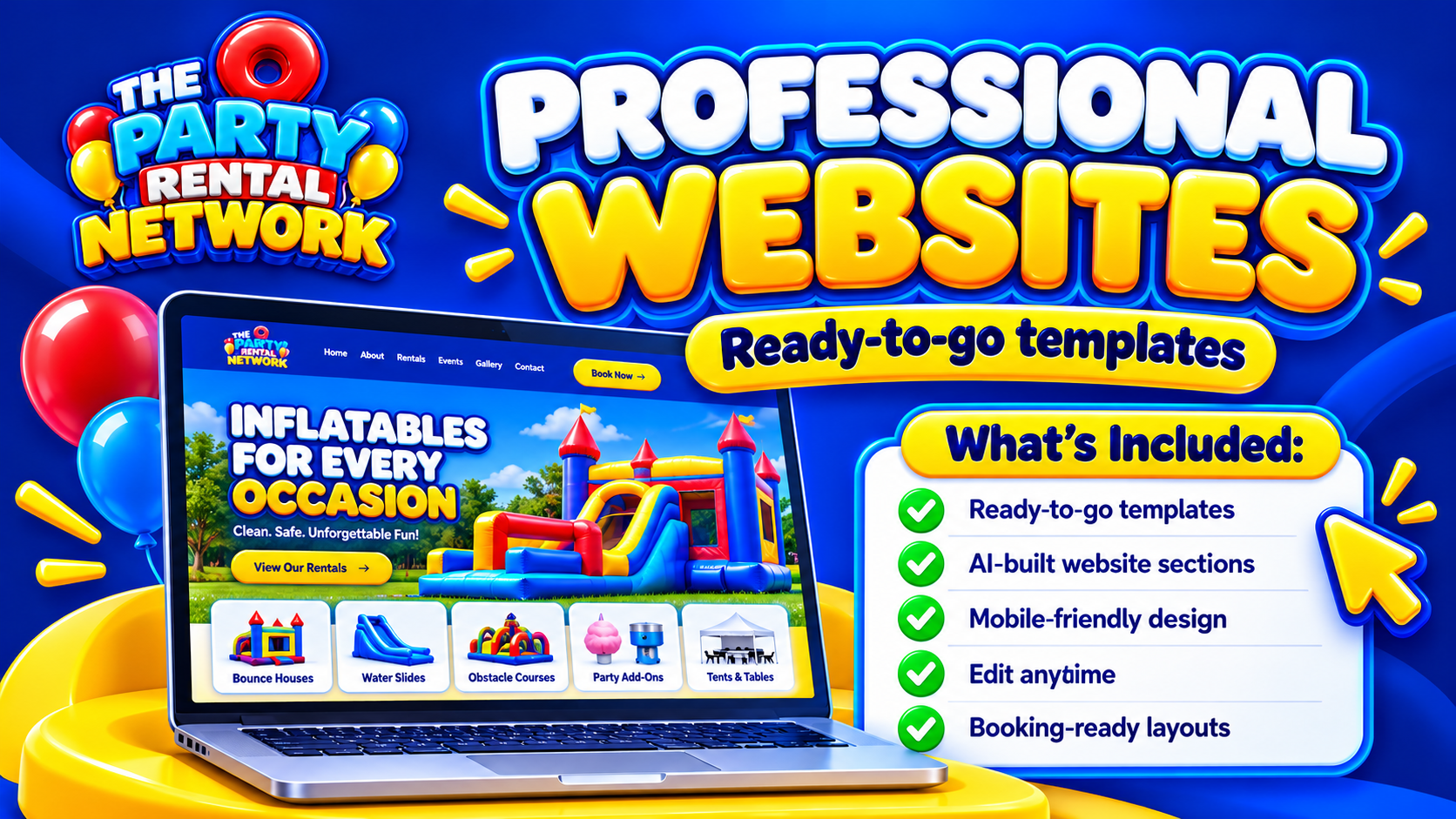
The Professional Websites feature is a useful starting point for considering your presentation. When comparing bouncy castle hire website templates, judge the product-page layout as carefully as the homepage appearance.
Put delivery geography into the booking journey
An inflatable might fit the garden but fall outside your delivery area. Explain where you operate, how customers check coverage and when additional delivery charges need confirming. Avoid making visitors complete a lengthy enquiry before discovering that their postcode is unsuitable.
Event dates, venue details and access questions belong in a deliberate sequence. Ask for information when it helps determine suitability, not simply because a form can collect it.
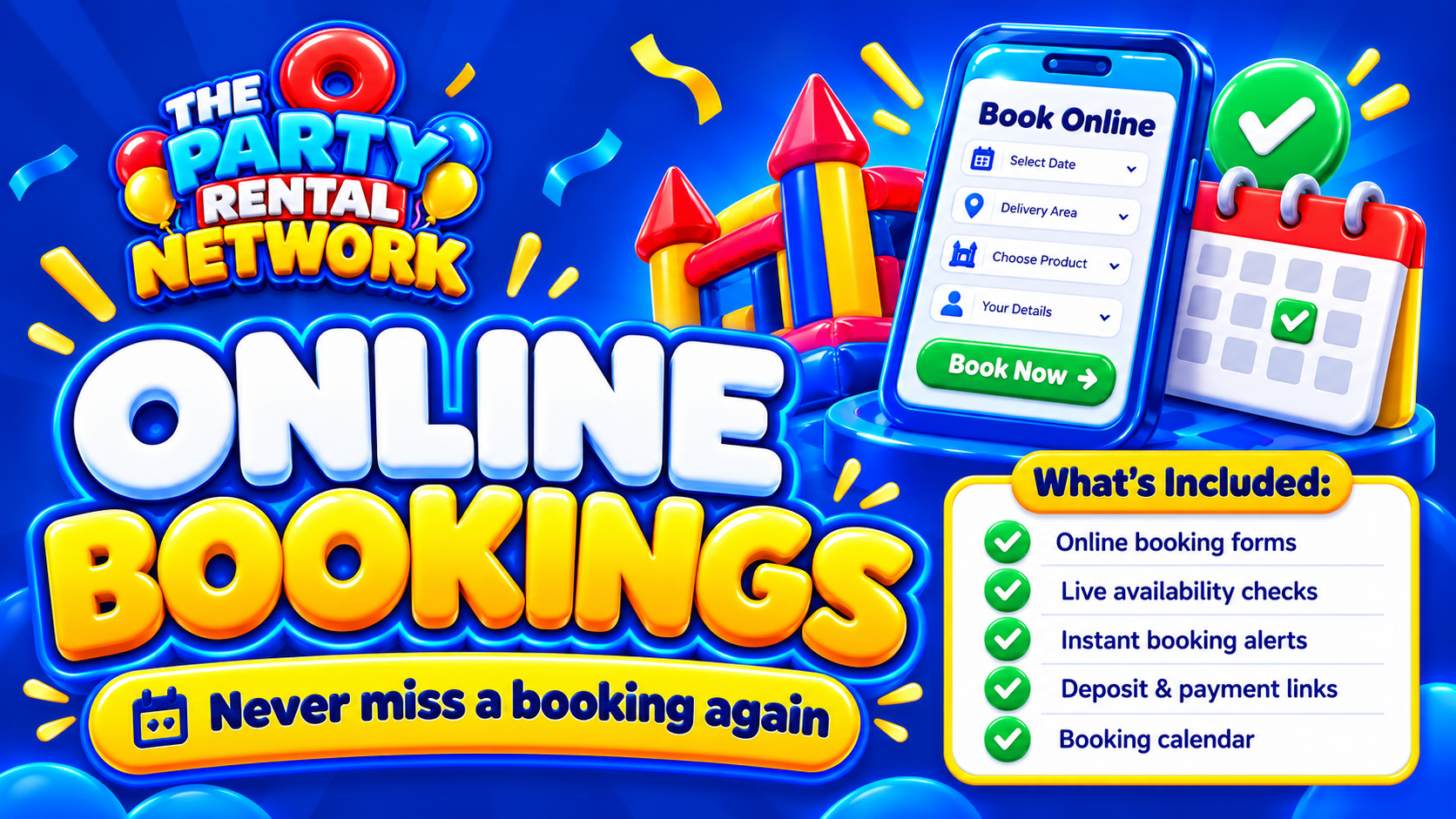
Review Online Bookings alongside your booking rules. The design should distinguish an enquiry, an availability indication and a confirmed booking, rather than using “book now” ambiguously.
Connect the design to your equipment records
A website is the customer-facing layer; the operational system holds the information your team needs to fulfil the hire. Attractive pages cannot compensate for unclear equipment records or inconsistent product names.
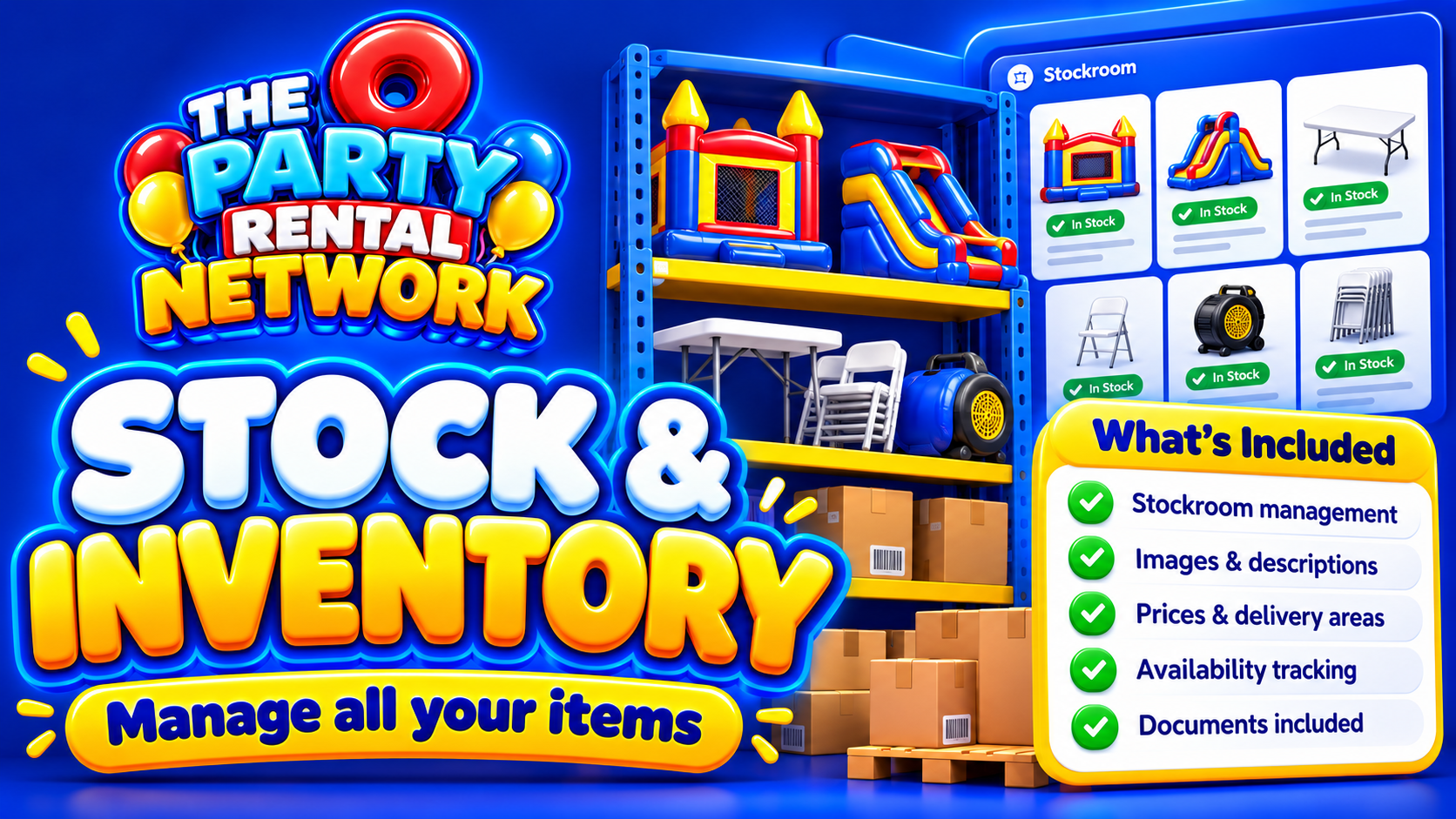
Before choosing software, check how you will organise units, variants, accessories and photographs. During setup, decide who maintains specifications and how equipment changes reach the website. Explore Stock & Inventory when mapping those responsibilities, and confirm what your selected package supports.
For example, two visually similar castles may have different dimensions. Treating them as interchangeable in the catalogue can create avoidable confusion, even if their hire prices match.
Build local pages that earn their place
Local search pages should explain something useful about hiring in the area. Relevant content might cover your actual delivery boundaries, the information needed for village hall bookings or how customers can check access before enquiring.
Do not publish interchangeable town pages that merely replace a place name. A smaller set of accurate, maintained pages is more useful to visitors than a sprawling collection of vague promises.
Product names, readable headings and clear navigation also matter. Keep important information in text rather than embedding it only in images, and remember that no website design can guarantee Google indexing or rankings.
Set the scope before judging the cost
Separate the cost of design from the work of preparing content and configuring the business tools. Agree who supplies photographs, checks specifications, writes delivery terms and maintains pages after launch. Those responsibilities affect whether a website remains useful.
Free Party Rental Network accounts can list equipment and become eligible for opportunities; that does not mean a complete business website and every tool are free. Paid subscriptions provide business tools according to package, without guaranteed bookings or income.
Use a website demonstration to walk through one realistic hire journey and confirm the package scope before deciding.
Questions about inflatable hire website design
Should every inflatable have its own page?
Usually, distinct units benefit from individual pages when dimensions, suitability or features differ. Keep genuinely identical options together only if customers can clearly understand what they are selecting.
What should appear above the fold on mobile?
Show the product name, a useful photograph and a clear route to specifications and the next booking step. Avoid oversized banners that push practical details out of view.
Can the website take payments immediately?
Do not assume so. Payment availability depends on configuration and launch safeguards. Confirm the supported payment journey before publishing checkout instructions or promising customers a particular method.
How should weather conditions be explained?
Publish clear conditions consistent with your operating procedures and equipment guidance. Explain how customers receive decisions or updates, without suggesting that website wording replaces competent safety judgement.
Can automated messages handle suitability questions?
Routine replies can explain what information you need. Automated WhatsApp replies for businesses should support that process, not make unsupported judgements about unfamiliar venues or equipment safety.
What should be tested before launch?
Test a complete mobile enquiry using a realistic date, postcode and venue. Check specifications, form labels, confirmation wording and contact routes, including what happens when a customer cannot proceed.