
Local SEO for party rental companies

What Is The Party Rental Network?
A connected booking, website and AI-powered business platform built around party rentals and event hire, with tools for your equipment, customers, team and wider industry network.
What Type of Party Rental Business Do You Run?
Equipment records, safety documents, delivery planning and artwork tools help keep inflatable hire jobs organised.
A party hire enquiry can look ideal until the postcode arrives. The customer wants one small item, the venue is beyond your usual delivery area, and collection would clash with another job. Local SEO should help attract suitable enquiries, not simply more traffic.
For party rental companies, that means connecting what people search for with the equipment, locations and delivery arrangements you can realistically offer. Your search presence should describe the business customers can actually book.
See what's possible
Start with the delivery area, not a town-name spreadsheet
Map your core delivery area before choosing location keywords. Consider journey time, minimum order requirements, collection arrangements and whether certain equipment needs specialist transport. A nearby town across a congested river crossing may be less practical than a larger venue further along the motorway.
Use those decisions to explain coverage clearly. Distinguish your normal service area from locations considered by arrangement. Avoid publishing dozens of nearly identical town pages: a changed place name does not give a customer useful local information.
Match each page to a real hiring decision
Someone searching for “garden party furniture hire in York” needs different information from someone researching a complete wedding marquee setup. Build pages around genuine equipment categories and the questions that affect their suitability.
Explain dimensions, access needs, setup arrangements and any relevant hire restrictions. Where prices depend on distance or order size, describe how quotations work rather than suggesting every booking costs the same.
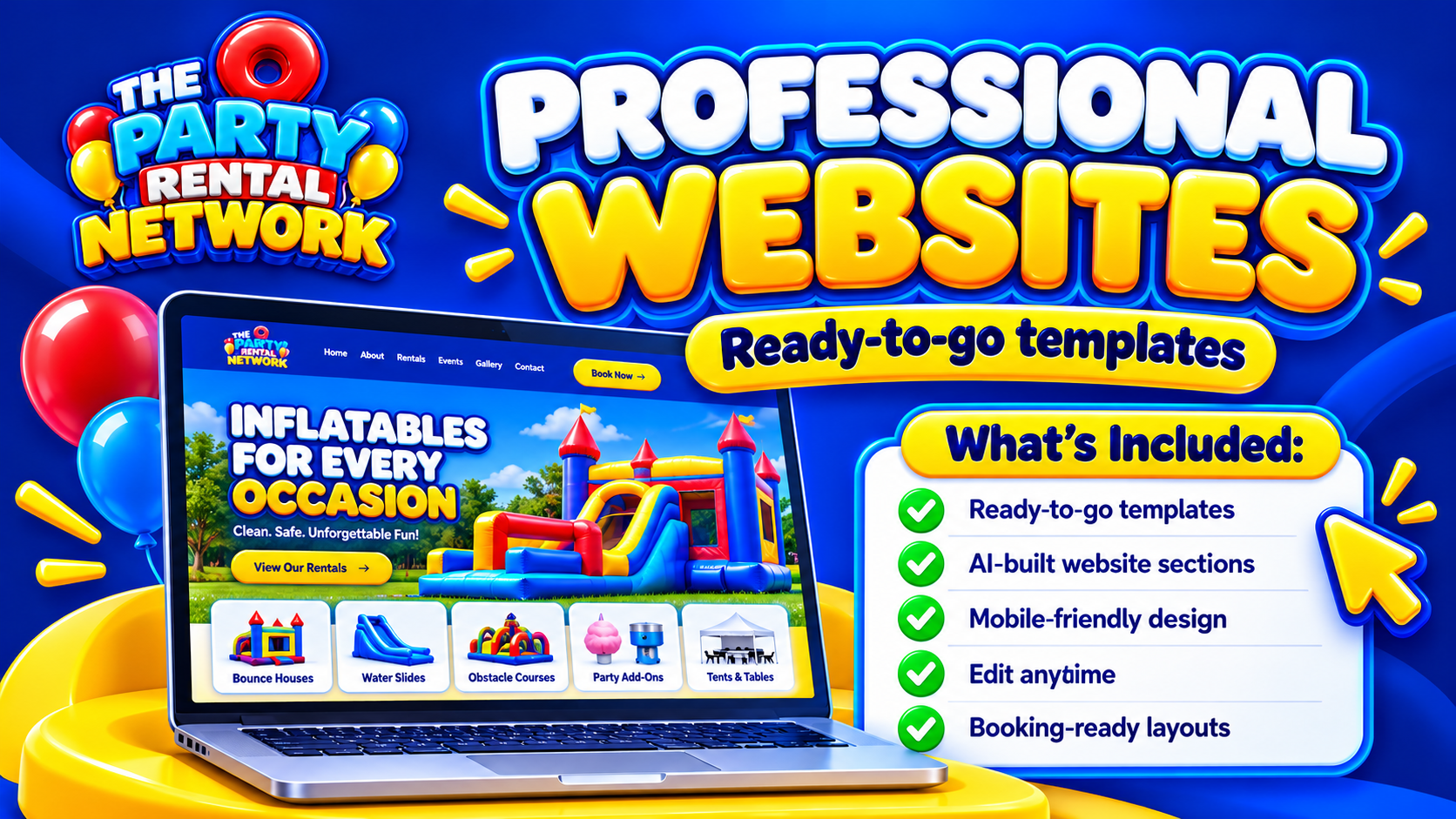
The Professional Websites feature is a relevant starting point when reviewing your web presence. Assess whether your chosen setup lets you maintain clear category pages, useful delivery information and an obvious enquiry route without creating duplicate content.
Make your Google Business Profile match your operation
Use your real trading name, accurate contact details and the most appropriate available business category. Follow Google's current eligibility and address-display rules, particularly if customers do not visit your premises. A service-area business should not present an unstaffed location as a customer-facing showroom.
Keep opening hours and website details consistent. Add genuine photographs that help customers understand your equipment and setup work, with permission where needed.
Ask customers for honest reviews without incentives or filtering requests to favour positive experiences. Respond professionally, and avoid publishing private booking information. Reviews can help people evaluate your business, but no review count guarantees a particular ranking.
Create local evidence that answers venue questions
Useful local content explains practical differences between jobs. An illustrative village-hall enquiry might involve narrow doors, a fixed collection deadline and limited unloading space. An outdoor birthday party might depend on suitable access and your weather policy.
Turn recurring questions into helpful venue or area guidance where you have reliable information. Do not imply a venue partnership or completed installation that does not exist. Check access details rather than presenting assumptions as facts.
Transport feasibility belongs in this planning too. Route Planning & Loading is relevant when considering delivery arrangements; route and driver planning should not be confused with live vehicle tracking.
Choose SEO software around a repeatable working process
Software selection concerns what you can edit, maintain and measure. A workable SEO system concerns who checks the information, when it is reviewed and how enquiries reveal gaps in your pages.
When reviewing Auto SEO, establish which tasks your package supports and which still need human input. Prioritise control over page titles, descriptions, local wording and outdated information. Automation cannot assure Google indexing or rankings.
Set a review rhythm around your hire calendar. Before a busy season, check coverage, equipment descriptions and enquiry details. Afterwards, use repeated customer questions to improve the pages that attracted them.
Measure suitable enquiries and understand account costs
Track whether visitors reach the relevant equipment page, make contact and progress towards a suitable booking. Search Console can help reveal search queries and indexing issues; enquiry records can show whether those searches bring customers within your delivery area.
Review the handover through Online Bookings. Customers should understand what happens after submitting their details and whether availability or delivery still needs confirmation.
Party Rental Network free accounts can list equipment and become eligible for opportunities. Paid subscriptions offer business tools according to package. Neither route guarantees bookings, income or rankings. Check package scope before choosing tools, rather than assuming a free account includes a complete SEO service.
Questions about local SEO for party rental companies
Do I need a page for every town I serve?
No. Create separate pages where you can provide genuinely different, useful information. A clear coverage page may serve customers better than repetitive town pages.
Can I rank locally without a public showroom?
An eligible service-area business can use a Google Business Profile without displaying a residential address. Follow Google's current rules; never invent premises to target another area.
Should I target “party rental” or “party hire”?
Use language your customers use. UK searches may include both. Incorporate relevant terms naturally rather than repeating every variation in headings and paragraphs.
How quickly will local SEO produce results?
There is no dependable universal timetable. Competition, site condition and search-engine decisions vary. Measure progress over time without treating visibility as a booking promise.
Are equipment photographs useful for SEO?
They help customers judge suitability and build confidence. Use descriptive filenames and meaningful alternative text where appropriate, without stuffing location keywords into every image description.
Is a free network account enough for local SEO?
It can support equipment listing and eligibility for opportunities, but it is not a complete local SEO strategy. Accurate profiles, useful website content and ongoing maintenance still matter.