
Online party rental booking system


What Is The Party Rental Network?
A connected booking, website and AI-powered business platform built around party rentals and event hire, with tools for your equipment, customers, team and wider industry network.
What Type of Party Rental Business Do You Run?
Equipment records, safety documents, delivery planning and artwork tools help keep inflatable hire jobs organised.
A customer books a castle for Sunday. Your team needs to know whether it is dry, whether the blower is available and whether delivery fits around another collection. The booking form is only the front door; the system is what connects that request to a workable hire.
An online party rental booking system should make the promise to the customer match the job your team can fulfil. For a UK hire business, choosing and setting it up means thinking beyond an available date.
See what's possible
Start with the promise your booking makes
Decide what customers are submitting: an enquiry, a provisional reservation or a confirmed booking. Those stages carry different expectations. A customer should not arrange a hall around a date that still needs your approval without understanding that limitation.
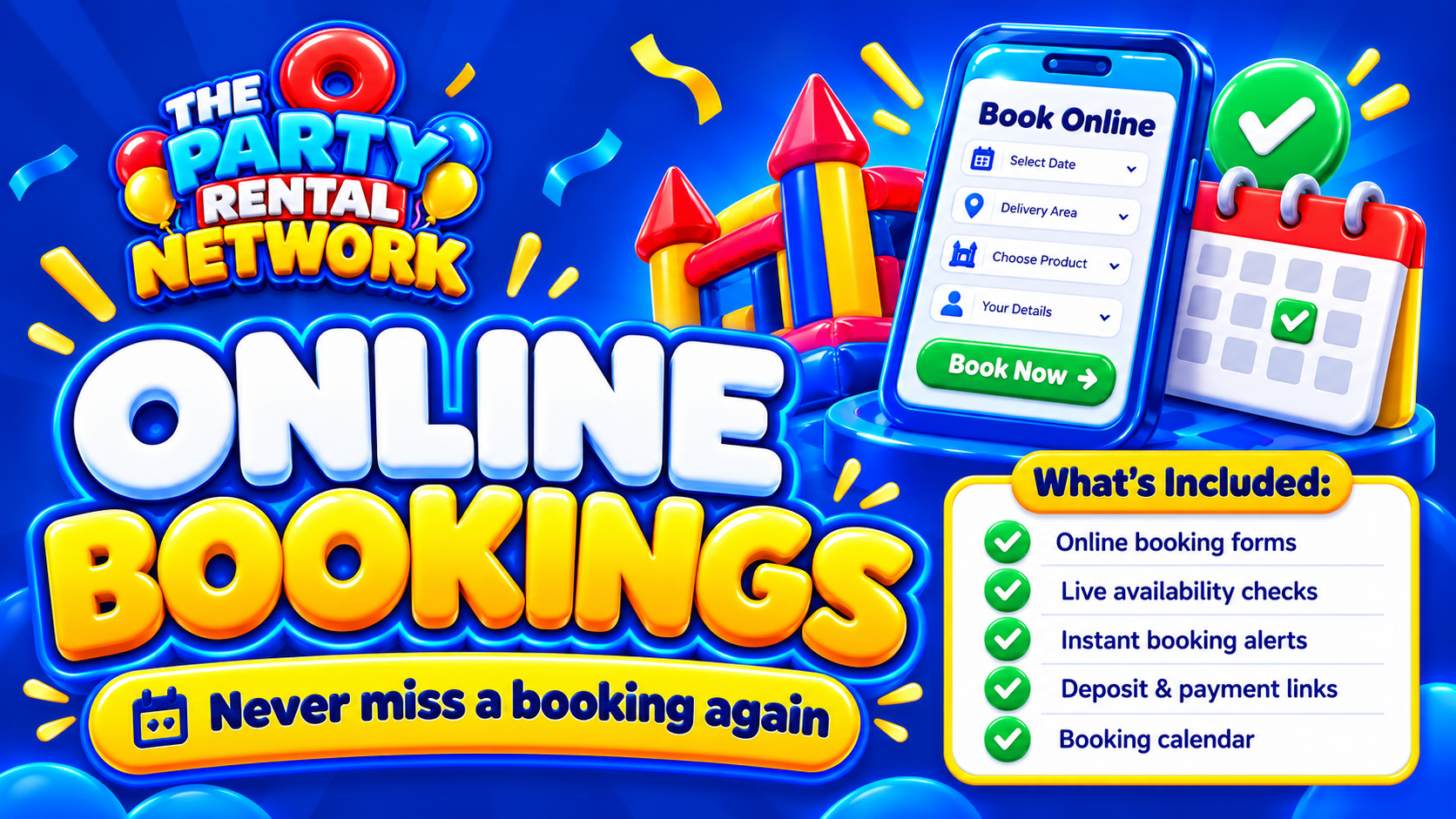
For straightforward hires, you may want a short route to confirmation. A larger package involving access checks, staff or several vehicles may need review first. Explore Online Bookings with those different journeys in mind, rather than assuming one booking process suits every job.
Write confirmation wording before building the form. It exposes unanswered questions about availability, delivery and outstanding checks.
Treat stock as equipment, not just product names
A catalogue might show “garden party package”, but fulfilling it could require an inflatable, blower, mats and extension leads. Consider how package contents affect availability and how individual items are identified internally.
In an illustrative weekend scenario, two similar castles are available on paper, but one returns wet on Saturday evening. Sunday capacity depends on its condition and preparation time, not merely its return date.
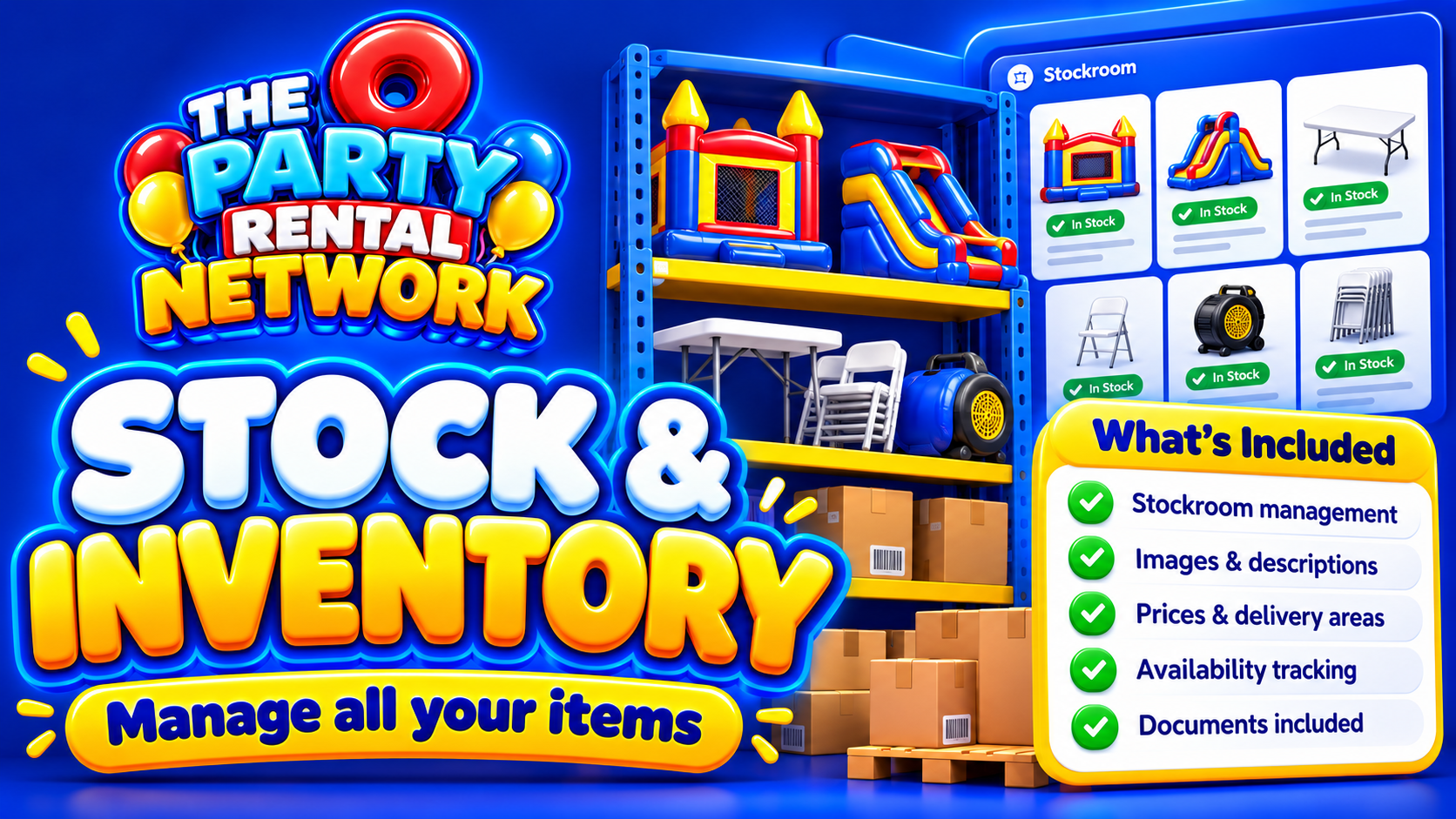
The Network includes an equipment stockroom and repairs/wet-equipment tools. Review Stock & Inventory against your actual workflow, including how equipment is taken out of circulation. Ask how booking availability relates to those records rather than assuming every condition change automatically blocks a hire.
Make delivery feasibility part of selection
An item can be available while the delivery slot is impossible. A village hall might allow access only shortly before the party, while another customer needs collection during that same window.
Before setup, establish your service area, realistic delivery windows and who handles exceptions. Collect access information that changes the job, such as steps, restricted parking or a long carry from the unloading point.
Route Planning & Loading covers a different operational need from the booking form: organising transport and loading. The Network includes transport planning and 3D van loading, but route or driver planning should not be confused with live vehicle tracking.
Separate payment status from booking status
A reservation, an agreed hire price and a payment record answer different questions. Your process should distinguish whether the job is accepted, what the customer owes and what has been received.
Decide how deposits, balances, cancellations and refunds will be explained. Check which payment options are available for your configuration before promising online checkout. Payment availability depends on configuration and launch safeguards; do not build customer instructions around an unverified payment route.
Use Payments & Accounts to assess the relevant tools. Accounting records can support administration, but they do not replace qualified accounting advice or establish that your terms are legally suitable.
Choose a system by testing the handovers
When comparing software, feature names are a starting point. When choosing a system, test how information moves between customer, office, stockroom and delivery team.
Try a normal booking, a date change and a damaged-item substitution. Ask who can make each change, who needs to approve it and how staff will know which instructions are current. These practical handovers reveal more than a polished enquiry screen.
If the distinction between holding stock and accepting a hire is your main concern, read the party rental reservation system guide. For the customer-facing site, the bouncy castle website builder resource addresses a separate part of the setup.
Match the package to your launch plan
Free Network accounts can list equipment and become eligible for opportunities. Paid subscriptions offer business tools according to package. Free membership should not be mistaken for access to every booking or operational feature, and eligibility does not guarantee bookings or income.
Where a network opportunity applies, the supplier sets the agreed hire price and the Network adds its margin. Check the relevant arrangements alongside your subscription needs.
Before you join the Network, map your first booking journey. Bring that example when you book a demo, so the discussion tests your requirements rather than an abstract feature list.
Questions about online party rental booking systems
Can customers book without speaking to us?
That depends on your configuration and acceptance process. Make any required review clear before customers treat the hire as confirmed.
Should I put every item online immediately?
Start with equipment whose details, availability and fulfilment requirements you can maintain reliably. Expand after testing the complete booking journey.
Is a website the same as a booking system?
No. A website presents the offer; the booking system manages the operational steps behind a request. Check how they connect.
Can staff manage bookings by voice?
Confirmed Work Mode booking voice actions are supported, subject to permissions and confirmation. Not every dashboard action is voice enabled.
Will the system certify my equipment as safe?
No. Risk assessments and document storage support record-keeping, but software cannot certify equipment or replace competent inspection and safety advice.
What should I test before launch?
Run a booking from request to collection, then change its date. Check customer wording, stock records, payment information and staff instructions at each stage.