
Party rental keyword tracker

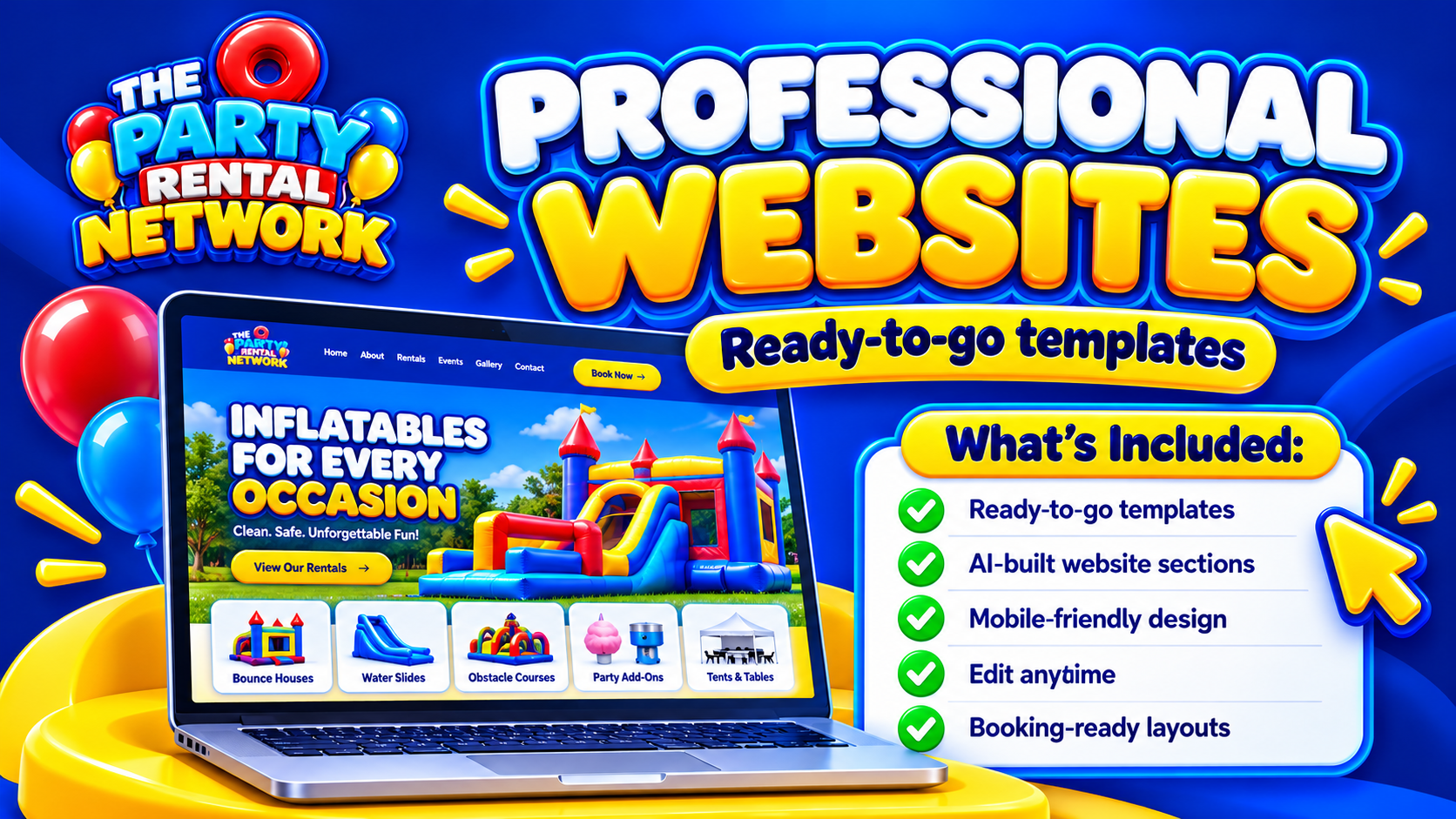
What Is The Party Rental Network?
A connected booking, website and AI-powered business platform built around party rentals and event hire, with tools for your equipment, customers, team and wider industry network.
What Type of Party Rental Business Do You Run?
Equipment records, safety documents, delivery planning and artwork tools help keep inflatable hire jobs organised.
A number-one position outside your delivery area can be less useful than a modest position where you already run Saturday routes. For a hire company, keyword tracking needs a delivery map, not just a leaderboard.
A party rental keyword tracker should help you see whether the right equipment pages appear for searches you can profitably serve. The aim is to connect search visibility with relevant enquiries, available stock and realistic transport commitments—not to collect impressive-looking rankings.
See what's possible
Build your keyword set around hire decisions
Start with the language customers use when choosing equipment. “Party rental” is a useful category, but UK customers may search for “party hire”, “gazebo hire”, “children’s party equipment” or a specific item followed by their town.
Group terms by the page that should answer them. An inflatable category page might cover broader bouncy castle searches, while an individual product page answers questions about size, surface requirements and suitability. Avoid creating several near-identical pages merely to target slight wording variations.
In an illustrative marquee business, “marquee hire York” and “small garden marquee hire” represent different decisions. Tracking both can reveal whether visibility is missing at the local supplier stage or the equipment-selection stage.
Keep the search location and result type consistent
A useful baseline records the keyword, intended landing page, search location, device and date. Without those settings, a change in position may simply reflect a different measurement method.
Separate ordinary website results from local map results. A tracker that reports one does not necessarily measure the other. Check how precisely its location settings work: a national UK view will not answer the same question as a search from a particular delivery town.
Use a repeatable review schedule rather than reacting to every daily fluctuation. Weekly checks can support routine monitoring; comparisons with the same seasonal period help distinguish a page problem from changing demand. Remember that personalised searches and tracker results may differ.
Read rankings alongside booking and delivery context
Suppose an equipment page climbs but enquiries remain flat. Before rewriting it, check whether visitors can understand the hire area, dimensions, access requirements and booking process. Ranking movement alone cannot tell you where customers hesitate.
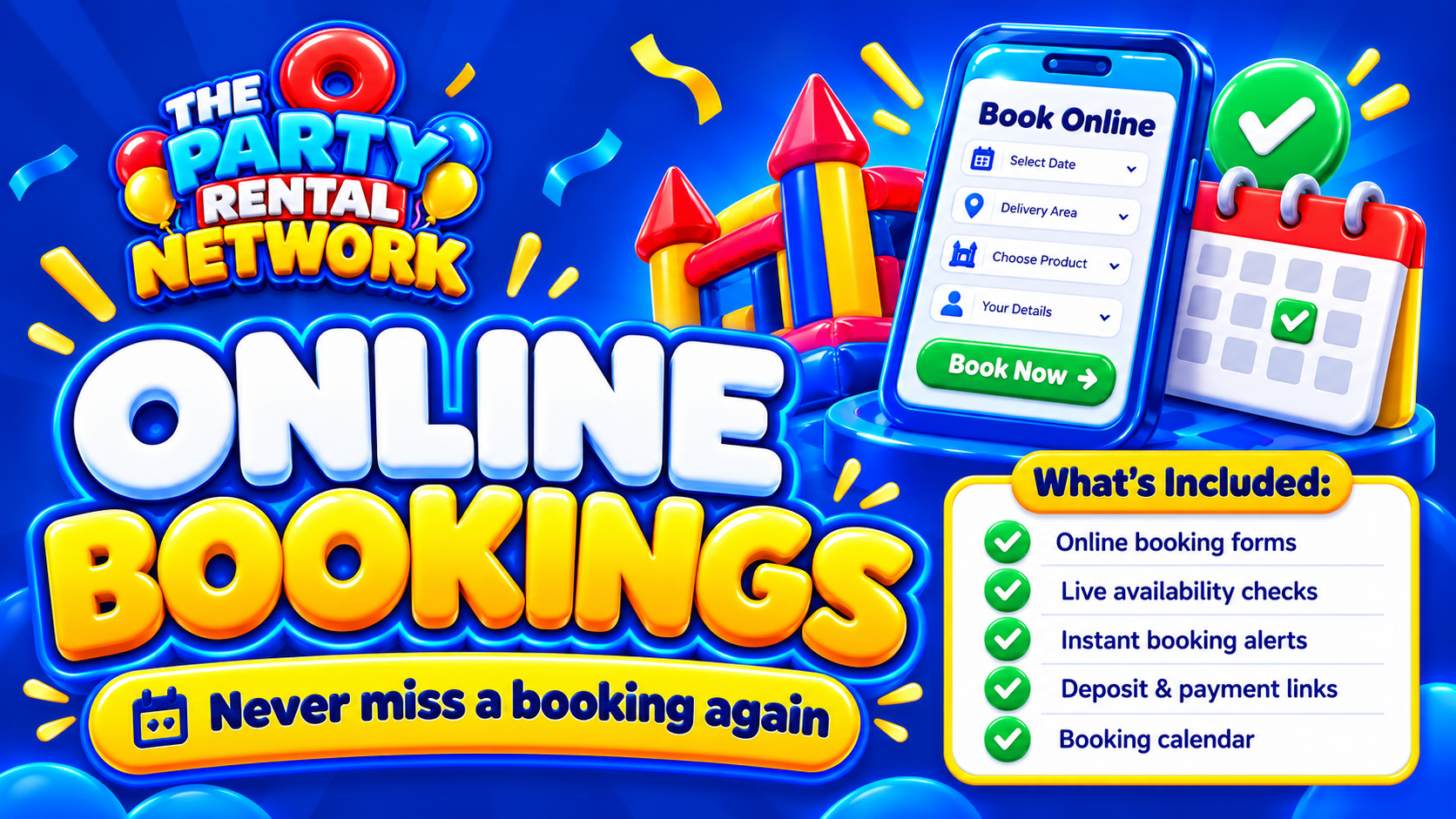
The Online Bookings feature is relevant to that next step: assess the journey from finding equipment to requesting or arranging hire, rather than treating visibility as the outcome.
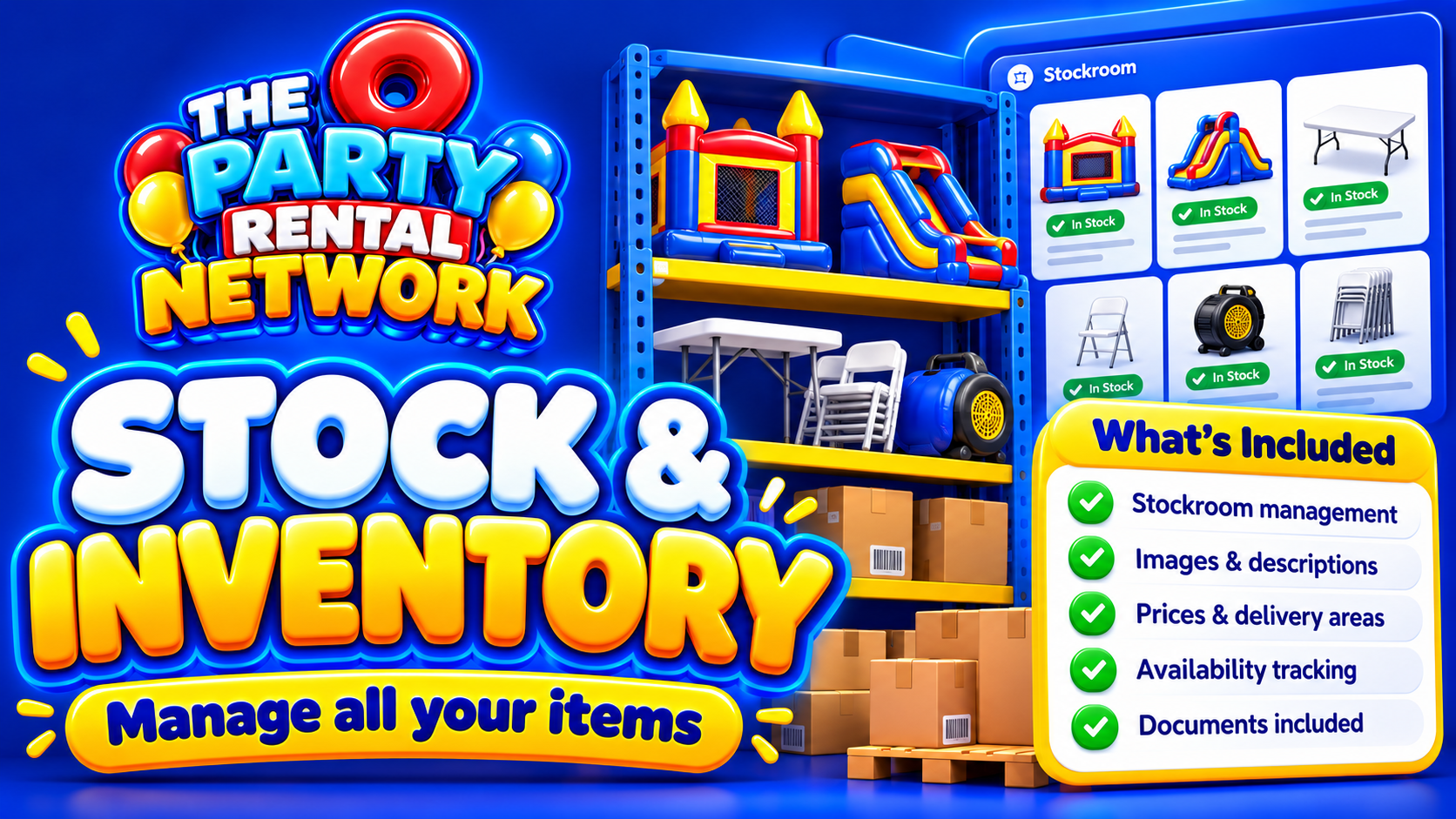
Availability matters too. Use your Stock & Inventory workflow to inform which categories deserve attention. Promoting an already fully committed item may be less useful than improving visibility for suitable alternatives.
For geographically broad searches, consider the operational questions covered in Event hire transport management. A promising town still needs workable delivery capacity; a keyword tracker does not establish that capacity for you.
Choose software, then define the tracking system
Keyword-tracking software collects measurements. Your tracking system is the routine for interpreting them and deciding what to change. Buying more measurements will not fix an unclear routine.
For software selection, compare location accuracy, mobile reporting, map-result coverage, update frequency, historical retention and export options. Check whether limits apply to keywords, locations or combinations of both. A small keyword set across several towns can consume more allowance than expected.
For setup, assign each keyword group an owner and a target page. Keep dated notes when changing page titles, copy or navigation, then allow time before drawing conclusions. Change one meaningful element where possible so results remain interpretable.
Review Auto SEO and Marketing Tools for the surrounding website and marketing workflow. Confirm current functionality separately: these feature names do not establish that a dedicated rank tracker, external integration or particular reporting allowance is included.
Separate free participation from paid tracking costs
Free Party Rental Network accounts can list equipment and become eligible for opportunities. Paid subscriptions offer business tools according to package. Neither arrangement guarantees bookings, income or search rankings.
An external keyword tracker may have its own free allowance or subscription. Compare the usable locations, reporting depth and history—not simply whether the initial account costs nothing. For supplier participation rather than search measurement, see Event hire supplier network.
You can join the network for free participation, or book a demo to check package scope and how your proposed tracking routine would fit.
Questions about party rental keyword tracking
Does Party Rental Network include a dedicated keyword tracker?
Do not assume it does. Confirm current package functionality and any supported integrations before choosing a separate service or planning reports around an included tracker.
How many keywords should a hire company track?
Start with a manageable set covering core equipment, priority towns and important customer needs. Expand when each additional term answers a distinct business question.
Should I track “rental” and “hire” separately?
Yes, where both reflect relevant searches. Compare which pages appear and whether the wording attracts suitable enquiries rather than assuming the terms perform identically.
Can a tracker guarantee Google indexing or rankings?
No. Tracking measures observed visibility; it cannot compel indexing or placement. Website improvements can support relevance and usability without guaranteeing a search outcome.
What should I investigate when a ranking falls?
Check measurement settings, the affected page, recent edits and whether other terms also moved. An isolated fluctuation is weaker evidence than a sustained pattern across related searches.
How do I judge whether tracking is worthwhile?
Look for better decisions: clearer priority pages, fewer unsuitable location targets and stronger enquiry journeys. Rankings are supporting evidence, not a substitute for evaluating actual hire demand.