Professional party rental websites
What Is The Party Rental Network?
A connected booking, website and AI-powered business platform built around party rentals and event hire, with tools for your equipment, customers, team and wider industry network.
What Type of Party Rental Business Do You Run?
Equipment records, safety documents, delivery planning and artwork tools help keep inflatable hire jobs organised.
A party hire website has two audiences: the person imagining the celebration and the person responsible for making it happen. Sometimes they are the same customer, switching between excitement about a garden party and concern about whether a marquee will fit through the side gate.
Professional party rental websites serve both. They make equipment appealing while explaining the practical conditions of hire. For Party Rental Network businesses, the useful question is not simply whether a site looks polished. It is whether that polish helps customers make suitable enquiries without creating promises the operation cannot keep.
See what's possible
Design around the customer's next decision
A visitor choosing a soft-play package needs different information from an organiser sourcing tables for a village hall. Organise your website around recognisable occasions and equipment categories, then give each product page a clear purpose.
Photographs should establish appearance and scale. Descriptions should explain what is included, dimensions, suitable settings and relevant restrictions. Distinguish an attractive display photograph from the actual hire package: decorative extras should not appear included unless they are.
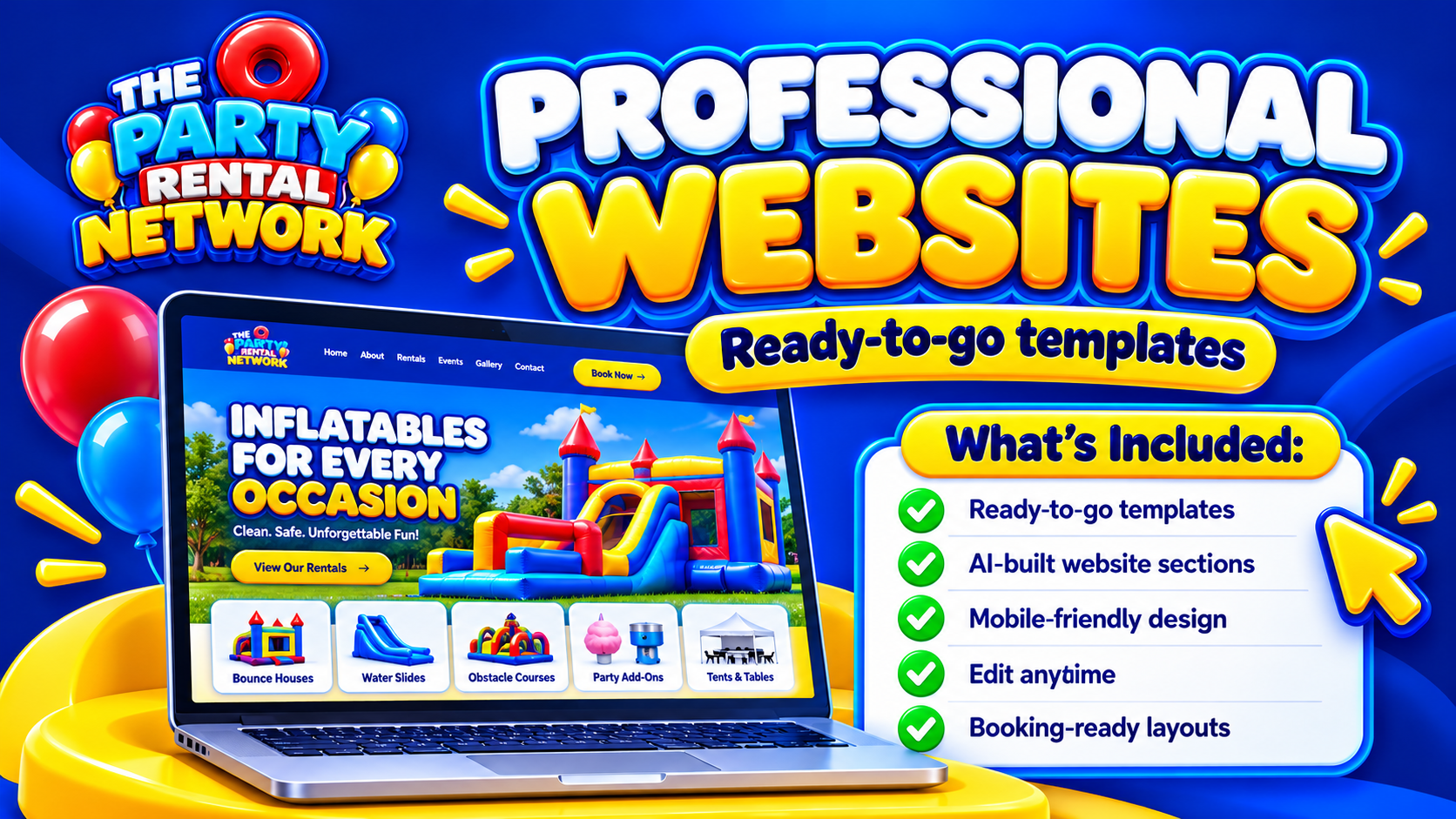
Explore Professional Websites when considering the website element of your setup. Judge design by how easily a customer can understand the offer, not by how many visual effects fit on the homepage.
Make delivery and setup part of the offer
For party hire, logistics are part of the product. A beautiful backdrop is not a workable choice if its transport case cannot reach the event room.
Explain your service area, delivery arrangements and what customers should disclose about access. Where relevant, cover stairs, parking, surface conditions, power requirements and setup space. State whether customer collection is available rather than leaving visitors to assume it is.
Consider an illustrative school fete enquiry. The organiser may know the event postcode but not the unloading arrangements. A website that asks about vehicle access and setup timing gives your team a better starting point. It does not replace a site assessment or qualified safety advice.
Build a booking journey that matches your operation
Before choosing a booking approach, separate straightforward hires from jobs requiring review. A standard chair order may need relatively few details; a multi-item outdoor event may require discussion about layout, weather and access.
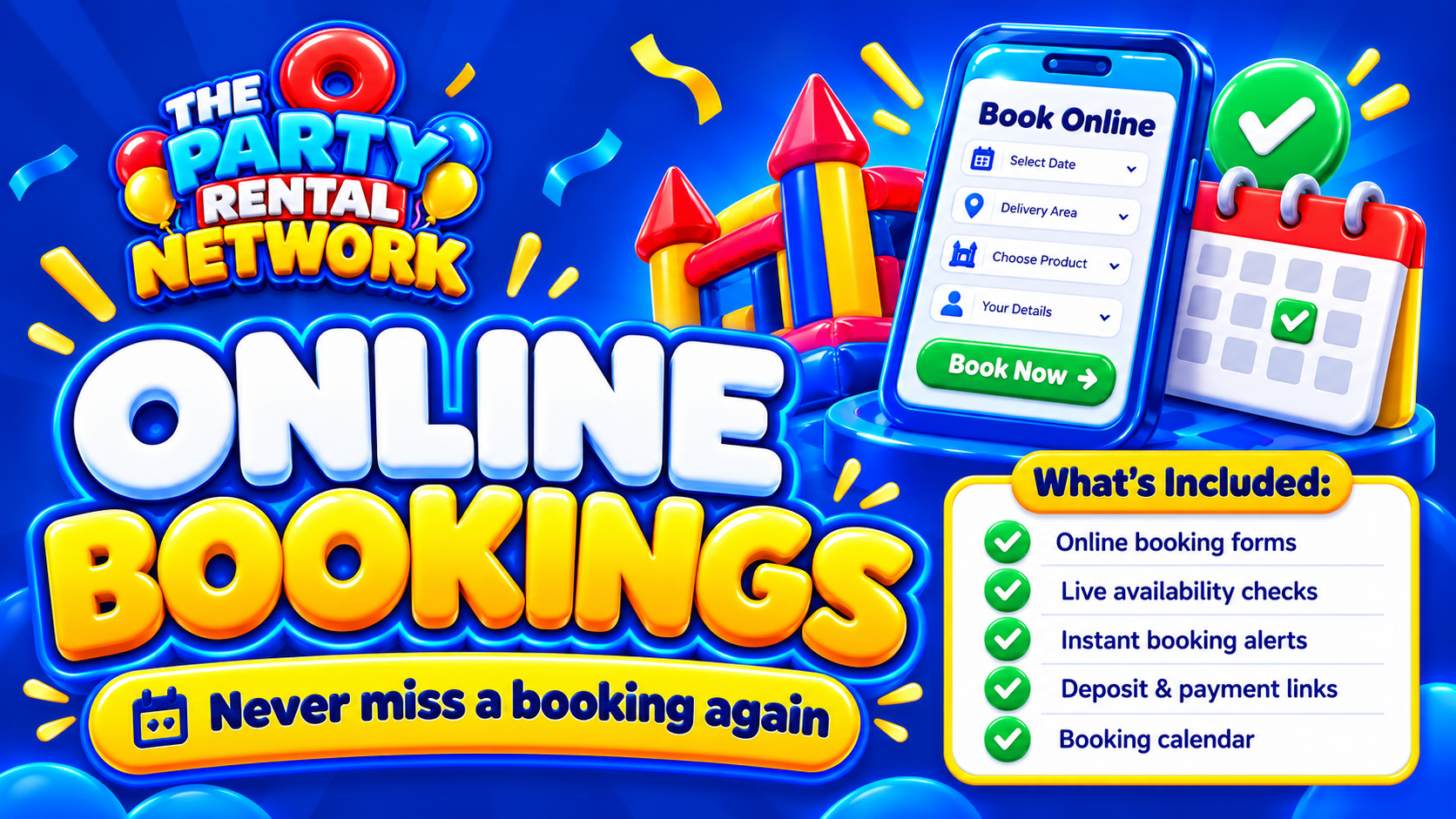
Review Online Bookings alongside your acceptance process. Customers should understand whether they are sending an enquiry, requesting a booking or receiving confirmation. Explain when any deposit or balance becomes due under your terms.
Do not treat a payment button as proof that every payment method is available. Payment availability depends on configuration and launch safeguards. Test the actual journey before publishing payment instructions.
Connect the catalogue to stock decisions
A website catalogue describes what you offer; stock management concerns what you can supply. Those are related, but they are not interchangeable.
Decide how packages, individual items and equipment awaiting repair should be represented. If two packages use the same component, your setup needs to account for that shared dependency rather than treating the packages as unrelated stock.
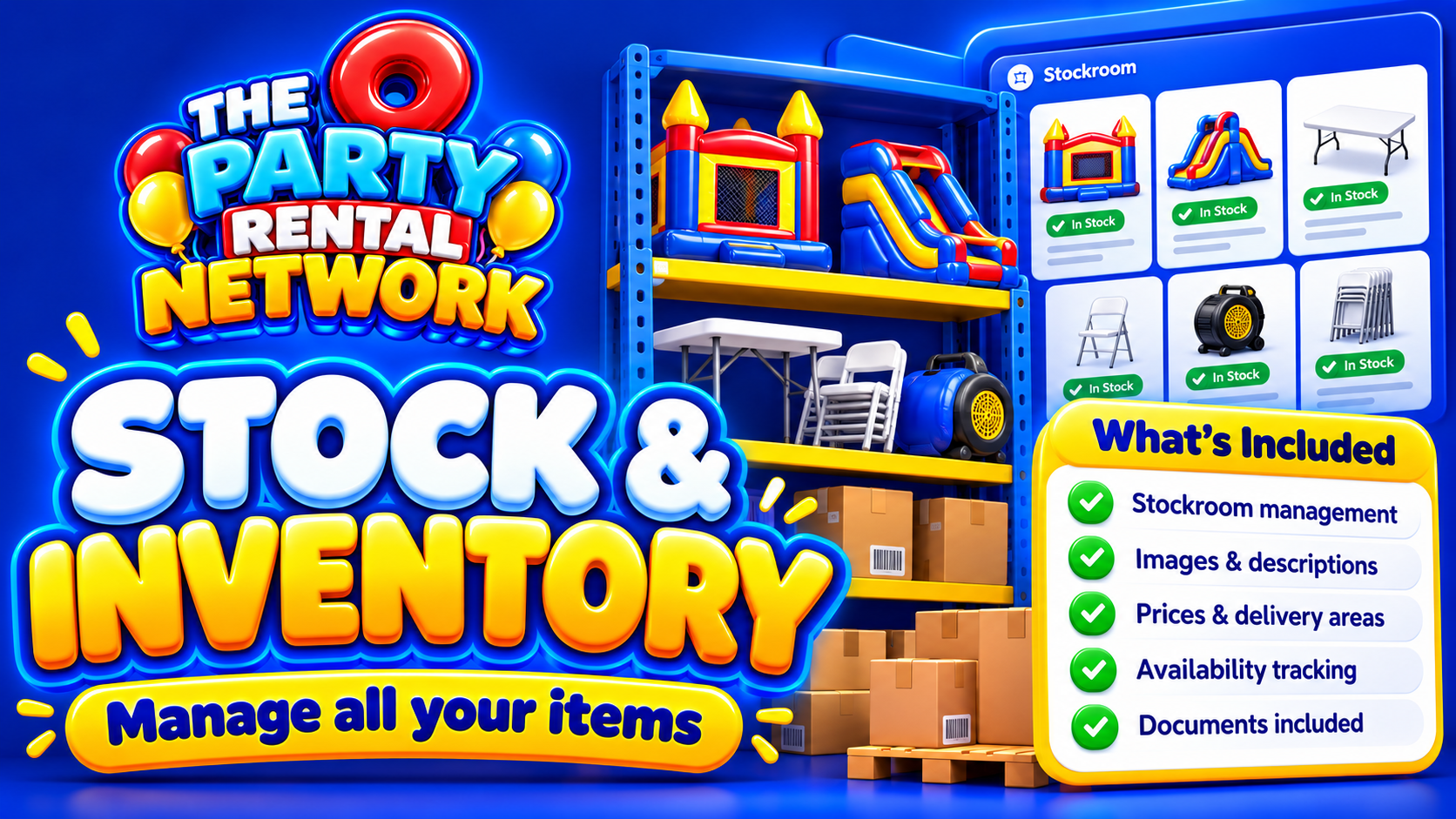
Use Stock & Inventory to explore the equipment-management side. During setup, check how website enquiries and booking decisions relate to stock records. Never assume that adding a product photograph establishes availability for every date.
Earn search visibility with useful local detail
Useful local content answers genuine service questions. Explain which areas you serve, how delivery is assessed and which event types you accommodate. Avoid near-identical town pages that merely substitute place names.
A page about village-hall furniture hire could discuss access windows, collection timing and suitable order information. That gives readers something more useful than repeated claims about being professional.
Auto SEO is relevant when reviewing search support, but no software can assure Google indexing or rankings. Accurate content, understandable navigation and maintained information remain practical priorities.
Select website software and configure the working system
Software selection asks what capabilities and package you need. System setup asks who maintains descriptions, checks enquiries, approves bookings and updates customer instructions. Buying tools does not settle those responsibilities.
For enquiry handling, read AI customer service for hire companies and decide which questions need human review. Where delivery and setup involve several people, Hire company staff management software provides a related planning topic.
Bring one realistic enquiry to a demo, from first visit through operational handover. This reveals fit more clearly than reviewing appearance alone.
Questions about professional party rental websites
Does a free account include every website and business tool?
No. Free network accounts can list equipment and become eligible for opportunities. Paid subscriptions offer business tools according to package; check website inclusions before choosing.
Should every item be bookable immediately?
Not necessarily. Complex installations or access-sensitive equipment may need review. Make the difference between an enquiry and a confirmed booking explicit.
What photographs are most useful?
Use clear images of the actual equipment, including details that show scale and condition. Label optional styling so customers understand what their hire includes.
Can the website guarantee more bookings?
No. Clear information can support customer decisions, but bookings depend on demand, suitability, availability and other factors. Network membership does not guarantee opportunities or income.
How should I assess affordability?
Compare package inclusions, setup work and ongoing maintenance responsibilities. Assess the tools against your workload rather than assuming the lowest headline cost is the best fit.
What should I check before launch?
Test mobile navigation, enquiry wording, contact details, delivery information and booking terms. Confirm that published payment instructions match the configuration actually available to your business.