Website for bouncy castle hire company
What Is The Party Rental Network?
A connected booking, website and AI-powered business platform built around party rentals and event hire, with tools for your equipment, customers, team and wider industry network.
What Type of Party Rental Business Do You Run?
Equipment records, safety documents, delivery planning and artwork tools help keep inflatable hire jobs organised.
A parent might love the photograph of your castle and still be unable to hire it. The garden gate could be too narrow, the available space too small, or the party outside your delivery area. A good website for a bouncy castle hire company brings those practical checks forward, before excitement turns into an unsuitable booking.
Build the journey around one question: can this inflatable work for this party? Attractive photographs matter, but useful information makes the difference between casual browsing and a well-informed enquiry.
See what's possible
Start with the garden, not the gallery
Imagine someone organising a Saturday birthday party on a phone. They know the postcode and approximate number of guests, but may not know which measurements matter. Your website should help them narrow the choice without needing a lesson in inflatable hire.
Show each inflatable's dimensions alongside its required operating space, using equipment documentation and your operating procedures as the source. Explain access requirements, suitable surfaces, power arrangements and any restrictions in plain English. Distinguish the inflatable's footprint from the space needed around it.
For hall bookings, explain that ceiling height and overhead obstructions matter too. Ask for venue details rather than implying that every indoor space is suitable.
Make each inflatable page answer booking questions
A catalogue thumbnail cannot do the whole job. Give each hire item its own useful page with clear photographs, a recognisable name, suitability information and an explanation of what the hire includes. If a photograph shows optional extras, say so.
Explain whether a displayed price includes delivery, how additional charges are established and what the stated hire period means. A customer should not have to reach the final enquiry step to discover an important condition.
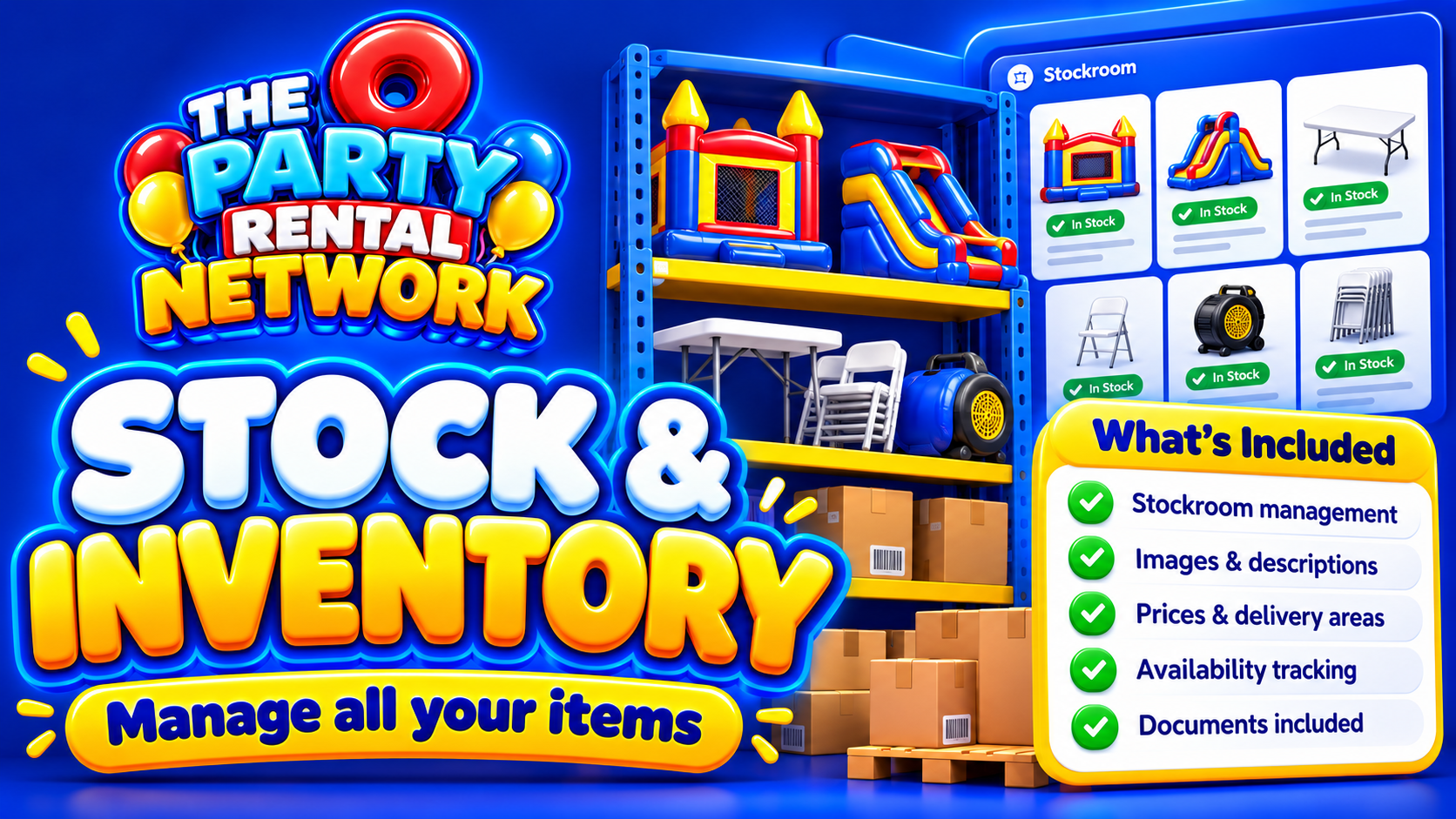
Compare Professional Websites against these practical needs, rather than judging a website only by its homepage design. On mobile, check that dimensions, price explanations and the next action remain easy to find. Avoid making essential information available only inside downloadable documents.
Connect the website to a sensible booking process
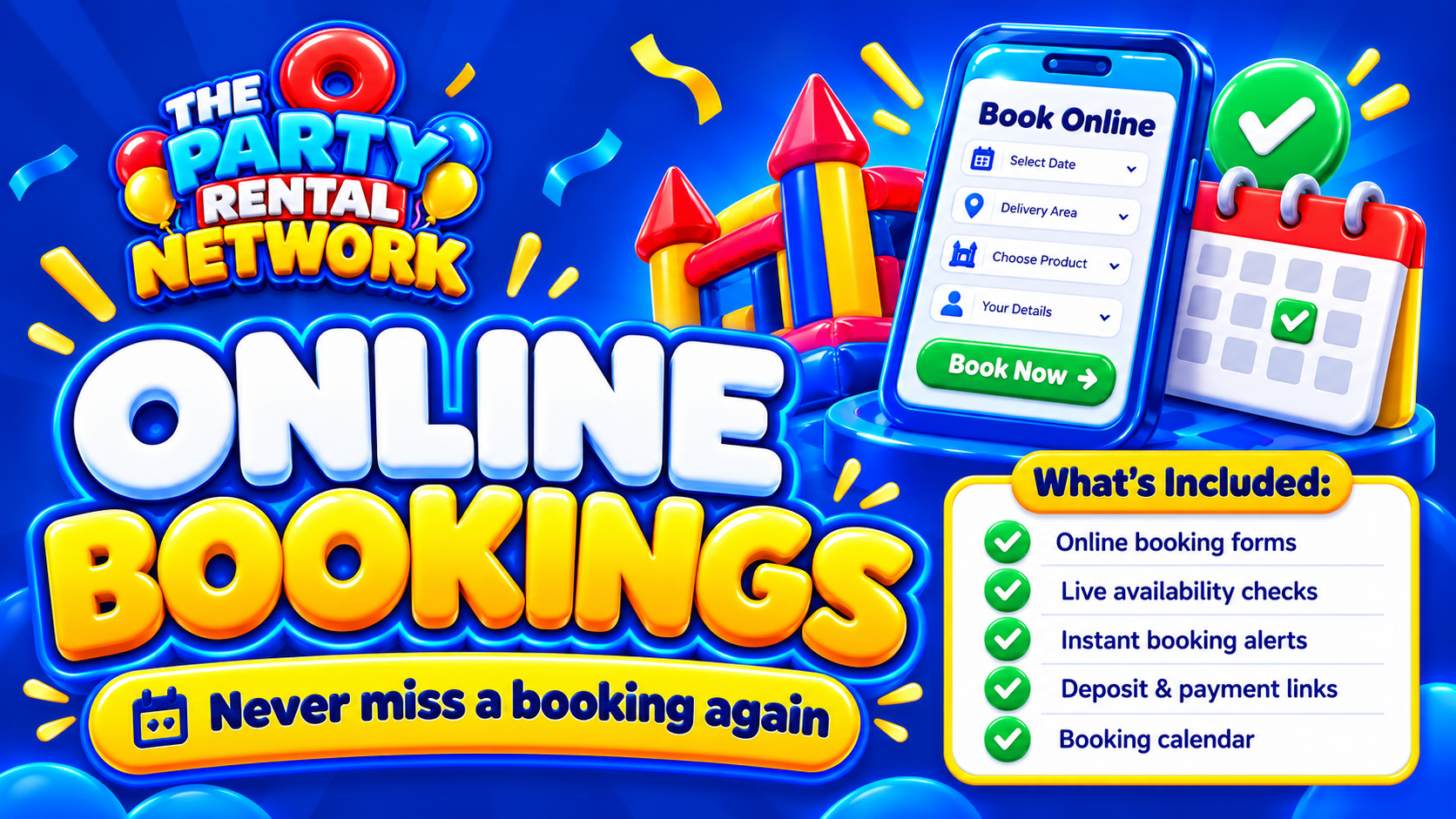
A booking button needs a clear meaning. Does it submit an enquiry, request availability or confirm a reservation? Explain that beside the action, including any checks that happen before acceptance.
Consider a customer requesting two inflatables for a school event. The website needs to gather enough information for you to assess stock, delivery and site requirements without presenting a daunting questionnaire. Date, postcode, venue type and equipment choice provide a useful starting point; further questions can follow where relevant.
Review Online Bookings alongside Stock & Inventory when choosing your setup. Establish how equipment records, reservations and unavailable items will be handled. Booking management and an equipment stockroom are platform capabilities, but confirm the website behaviour and package before relying on a particular workflow.
Build local relevance without copying town pages
Customers searching locally need evidence that you serve their area, not dozens of pages with the same paragraph and a different place name. Publish a clear delivery-area explanation, including how you handle boundary postcodes and delivery charges.
Useful local content might explain your process for village-hall enquiries or what customers should check before requesting a park booking. Do not imply venue approval or permission where it has not been established.
Use Auto SEO as part of your feature evaluation, while keeping responsibility for accurate business information. No software can assure Google indexing or rankings. Distinctive equipment descriptions and genuinely helpful answers are a stronger editorial foundation than repetitive location text.
Choose the package, then prepare the launch
A free Party Rental Network account can list equipment and become eligible for opportunities. It should not be confused with a paid business-tool package: paid subscriptions provide tools according to the selected package. Neither account type guarantees bookings or income.
Before committing, confirm website provision, domain arrangements, editing access, support and any migration requirements. Prepare current photographs, equipment specifications, delivery policies and customer-facing terms. Test the journey with an illustrative hall booking and a garden enquiry before publishing.
Keep automation decisions separate from page design. The guides to party rental business automation and AI party rental software provide related reading. You can join the network for free-account access or book a demo to discuss website requirements and package scope.
Questions about bouncy castle hire websites
Is a free network account the same as a free website?
No. Free accounts can list equipment and become eligible for opportunities. Confirm website availability and costs within the relevant paid package rather than assuming they are included.
Should customers book immediately or enquire first?
Choose according to the checks your business needs. Straightforward hires and complex event requests may need different journeys, with confirmation status clearly explained.
What information should I collect about a garden?
Ask about usable space, surface, access and power, alongside the address. Customer answers support assessment but do not replace your safety procedures or equipment instructions.
Can customers pay through the website?
Payment availability depends on configuration and launch safeguards. Confirm the available arrangements before advertising online payment, and explain when payment is due.
Can the website prove my equipment is safe?
No. It can communicate relevant information, but software cannot certify equipment or replace competent inspection, qualified safety advice and appropriate operating procedures.
What should I check before moving an existing website?
Confirm domain control, content transfer, existing page addresses and redirect requirements. Agree responsibilities before switching, and test enquiries and booking links after launch.