
Event hire booking system

What Is The Party Rental Network?
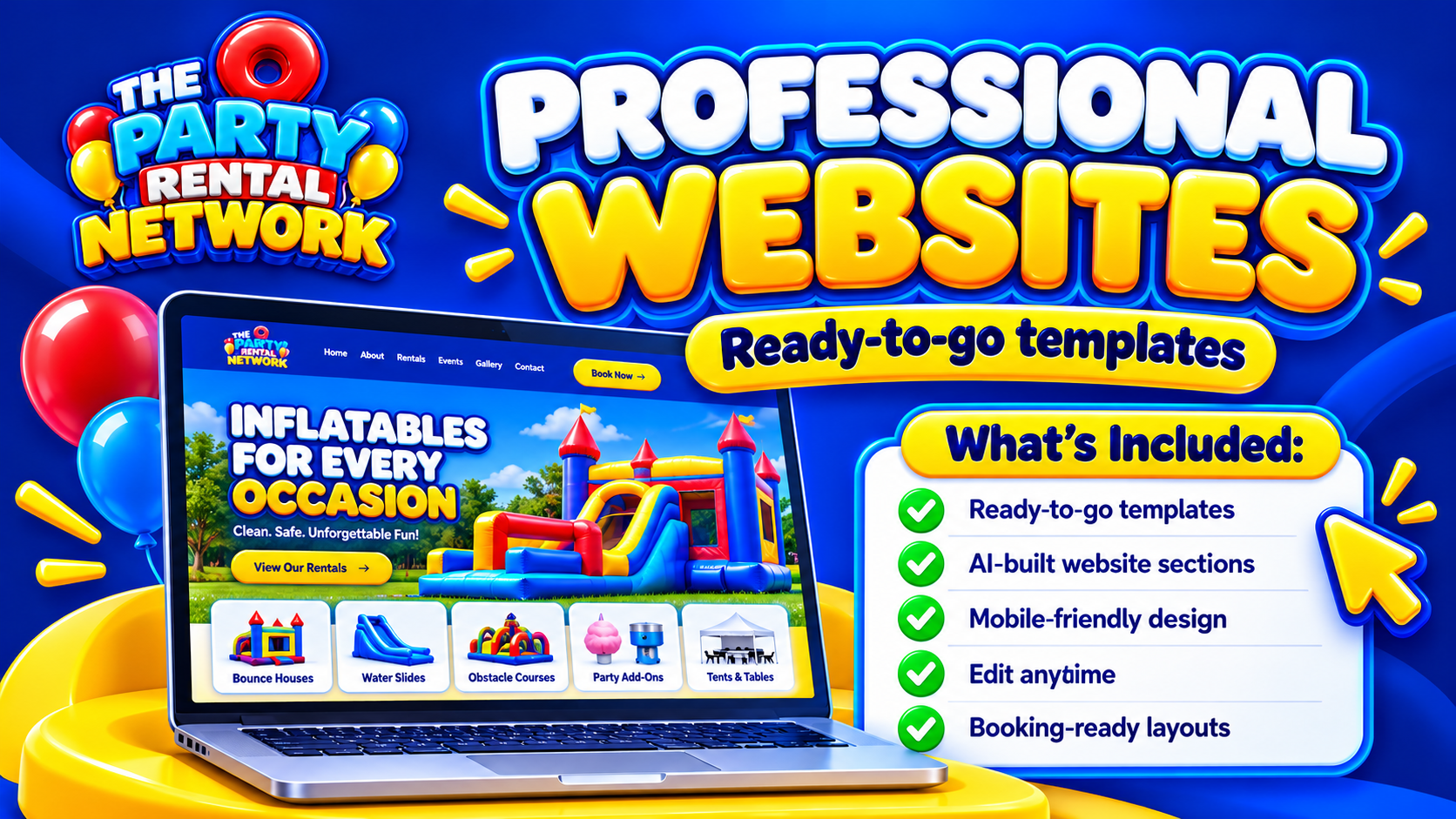
A connected booking, website and AI-powered business platform built around party rentals and event hire, with tools for your equipment, customers, team and wider industry network.
What Type of Party Rental Business Do You Run?
Equipment records, safety documents, delivery planning and artwork tools help keep inflatable hire jobs organised.
A Saturday booking can occupy equipment from Friday loading until Monday inspection. That gap is where an event hire booking system earns its place: not simply by recording the event date, but by helping your team organise the commitments around it.
For a company hiring marquees, furniture, inflatables or party equipment, the practical question is whether the booking process reflects how stock leaves, returns and becomes ready again. Start there, rather than with the appearance of the booking calendar.
See what's possible
Map the hire window, not just the party
Consider an illustrative order for tables delivered on Friday, used on Saturday and collected on Sunday. The same tables might need cleaning before another delivery on Monday. A calendar showing only Saturday misses much of the operational commitment.
Before choosing your setup, define the periods your team needs to manage: preparation, delivery, use, collection and turnaround. Then test how those periods can be represented. Ask specifically how the system distinguishes an event date from the time equipment is unavailable. Do not assume that every booking calendar handles both in the same way.
Give each booking stage a clear meaning
An enquiry, an agreed quote and a confirmed hire are different commitments. Decide what moves an order between stages, who can make that change and what the customer should understand at each point.
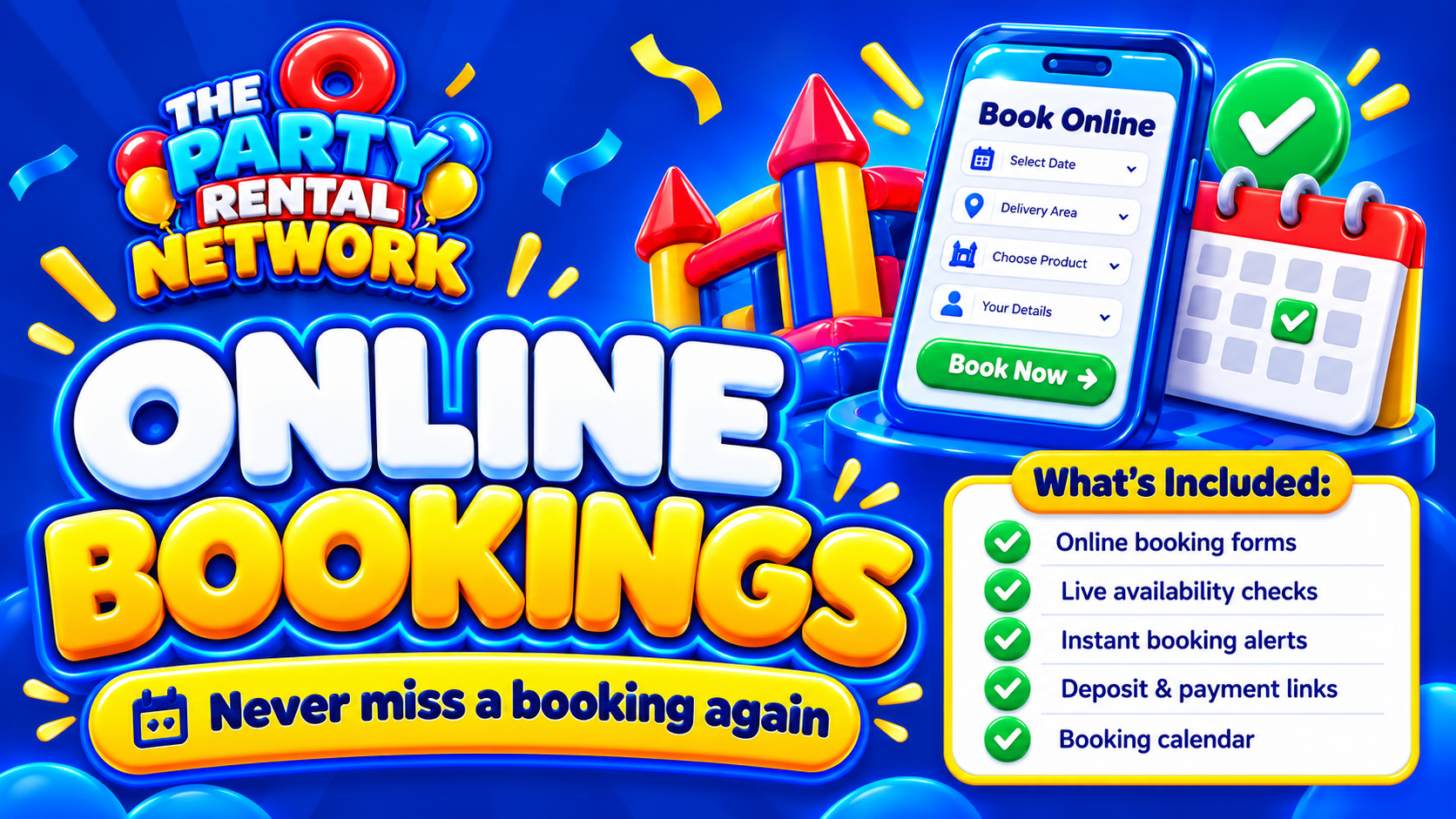
The Party Rental Network connects booking management with other hire-business tools. Its Online Bookings feature page is a useful starting point for exploring the customer-facing process. During evaluation, check how your preferred confirmation rules fit the available setup, including what happens when information is missing or the requested delivery arrangement needs discussion.
Build stock records around what actually goes out
A product name alone may not describe the equipment needed to fulfil an order. A marquee booking could involve several components; an inflatable hire might require accessories and a suitable delivery arrangement. Decide how your team will record these requirements before moving bookings into a new system.
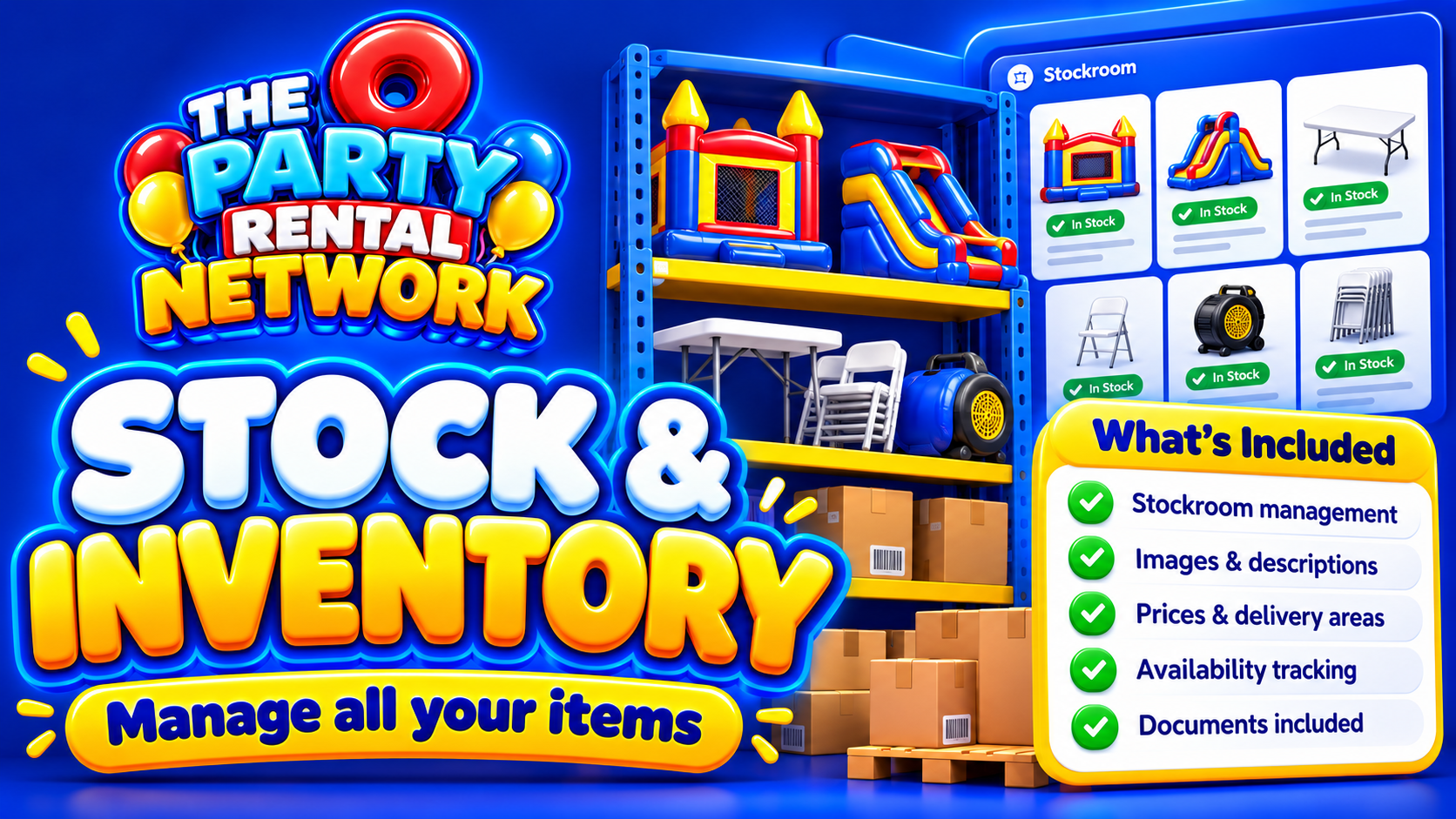
Explore Stock & Inventory alongside your equipment records. Test a straightforward hire, a mixed order and an item returning wet or needing repair. The platform includes repairs and wet-equipment tools, but your procedures must still establish when equipment is ready. Software does not certify equipment or replace competent inspection.
Check delivery feasibility before treating space as availability
Having equipment available does not necessarily mean you can deliver it. Imagine two venues requesting installation at the same time, with one accessible only through a narrow service entrance. Stock availability is only one part of that decision.
Use Route Planning & Loading to explore transport planning and 3D van loading within the network. Evaluate the setup against realistic vehicle capacity, access details and staff commitments. Route and driver planning should not be confused with live vehicle tracking. Your team still needs workable schedules and a clear process for handling late changes.
Set up records before switching your booking process
Start with a manageable set of equipment and representative bookings. Agree consistent product names, quantities, customer details and venue information. Identify who owns each record, especially when several people answer enquiries or change delivery arrangements.
Customer Management is relevant when assessing how customer information supports repeat hires and ongoing conversations. Test a changed venue, a reduced order and a cancellation before relying on the setup for a busy weekend.
Bring these examples to a demo. A walkthrough of your awkward bookings is more revealing than a tour of an empty dashboard.
Separate the booking system from the wider software decision
A booking system is the combination of tools, rules and responsibilities used to accept and fulfil hire orders. Software supports that system; it does not decide your operating rules. Our party equipment rental software resource covers the broader software choice, while party rental website design addresses the customer-facing website.
Free network accounts can list equipment and become eligible for opportunities. Paid subscriptions provide business tools according to package. Check the relevant package before treating a free account as your operational booking solution. For network opportunities, the supplier sets the agreed hire price and the network adds its margin. No bookings or income are guaranteed.
Questions about event hire booking systems
Can I use a free account to manage all my bookings?
Do not assume so. Free accounts support equipment listings and eligibility for opportunities; business tools are available through paid subscriptions according to package.
What should I prepare before setting up the system?
Prepare equipment quantities, current commitments, customer records and operating rules. Include collection and turnaround requirements, not just event dates, so your test bookings reflect real work.
Can customers always pay online?
Payment availability depends on configuration and launch safeguards. Confirm what is available for your setup before promising online payment or building your confirmation process around it.
Can staff change bookings using voice commands?
Confirmed Work Mode booking voice actions are supported, subject to permissions and confirmation. Not every dashboard action is voice-enabled, so check the particular tasks your staff need.
Does the system work completely offline?
Backup copies do not mean the whole platform works offline. Establish what information your team needs during an interruption and confirm the access arrangements before relying on them.
How should I judge whether a package is affordable?
Compare the package with the tasks you actually need covered, the setup effort and any remaining manual work. Assess suitability against your workload rather than assuming guaranteed savings.