Party rental website design
What Is The Party Rental Network?
A connected booking, website and AI-powered business platform built around party rentals and event hire, with tools for your equipment, customers, team and wider industry network.
What Type of Party Rental Business Do You Run?
Equipment records, safety documents, delivery planning and artwork tools help keep inflatable hire jobs organised.
A party hire website has to sell an event that has not happened yet, using equipment that must return for the next one. That makes its design different from an ordinary online shop. Attractive photographs matter, but so do dates, access, delivery boundaries and what the customer actually receives. Good party rental website design connects that excitement with the practical information needed to make a workable booking.
See what's possible
Design around the date, place and occasion
Imagine a parent arranging a garden birthday, or an organiser furnishing a village hall. Neither starts with your stock codes. They start with an occasion, a location and a deadline.
Give those visitors recognisable routes into your catalogue, such as garden parties, indoor celebrations or seating and tables. Make the next step obvious: explore suitable equipment, check the relevant details, then request or book hire. Where date and postcode checks are supported by your chosen setup, introduce them before customers invest time assembling an unsuitable order.
Make equipment pages answer the awkward questions
A striking product image cannot tell someone whether equipment will fit through a side gate. Alongside photographs, explain dimensions, space requirements, hire duration, included accessories and any delivery or setup conditions. Distinguish the equipment footprint from the space needed to use it safely, using appropriate supplier guidance and qualified advice.
Show the actual hire item clearly rather than relying entirely on styled event photographs. If a picture includes optional extras, identify them.
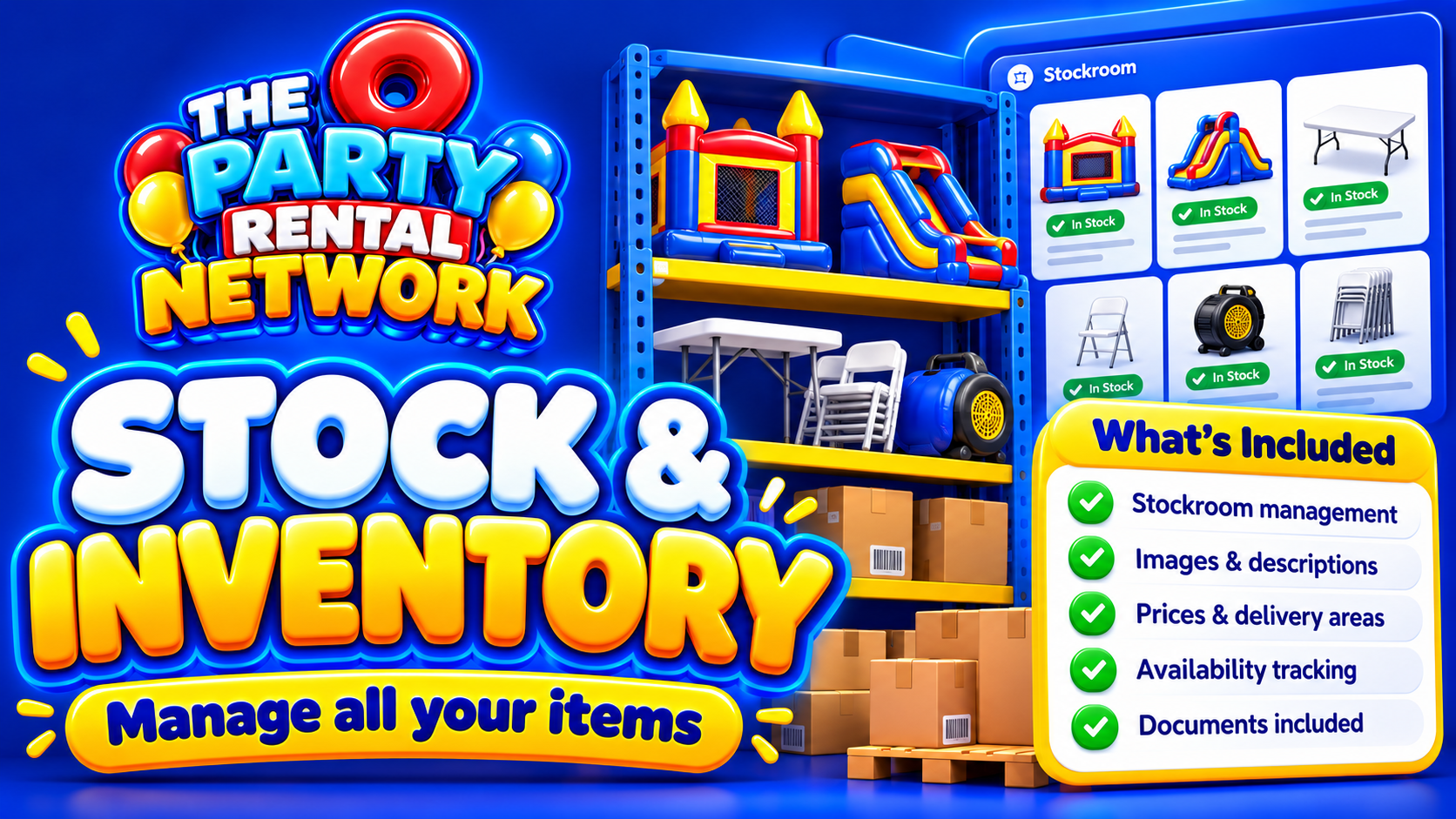
The relationship between your catalogue and Stock & Inventory deserves attention during planning. Decide how individual items, packages and shared components should be represented before commissioning polished page layouts.
Give the booking journey a clear handover
Customers should know whether they are sending an enquiry, requesting availability or confirming a booking. Those actions are not interchangeable. Button labels and confirmation messages should describe what happens next without suggesting that an unreviewed request is already secured.
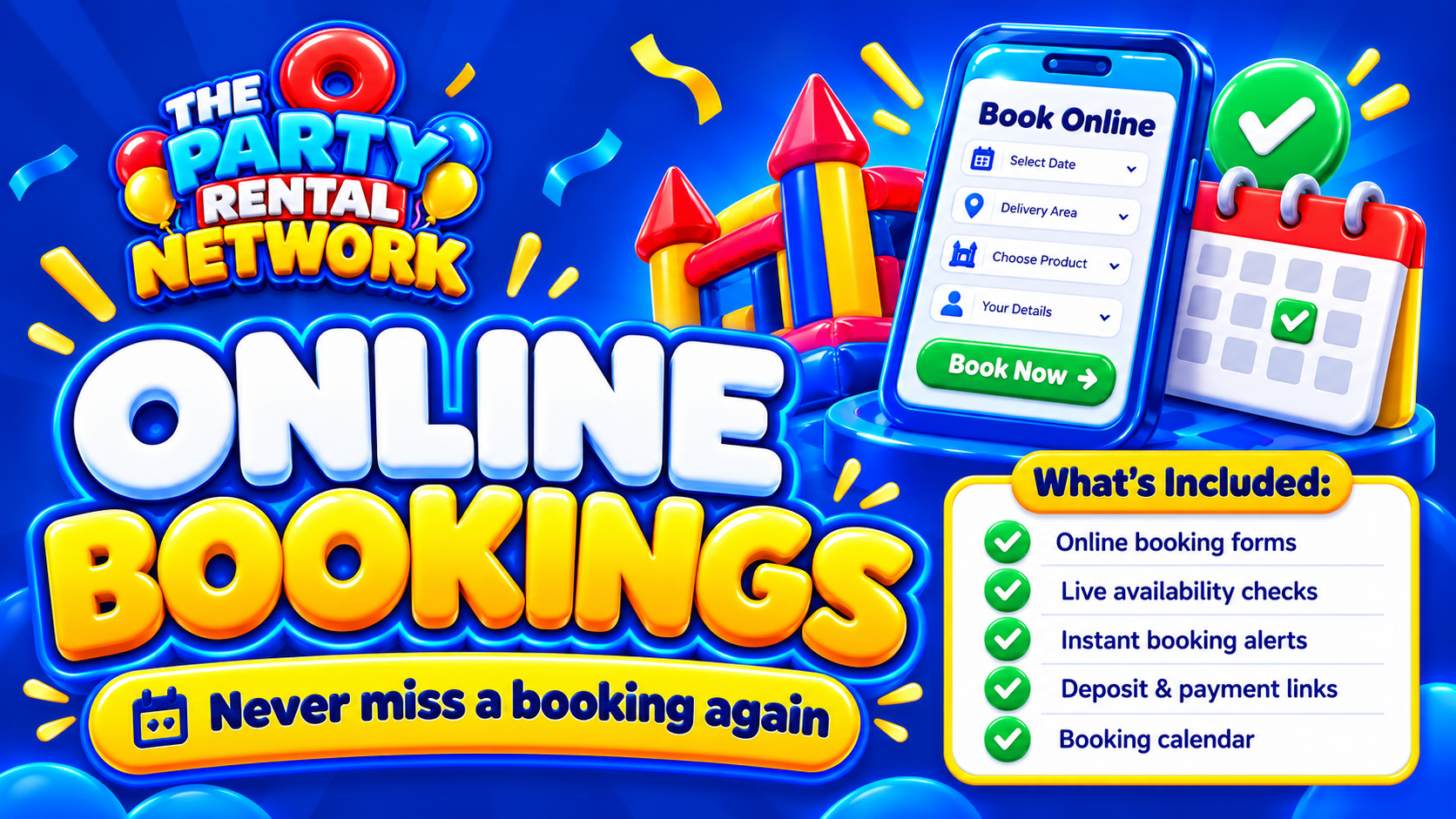
Use the Online Bookings feature information to discuss the journey your package and configuration can support. Establish which details you need before accepting an order and which can follow later.
Explain deposits, balances and cancellation terms where relevant. Payment availability depends on configuration and launch safeguards, so the design must not promise immediate online payment unless that route is available in your setup.
Build for a phone held in one hand
Many party plans take shape between other jobs. A useful mobile layout keeps item names, key conditions and the next action easy to find. Avoid oversized banners that push the catalogue out of view, text embedded inside images and enquiry forms that demand unnecessary information.
Photographs should help customers judge scale and appearance without making pages cumbersome. Readable contrast, labelled fields and clear navigation make the site easier to use across different circumstances.
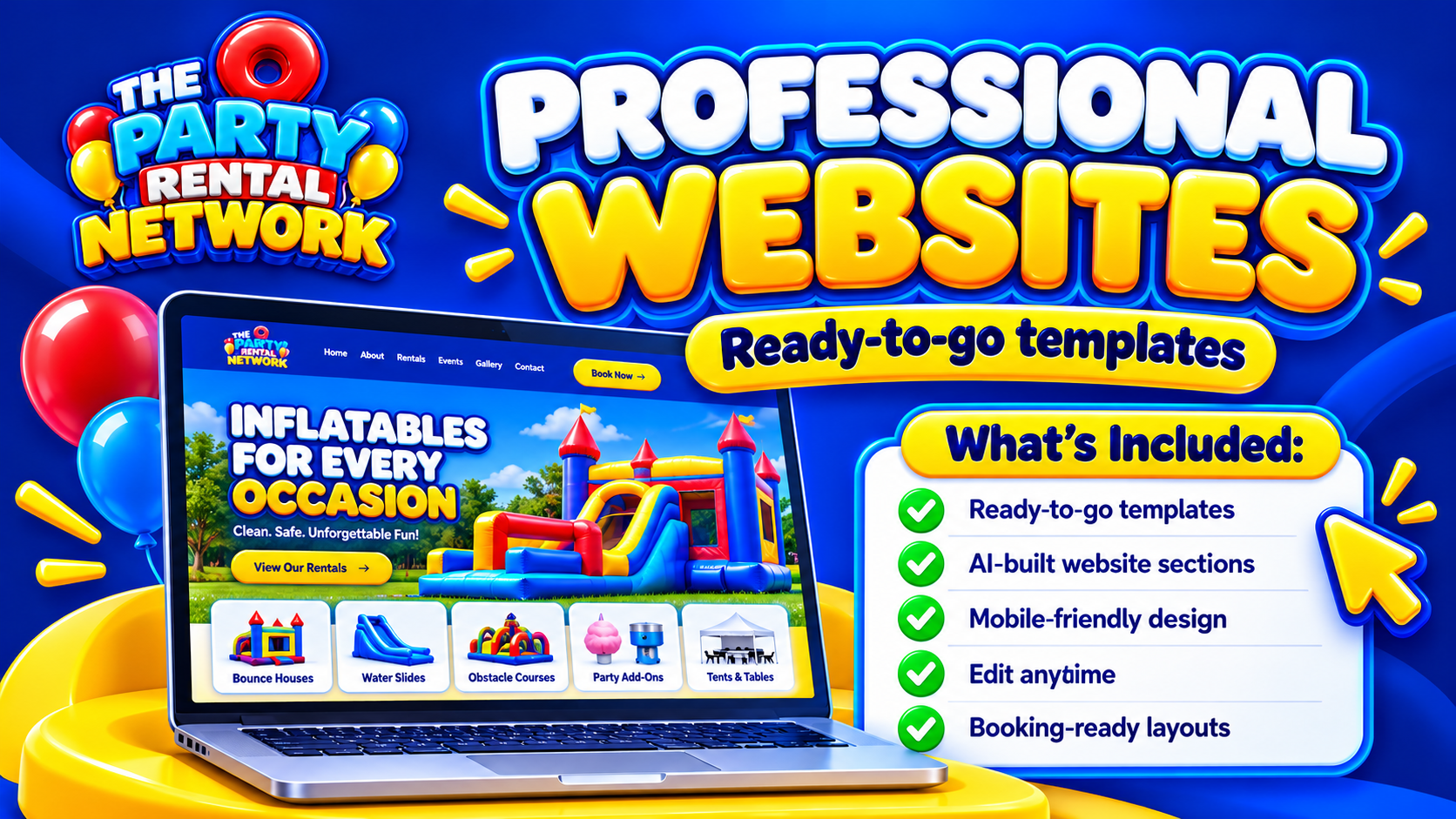
Treat Professional Websites as a starting point for discussing presentation requirements, rather than assuming a decorative theme alone will solve the hire journey.
Write local pages that earn their space
Location content should explain how you serve an area, not simply repeat a town name. Describe genuine delivery coverage, collection arrangements where offered and factors that may affect access or scheduling. Avoid implying that you have premises in every place you deliver to.
A useful local page might explain the information needed for a hall delivery or a restricted-access venue. Keep examples illustrative unless you have permission and evidence to describe a real event.
Review Auto SEO alongside your content plans, while recognising that software cannot assure Google indexing or search rankings.
Choose the setup before approving the visuals
Separate the website's presentation from the working arrangements behind it. Who maintains photographs? Who changes hire conditions? How will enquiries reach the right person? These decisions shape a sustainable design.
If you want a hands-on starting point, explore the party hire website builder. For presentation priorities, read about professional party rental websites.
Free network accounts can list equipment and become eligible for opportunities; they do not guarantee bookings. Paid subscriptions offer business tools according to package. Before committing, book a demo to establish which website and booking requirements your proposed package covers.
Questions about party rental website design
Can I start without a large equipment catalogue?
Yes. Organise a smaller range clearly and give each item useful detail. Empty categories and repetitive pages make a modest catalogue harder, not easier, to browse.
Should prices appear on equipment pages?
Where practical, show a clear hire price and explain exclusions or variable charges. If a quotation is necessary, say which details determine it rather than leaving customers guessing.
Are packages better than individual product pages?
Both can help. Packages explain a coordinated option, while individual pages provide detail. Clarify quantities and optional additions so customers understand exactly what the package contains.
Do I need new photographs before launching?
Not necessarily. Accurate, clear existing photographs can be useful. Prioritise replacing misleading or poor-quality images, and ensure you have permission to use every photograph you publish.
What should I test before publishing?
Follow a realistic mobile journey from category to enquiry or booking. Check wording, links, form messages and delivery information, including what happens when a request needs manual review.
Is joining the network the same as buying a website?
No. You can join the network with a free account for equipment listings and opportunity eligibility. Website provision and business tools should be checked against the relevant paid package.