Party rental equipment marketplace
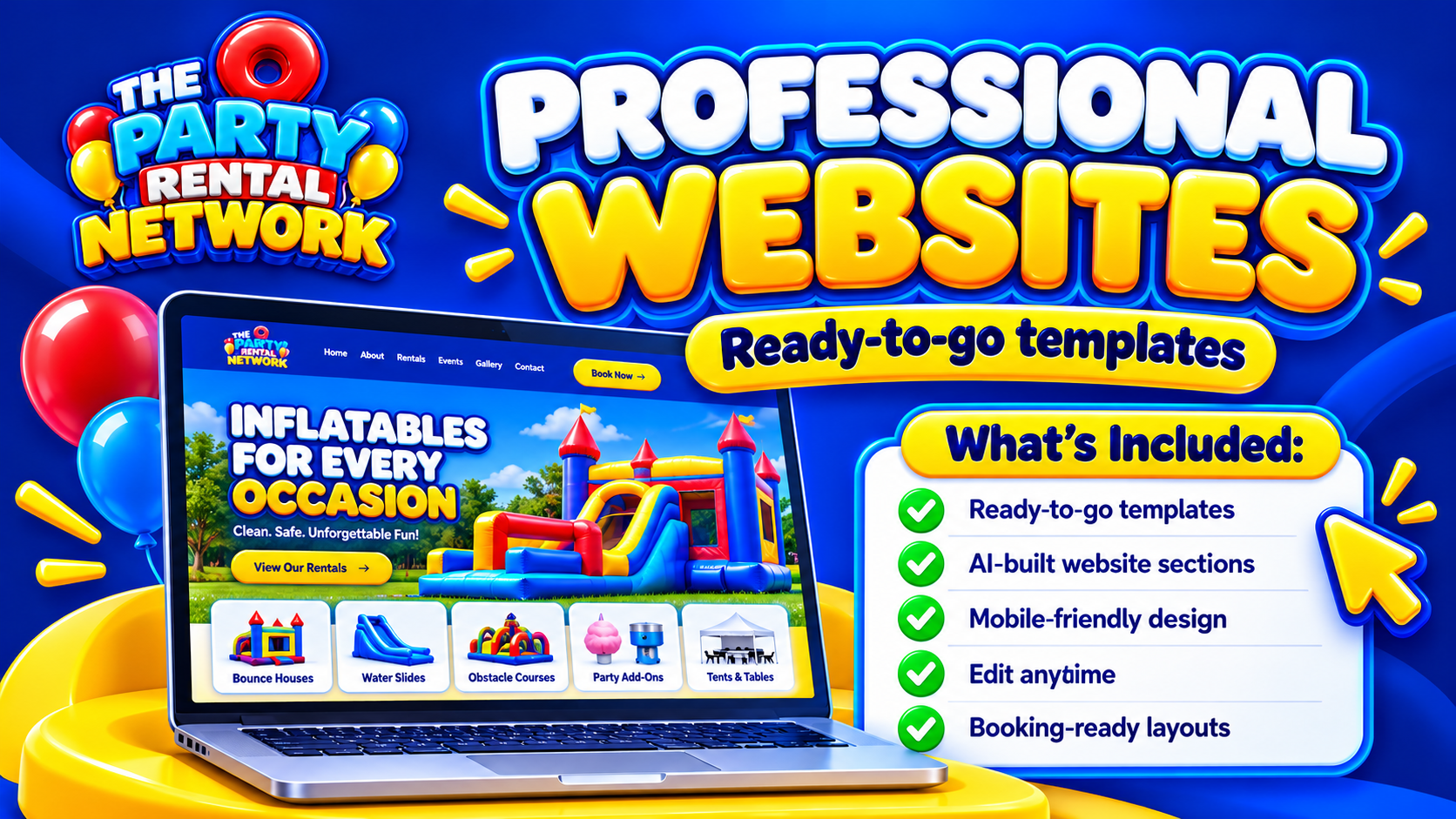
What Is The Party Rental Network?
A connected booking, website and AI-powered business platform built around party rentals and event hire, with tools for your equipment, customers, team and wider industry network.
What Type of Party Rental Business Do You Run?
Equipment records, safety documents, delivery planning and artwork tools help keep inflatable hire jobs organised.
A party hire enquiry is rarely just about finding an item. The customer wants something that fits the venue, arrives within the access window and can be collected without disrupting the evening. For the supplier, the question is whether that job works alongside everything already booked. A party rental equipment marketplace needs to connect those two perspectives, not simply display attractive equipment photographs.
See what's possible
Match the equipment to the occasion, not just the search
A listing should help someone judge suitability before they enquire. Dimensions, power requirements, intended use and setup space can matter as much as colour or theme. Clear photographs help, but they cannot explain whether a doorway is wide enough or a venue permits the proposed equipment.
Consider an illustrative village-hall birthday party requiring soft play and tables. The useful starting point is not the largest available package: it is the room layout, guest ages and access arrangements. Suppliers should describe restrictions plainly and confirm relevant details before agreeing the hire. Marketplace visibility starts a conversation; it does not replace that assessment.
Keep the supplier price and customer scope clear
On the Party Rental Network, the supplier sets the agreed hire price and the network adds its margin. Suppliers should establish what their agreed price covers, rather than treating the equipment name as a complete specification for the job.
Delivery distance, setup requirements, collection timing and any agreed extras can change the practical scope. For example, a ground-floor daytime delivery differs from an upstairs setup with a late collection. Confirming the scope protects the conversation from avoidable misunderstandings.
Customers should understand the total offered price and applicable terms before committing. Marketplace participation does not guarantee bookings or income, and there is no reliable earnings forecast based solely on the number of items listed.
Connect marketplace enquiries with bookable stock
An item can look available while still being unsuitable for the next job. It may need drying, repair, inspection or collection from a previous booking. Suppliers need to check the equipment's condition and turnaround time as well as its calendar position.
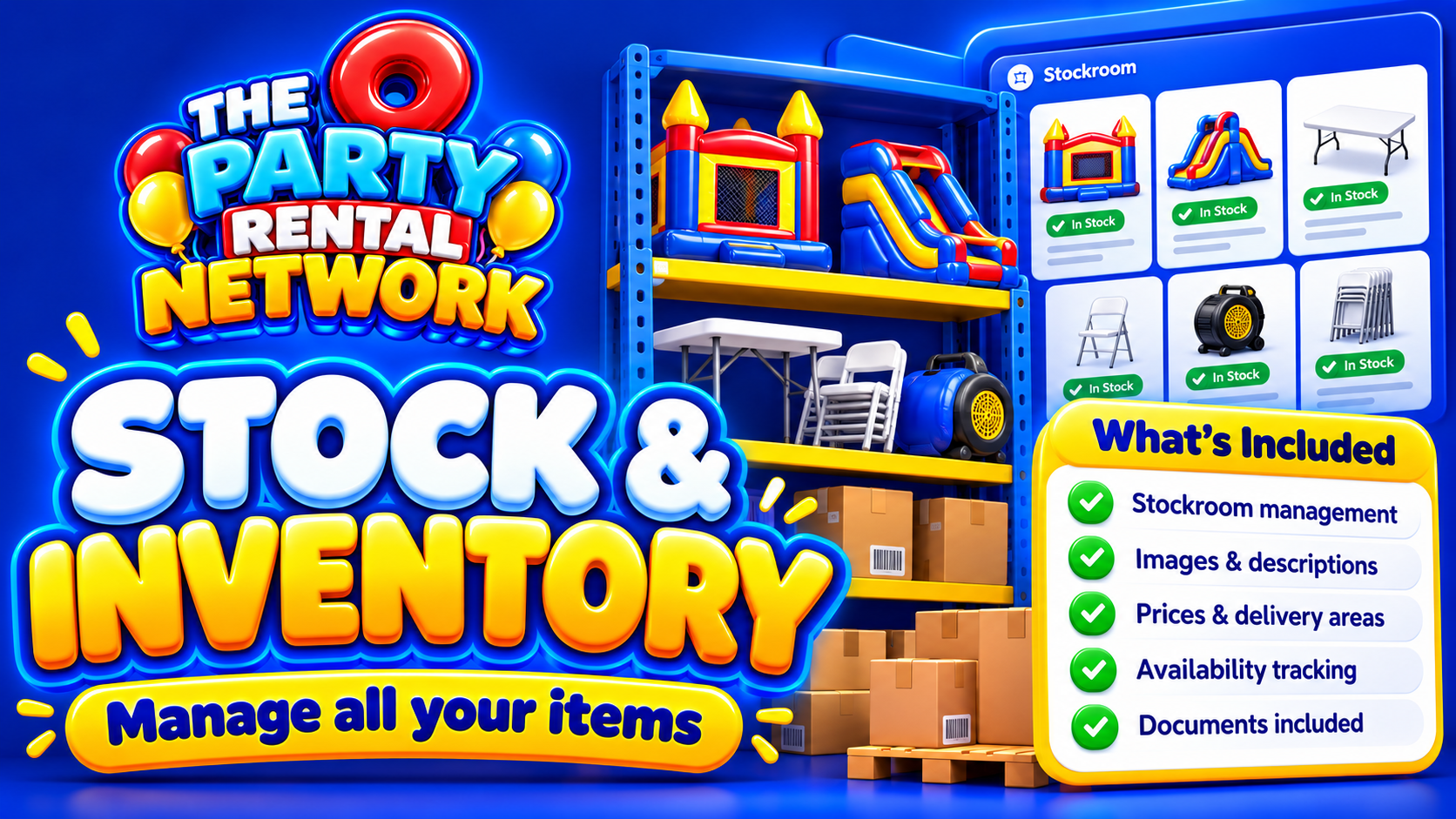
The network's Stock & Inventory tools provide an equipment-management context alongside its booking management. That distinction matters: a public listing describes what you offer, while operational records help you decide what you can responsibly commit.
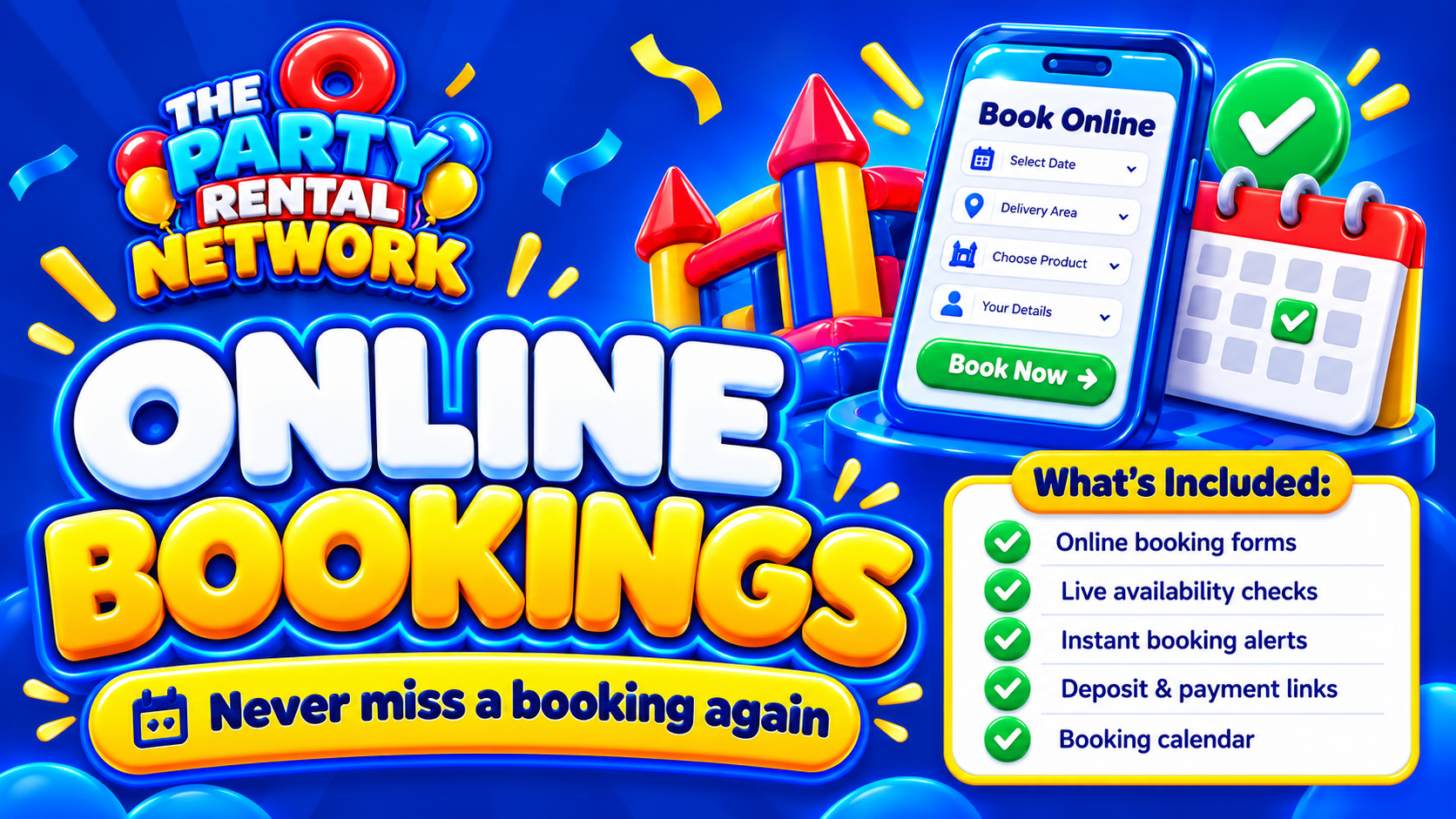
Explore Online Bookings when considering how enquiries and bookings fit your workflow. Do not assume that publishing equipment automatically confirms availability, reserves stock or makes every proposed booking suitable.
Treat delivery and collection as part of the product
A compact garden party and a city-centre corporate event might require similar equipment but very different transport arrangements. Loading order, parking restrictions, stairs and narrow collection windows can determine whether either job is workable.
Route Planning & Loading covers planning concerns, including transport planning and 3D van loading. These are distinct from live vehicle tracking: route and driver planning should not be presented as a live GPS service.
Shared venue passports can support venue information within the network, but suppliers should still check the details relevant to each booking. A previous visit cannot establish that this event has the same access arrangements, permissions or layout.
Start free, then assess the tools you actually need
Free network accounts can list equipment and become eligible for opportunities. Eligibility is not a promise of enquiries, preferred placement or bookings. Paid subscriptions offer business tools according to the package, so the decision to subscribe should reflect your operational needs rather than an expectation of guaranteed marketplace returns.
Before choosing a package, identify where work currently gets repeated: updating stock records, handling booking details or preparing delivery plans. Compare the relevant package against those tasks. You can join the network to start participating, or book a demo to examine a proposed workflow before selecting paid tools.
Choose a marketplace and a booking workflow separately
The marketplace concerns how equipment is presented and how suppliers become eligible for opportunities. A party rental booking system concerns the practical handling of booking details, stock commitments and the steps needed to fulfil a job. Evaluate both, without assuming one replaces the other.
For inflatable specialists, bouncy castle hire software raises additional setup questions around equipment records, operating restrictions and turnaround. Before adopting tools, decide who maintains records, who can confirm bookings and how staff check exceptions. Software supports that process; it cannot certify equipment or replace qualified safety advice.
Questions about the party rental equipment marketplace
Can I list equipment with a free account?
Yes. Free network accounts can list equipment and become eligible for opportunities. Paid business tools depend on the subscription package. Listing equipment does not guarantee that it will attract enquiries or secure bookings.
Who sets the hire price?
The supplier sets the agreed hire price, and the network adds its margin. Establish the equipment, delivery, setup, collection and any extras covered by the agreement so the price relates to a clearly defined job.
Does a listing prove equipment is safe?
No. A marketplace listing is not certification. Suppliers remain responsible for appropriate equipment checks, documentation and safe operating decisions, seeking qualified advice where necessary.
Can customers always pay online?
Payment availability depends on configuration and launch safeguards. Check what is available for your setup rather than assuming payments are live. The Payments & Accounts feature page provides relevant context.
Is marketplace participation the same as paid software?
No. Free listing and opportunity eligibility are distinct from paid operational tools. Assess a subscription against the work your business needs to manage, not as a purchase of guaranteed customer demand.
What should I prepare before listing?
Prepare accurate photographs, descriptions, dimensions, restrictions and clear hire terms. Check how you will confirm availability, condition, delivery feasibility and collection arrangements before agreeing a job.