SEO for bouncy castle businesses
What Is The Party Rental Network?
A connected booking, website and AI-powered business platform built around party rentals and event hire, with tools for your equipment, customers, team and wider industry network.
What Type of Party Rental Business Do You Run?
Equipment records, safety documents, delivery planning and artwork tools help keep inflatable hire jobs organised.
Your nearest customer is not always your easiest delivery. A family five miles away might be across a congested bridge, while a village ten miles away fits neatly into Saturday’s route. SEO for bouncy castle businesses should reflect that reality: attracting searches from places you can serve profitably, then helping customers choose equipment that actually fits their party.
The aim is not simply more traffic. It is better-matched enquiries with fewer surprises about access, space, delivery and suitability.
See what's possible
Match local searches to workable delivery areas
Start with your delivery boundaries, not a long list of nearby towns. Identify your core area, locations with additional delivery charges and places you serve only by arrangement. Use those distinctions consistently across your website.
Imagine an operator covering two neighbouring towns and several villages. A useful town page could explain delivery arrangements, collection expectations and what customers should check before booking a hall. A weak version simply swaps the town name into identical text.
Prioritise pages for areas with meaningful demand and genuinely different information. You do not need a separate page for every postcode you might occasionally visit.
Build pages around different hiring decisions
“Bouncy castle hire”, “low-height inflatable hire” and “adult bouncy castle hire” represent different requirements. Give important equipment categories their own clear pages where your actual stock supports them. Avoid creating categories that suggest you supply equipment you do not hold.
A category page helps customers compare options; an individual equipment page should answer questions about that specific inflatable. Town pages explain service coverage. Keeping those roles distinct reduces competing pages and makes navigation easier.
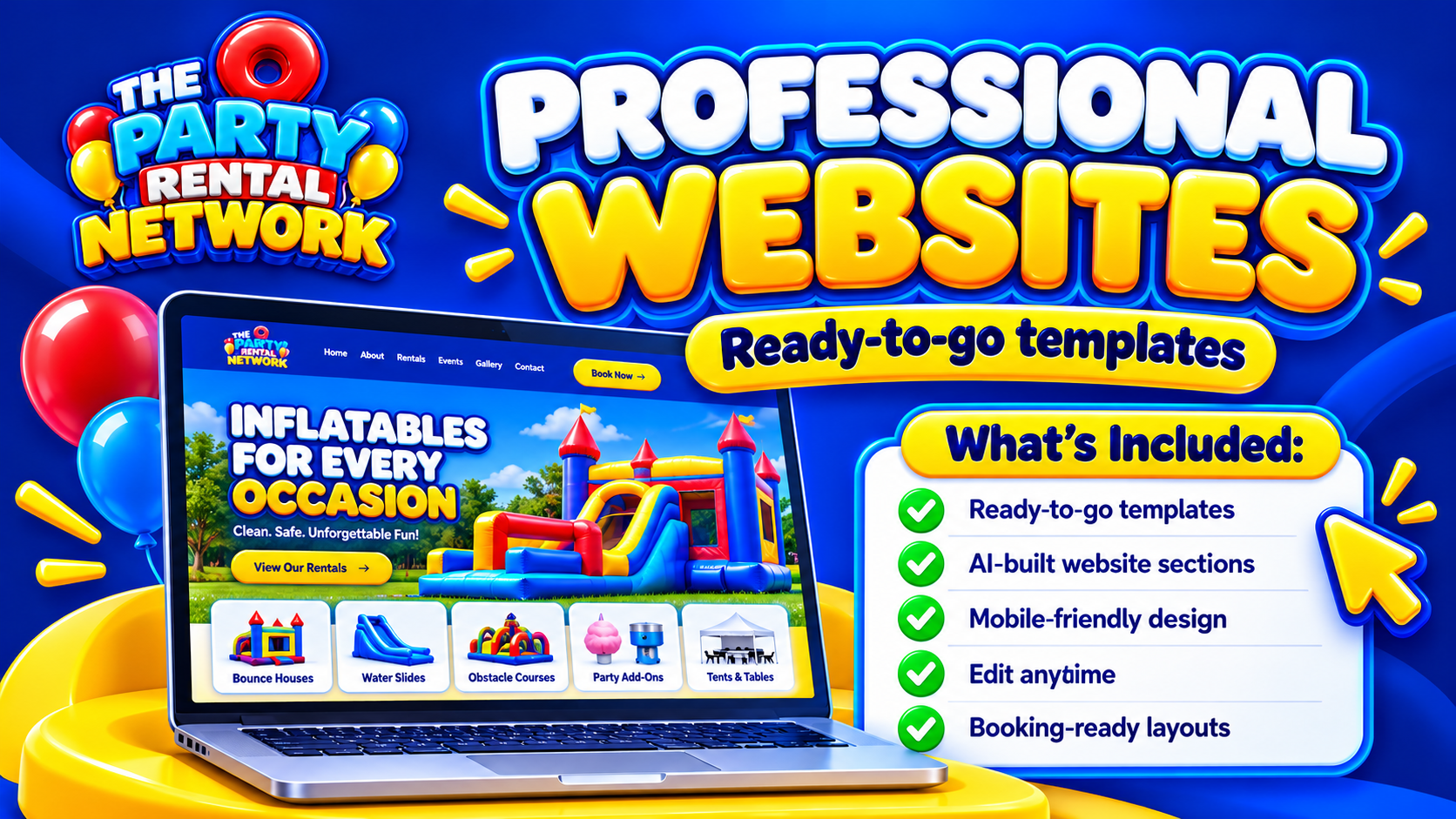
When reviewing Professional Websites, consider how clearly your proposed website structure separates equipment, locations and booking information. Descriptive page titles and internal links should help visitors understand that structure without guessing.
Make suitability information your competitive edge
A photograph cannot tell a parent whether an inflatable will fit beneath a village hall ceiling. Equipment pages become more useful when they include accurate dimensions, required operating space, access requirements and relevant usage restrictions based on the equipment documentation.
Show the actual item where possible. Explain what customers need to measure, rather than relying on a vague instruction to “check your garden”. Keep pricing and delivery conditions easy to find, including what needs a separate quotation.
Information maintained through Stock & Inventory deserves attention alongside the website. Check that published descriptions match your current equipment records. Software cannot certify an inflatable or replace competent inspection and safety advice.
Connect search traffic with a clear booking route
Someone arriving from Google should not have to search again to discover how to hire. Each equipment page needs an obvious next step, whether that is checking a date, requesting a quote or submitting a booking request.
Before choosing an Online Bookings setup, establish what each step means. Does the customer receive a request acknowledgement or a confirmed booking? When are delivery details checked? Which information must they supply?
Make those distinctions explicit. Do not advertise immediate confirmation unless your process supports it. Payment availability depends on configuration and launch safeguards, so website wording should reflect what customers can actually do today.
Choose SEO tools around a repeatable working system
SEO software and an SEO system are not the same purchase. Software selection concerns include control over titles, descriptions, page addresses and content. Setup concerns include assigning search topics to pages, checking indexing settings and deciding who updates seasonal information.
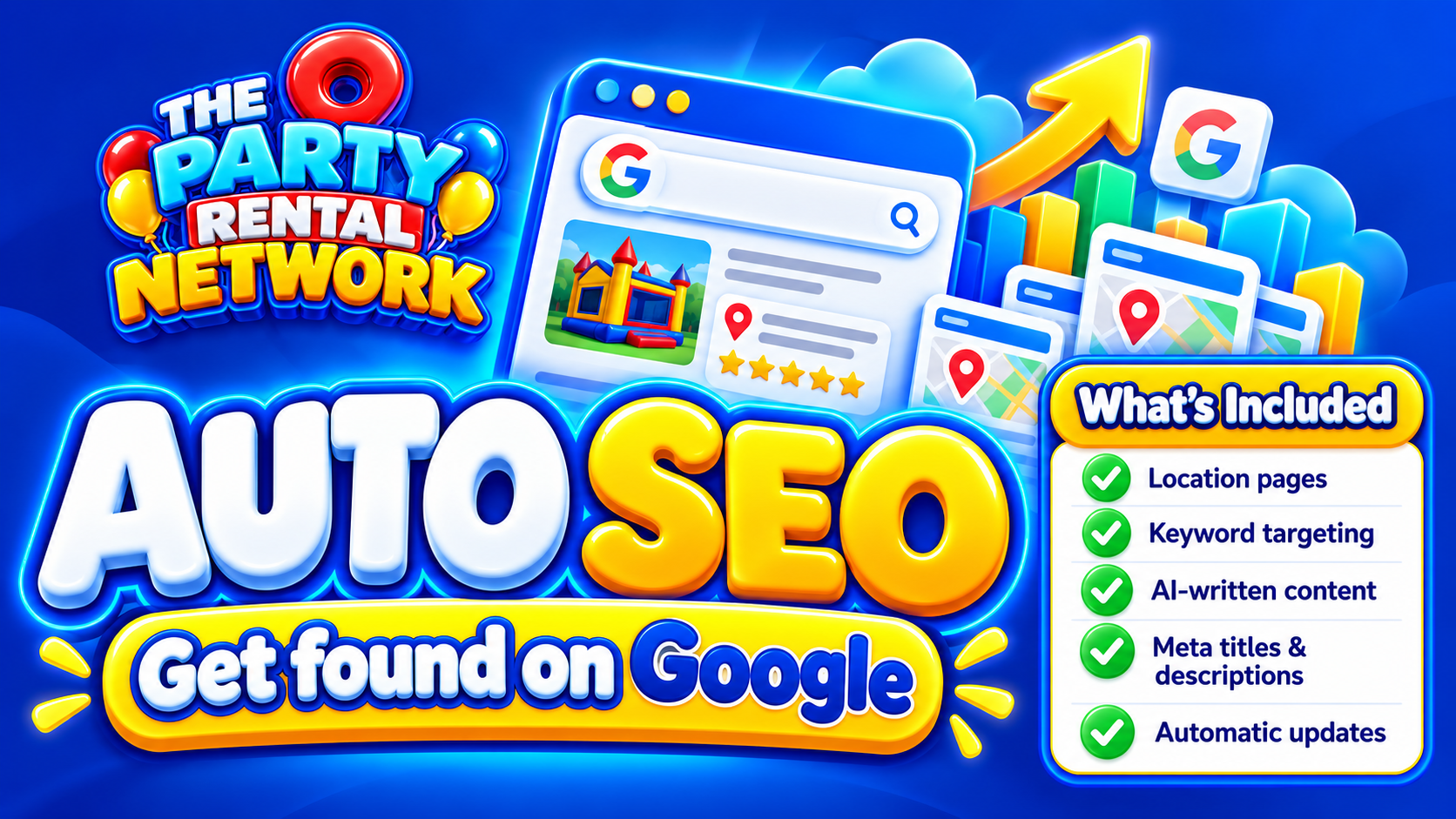
Review Auto SEO against those practical requirements rather than assuming automation removes the need for judgement. Automated output still needs checking for accurate delivery areas, equipment details and natural language.
Use the Party rental keyword tracker as a reference point when planning search-term monitoring. Pair ranking observations with enquiries and completed hires. Visibility for an unsuitable location is less valuable than a relevant enquiry from your normal delivery patch.
Questions about SEO for bouncy castle businesses
How long does SEO take to produce results?
There is no fixed timetable. Competition, website condition and search-engine crawling all matter. Monitor changes over time rather than expecting an immediate uplift. Neither software nor an agency can guarantee indexing, rankings or bookings.
Is a free Party Rental Network account enough for SEO?
Free network accounts can list equipment and become eligible for opportunities; that is not a promise of search visibility or bookings. Paid subscriptions provide business tools according to package. Check the current options before joining the network.
Can I use a Google Business Profile without a shop?
A delivery-based hire business may qualify as a service-area business under Google’s current rules. Follow its eligibility and address-display requirements. Do not create fictional premises or extra profiles simply to target neighbouring towns.
Do customer reviews help local SEO?
Genuine reviews help prospective customers assess your service and can contribute to local visibility. Invite honest feedback without incentives or requests for positive ratings. Never invent reviews, and avoid publishing private booking details when responding.
Should I publish a wet-weather policy?
Yes. Explain how customers receive updates and where to find cancellation or postponement terms. Keep weather decisions grounded in applicable equipment guidance and competent judgement, rather than writing reassuring promises merely to win a booking.
Which SEO results should I measure?
Track relevant search impressions, visits to hire pages, enquiries and completed bookings where measurement is available. Record which locations and equipment types attract suitable work. Treat rankings as diagnostic information, not proof that a search visit became a hire.