Transfer a Bouncy Castle Hire Website
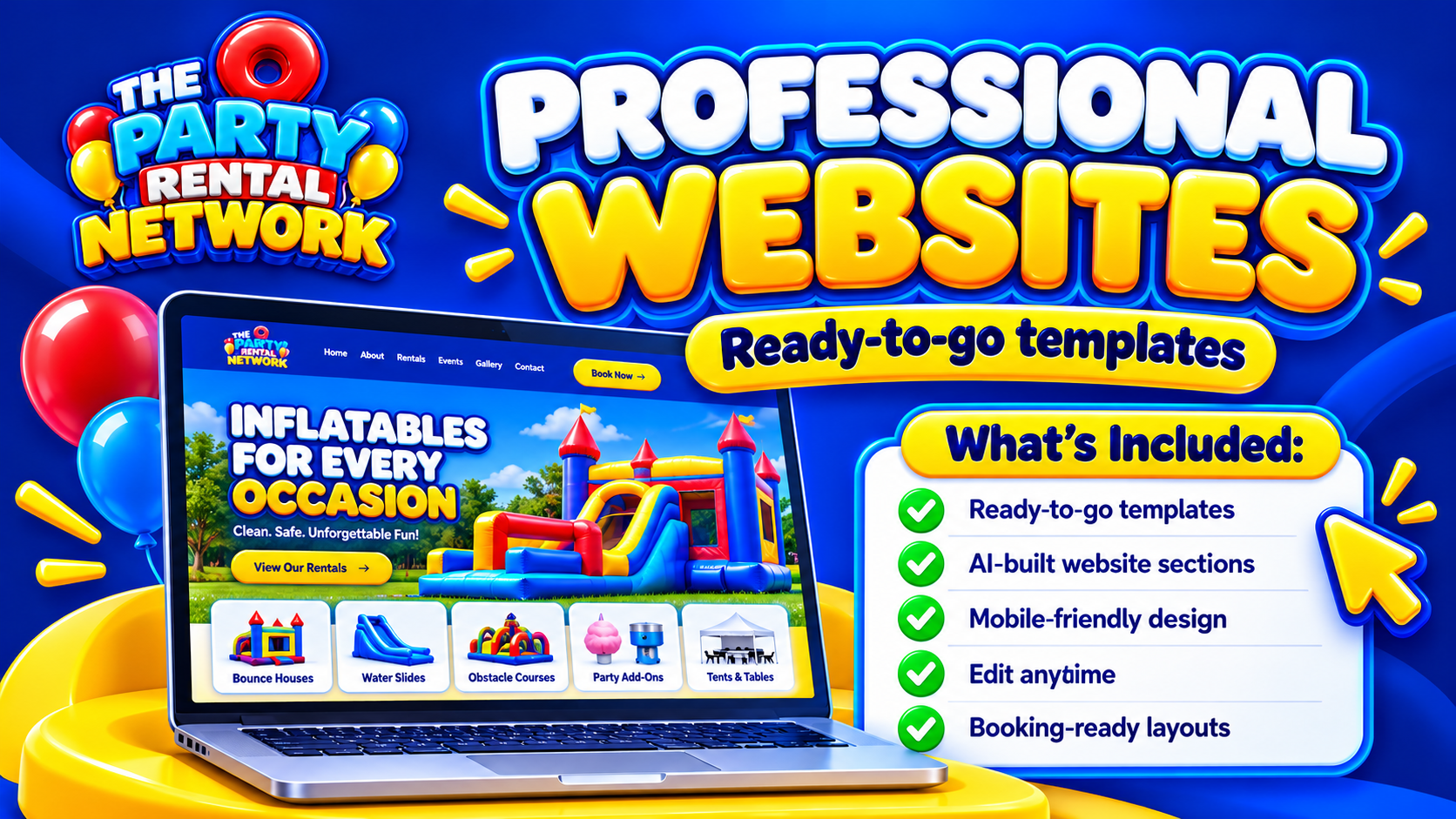
Transferring an established bouncy castle hire website to a modern platform is one of the most commercially significant decisions an inflatable hire business owner can make. Many UK operators begin their journey on generic website builders, shared platforms, or outdated bespoke systems that initially serve their purpose but ultimately fail to keep pace with business growth. Over time, clunky administrative workflows, fragmented enquiry forms, and a lack of integrated dispatch tools begin to drain productive weekend hours. Moving to a dedicated industry platform revitalises your operational efficiency and ensures your business maintains a professional digital storefront that turns casual traffic into confirmed hires.
While the prospect of moving your digital home might appear daunting, a properly structured migration avoids downtime and safeguards your hard-earned reputation. Experienced hire business owners recognise that a website is far more than a digital brochure; it is the central operational engine governing asset availability, customer communication, and cash collection. By following a methodical migration plan, you can protect your domain authority, refine your hire inventory, and transition to automated systems without missing a single weekend delivery.
See what's possible
Business Benefits
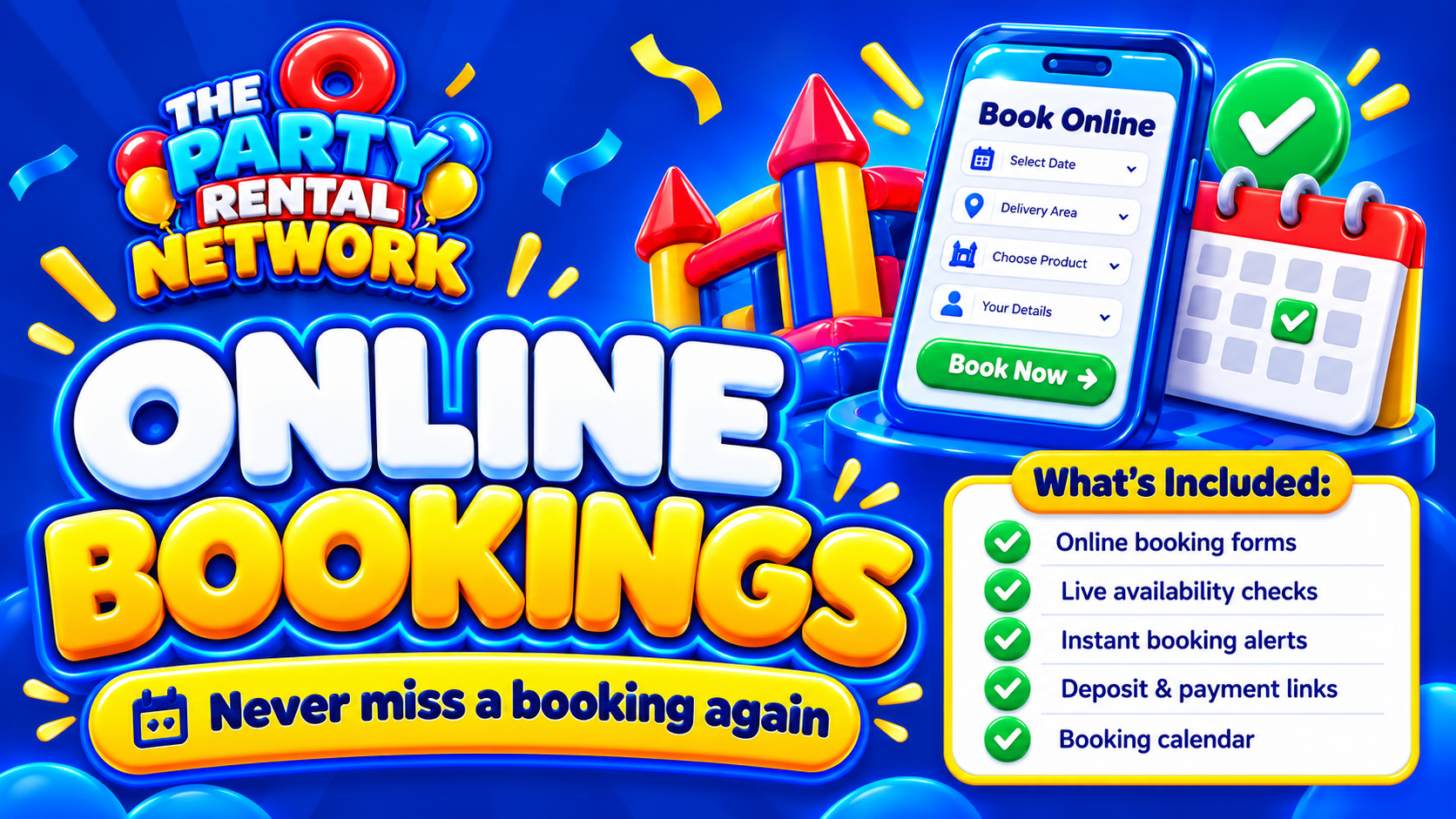
Migrating your business to modern bouncy castle hire websites delivers an immediate reduction in manual administration and phone-based booking friction. Older platforms frequently rely on basic contact forms, requiring you to cross-reference paper diaries, send manual availability emails, and chase bank transfers during your busiest operating hours. A modern, dedicated setup updates equipment availability in real time, collects deposits seamlessly, and automatically dispatches booking confirmations, freeing up valuable hours every week to focus on asset care, safety testing, and business development.
Upgrading your web presence also enhances conversion rates through responsive, mobile-first design. Parents and corporate event planners routinely arrange entertainment on smartphones, often late in the evening. If your legacy site is slow, difficult to navigate, or requires multiple steps just to see if a disco dome is free, potential customers quickly look elsewhere. Transitioning to a high-performance system ensures your assets are presented cleanly, upsell packages are displayed intelligently, and customers can complete their bookings within minutes.
Long-term financial clarity is another key commercial benefit. Fragmented legacy platforms often mask operational overheads, requiring multiple disparate subscriptions for forms, card processing, vehicle routing, and client records. Bringing these elements under one roof reduces unnecessary third-party subscription costs and gives you a single source of financial truth. As an illustrative example, eliminating multiple detached software subscriptions and administrative bottlenecks could save an operator several hundred pounds annually while drastically cutting booking management time, though you should always evaluate your own operational figures and platform quotes.
How Party Rental Network Helps
Party Rental Network provides UK inflatable hire operators with an all-in-one ecosystem designed specifically around the day-to-day realities of bouncy castle hire. Instead of patching together various generic tools, our platform unites modern hire websites with powerful bouncy castle booking software, an automated booking diary, and direct card payment collection. The migration process is engineered to be straightforward, allowing you to bring across your existing domain name while upgrading to an interface that is purpose-built to convert local party traffic into paid hires.
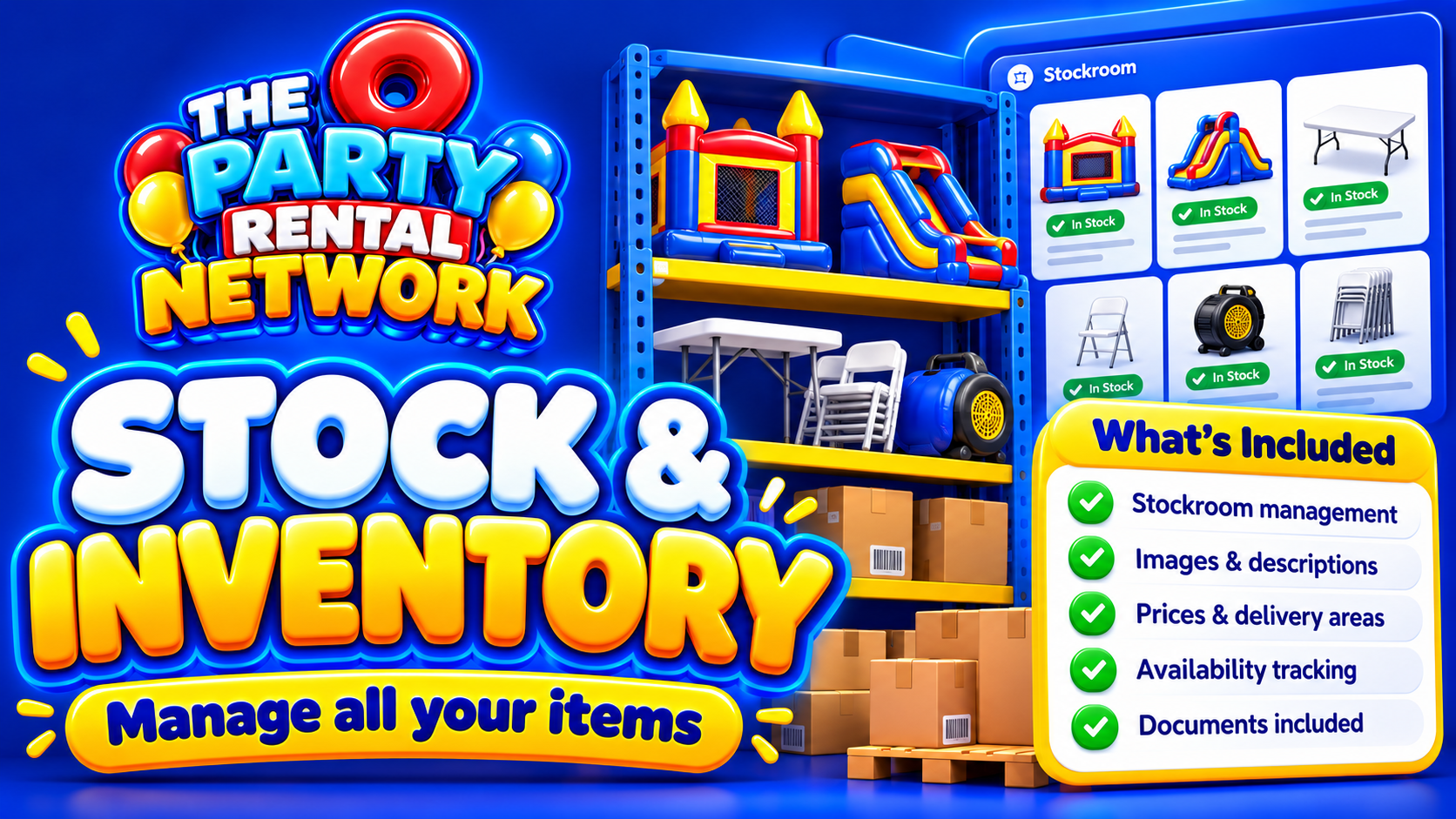
Back-office operations receive an immediate boost through our integrated Stockroom and vehicle loading features. Our platform tracks asset allocation down to individual accessories, helping you verify that blowers, stakes, sandbags, and cables accompany every castle. When Friday preparations arrive, the built-in route planning and loading tools sequence your weekend drops and collections logically across your delivery area, reducing fuel burn and delivery delays. These workflows are further enhanced by Yodo, our proprietary artificial intelligence assistant, which supports your business with customer communication, automated insights, and day-to-day administration.
Beyond software, joining Party Rental Network connects you to an active commercial network. Our supplier network and booking exchange allow trusted members to subcontract or refer excess bookings during peak summer weekends, ensuring you never leave potential revenue on the table. To explore how this unified architecture replaces outdated systems, you can book a demo and review our platform firsthand.
Protecting Search Rankings and Domain Authority During Migration
The primary concern when moving an established domain is safeguarding search engine visibility that has taken years to build. If your current website ranks well across local search terms for party hire in your primary delivery postcodes, simply pointing your domain to a new website without preparation can cause search engines to lose track of your key pages. A successful transition preserves your existing domain age and backlink equity by carefully auditing every indexed URL before making any technical changes.
Implementing structured 301 redirects ensures that any customer or search crawler visiting an old page is smoothly routed to the corresponding page on your new site. Matching your existing content themes, categories, and geographic signals prevents ranking drops and minimises broken links. Our built-in auto SEO features automatically create clean URL structures, generate schema markup, and optimise metadata for inflatables, soft play, and party packages, helping search engines understand your updated product catalogue quickly.
It is also critical to verify and update external business listings throughout the transfer process. Updating your Google Business Profile, local trade directories, and regional social media pages guarantees consistent business details across the web. Consistent names, addresses, phone numbers, and operational areas signal reliability to search algorithms, accelerating indexation of your updated site and defending your hard-earned local organic visibility.
Auditing Equipment Stock and Operational Workflows
A website migration provides the perfect opportunity to conduct a comprehensive audit of your physical inventory and internal processes. Over years of trade, hire businesses accumulate legacy assets, retire worn inflatables, and alter their standard accessory configurations. Before entering your equipment into your new system, inspect every inflatable, verify its serial numbers, and check compliance records against British Standard BS EN 14960, ensuring valid annual test certificates, such as PIPA inspections, are up to date alongside your public liability insurance coverage.
Migrating your equipment onto a structured stock inventory manager allows you to configure item dimensions, space requirements, user age restrictions, and surface compatibility with surgical precision. Rather than manually warning customers about access widths or ceiling heights after an enquiry is submitted, modern booking engines present these safety restrictions clearly during checkout. This proactive approach prevents embarrassing delivery day refusals and protects your team from arriving at venues where assets simply will not fit.
Take this opportunity to rationalise your pricing structures, delivery fees, and surface surcharges as well. Review your postcodes and establish clear mileage bands that accurately reflect current fuel expenses and driver times. By configuring distinct delivery zones and minimum hire thresholds during the site setup phase, you protect profit margins and eliminate the administrative friction of negotiating custom transport quotes for out-of-area hires.
Managing Customer Data and Booking Continuity
Preserving your existing booking pipeline is critical when transitioning your digital operations. Before switching your live domain, compile a clean export of all forward bookings, including event dates, customer contact numbers, delivery addresses, and payment balances. Ensuring every confirmed future hire is entered into your new calendar prevents double bookings and guarantees that automated reminder emails reach parents and event organisers on schedule.
Handling customer data responsibly during a platform change is also a statutory duty under UK data protection regulations. Moving your client list into a secure system allows you to categorise corporate hirers, schools, charities, and private repeat clients for future marketing. You should take care to cleanse duplicate records, verify consent flags, and store contractual delivery waivers cleanly against customer profiles, creating a tidy database that supports repeat hire campaigns without compliance ambiguity.
Communication with existing customers throughout the launch window should be clear and reassuring. If customers have existing online portals or pending invoice links, send a courtesy email detailing the upgrade and confirming that their booking details remain fully intact. An orderly, professional communication reinforces client confidence and demonstrates that your business is continually reinvesting in customer service and modern technology.
Launching Your New Site and Testing Workflows
The final transition from your old platform to the new one should be executed during a quieter period of the week, typically on a Tuesday or Wednesday morning, well clear of busy weekend delivery runs. Prior to pointing your domain name server records to your new host, run complete test bookings through the checkout to verify that card processing gateways, automated customer receipts, and diary allocations function flawlessly under real-world conditions.
Check all notification triggers to confirm that dispatch alerts arrive on your mobile devices and customer confirmations reach their inboxes promptly without falling into junk folders. Test your contact forms, terms and conditions checkboxes, and health and safety acknowledgement waivers to ensure every operational safeguarding mechanism is active. Once domain propagation is underway, monitor your web analytics and local search positions closely, submitting your updated sitemap through Google Search Console to encourage rapid re-crawling.
When you are satisfied that every operational link is performing as expected, you can confidently decommission your legacy platform subscriptions. By executing a controlled, step-by-step launch, your hire business avoids downtime, maintains continuous cash flow, and immediately reaps the efficiency rewards of an integrated digital ecosystem. When you are ready to begin this transition and take your fleet to the next level, you can join now and start configuring your modern platform.
Frequently Asked Questions
Will my search engine rankings drop when I move my domain?
A temporary, minor fluctuation in search rankings can occasionally happen as search engines crawl and re-index updated page structures, but a correctly planned migration with matching content and comprehensive 301 redirects prevents severe traffic loss. By keeping your existing domain name and using automated SEO tools to preserve clean page hierarchies and metadata, you ensure that your local search authority remains intact and often improves over time due to faster page load speeds and enhanced mobile performance.
How do I prevent double bookings during the migration process?
You prevent double bookings by establishing a firm cut-off date for incoming bookings on your old site while simultaneously manually populating all future confirmed hires into your new calendar before you point your domain over. Once the domain switches, your live inventory immediately reflects every pre-existing booking, ensuring that incoming public orders can only secure equipment that is genuinely available for their selected date and times.
Can I keep my existing domain name and email accounts?
Yes, you retain complete ownership and control of your existing domain name throughout the entire process, as the transfer simply involves updating your domain name server or DNS records to connect with your new platform. Your professional email hosting arrangements can remain exactly where they are currently hosted, such as with Google Workspace or Microsoft 365, by leaving your existing mail exchange records untouched during the website transfer.
What happens to my historical customer data and hire records?
Historical customer records, past hire invoices, and delivery notes should be downloaded and archived from your legacy platform for your accounting records and statutory tax obligations before closing your old account. You can then import your customer contact lists and active corporate accounts into your new management database, allowing you to maintain ongoing relationships and run targeted marketing campaigns while preserving your historic financial archives safely offline.
How long does a website transfer typically take?
The technical process of connecting your domain name and propagating DNS records across UK internet providers generally takes between a few hours and two business days once your new platform is fully built. Taking time prior to that launch window to upload your equipment images, review safety descriptions, and calibrate delivery postcodes ensures the actual cutover is swift, seamless, and completely invisible to visiting customers.
Do I need technical web design skills to complete the switch?
You do not need any coding knowledge or advanced technical web design expertise to move your business onto a dedicated hire platform. Purpose-built systems handle the complex technical infrastructure, mobile responsiveness, and booking engine logic behind the scenes, allowing you to focus purely on inputting your inflatables, setting your hire rates, and managing your deliveries.
Helping Party Rental Businesses Across the UK
England: London | Birmingham | Manchester | Liverpool | Leeds | Sheffield | Bristol | Nottingham | Leicester | Coventry | Bradford | Newcastle upon Tyne | Southampton | Portsmouth | Plymouth | Derby | Wolverhampton | Stoke-on-Trent | Norwich | Oxford | Cambridge | York | Peterborough | Sunderland | Brighton and Hove | Milton Keynes | Preston | Hull | Gloucester | Exeter | Bath | Chester | Carlisle | Durham | Lancaster | Lincoln | Worcester | Hereford | Canterbury | Winchester | Chelmsford | Colchester | Southend-on-Sea | Salford | Wakefield | Doncaster | Westminster | St Albans | Salisbury | Chichester | Truro | Wells | Ripon | Ely | Lichfield
Wales: Cardiff | Swansea | Newport | Wrexham | Bangor | St Asaph | St Davids
Scotland: Glasgow | Edinburgh | Aberdeen | Dundee | Inverness | Stirling | Perth | Dunfermline
Northern Ireland: Belfast | Derry/Londonderry | Lisburn | Newry | Armagh | Bangor (County Down)