
Bouncy Castle Stockroom Management


Running an inflatable hire business across the United Kingdom demands more than clean PVC and a reliable van; it requires an impeccably controlled warehouse floor. A bouncy castle stockroom is the beating heart of your daily operations, where units are inspected, rolled, dried, and staged for dispatch. Without structured processes, simple oversights quickly turn into catastrophic morning delays, misplaced anchor stakes, or inadvertent hires of uninspected equipment.
Professionalising your stockroom workflow transforms chaotic loading routines into calm, systematic dispatches. By bridging physical storage organisation with digital tracking tools, commercial operators can extend the lifespan of their assets, maintain rigorous UK safety standards, and protect profit margins against unnecessary wear and tear.
See what's possible

Business Benefits
Establishing clear warehouse systems eliminates the costly scramble for equipment during early weekend departures. When every castle, fan, sandbag, and extension lead has a designated home, loading times decrease noticeably. For an illustrative example, saving thirty minutes per van across four delivery vehicles equates to two hours of reclaimed labour every Saturday morning, reducing driver fatigue and preventing delivery disputes. You should assess your own operational costs and team size to measure the precise time savings possible within your depot.
Operational transparency directly protects your bottom line by safeguarding expensive commercial assets. Inflatables stored damp or packed improperly risk mildew damage and stitching deterioration, which cuts years off their working life and voids safety ratings. Maintaining meticulous control over how kit is catalogued, cleaned, and packed away reduces capital expenditure on premature replacements and emergency repairs.
Strong stock management also fortifies legal and regulatory peace of mind. Keeping up with safety requirements, such as annual PIPA tests or equivalent inspections under British Standard BS EN 14960, becomes substantially easier when inventory tracking identifies which inflatables require certification before going out on hire. Commercial hirers must always consult their specific public liability insurance policies and current UK guidance to confirm their compliance obligations.
How Party Rental Network Helps
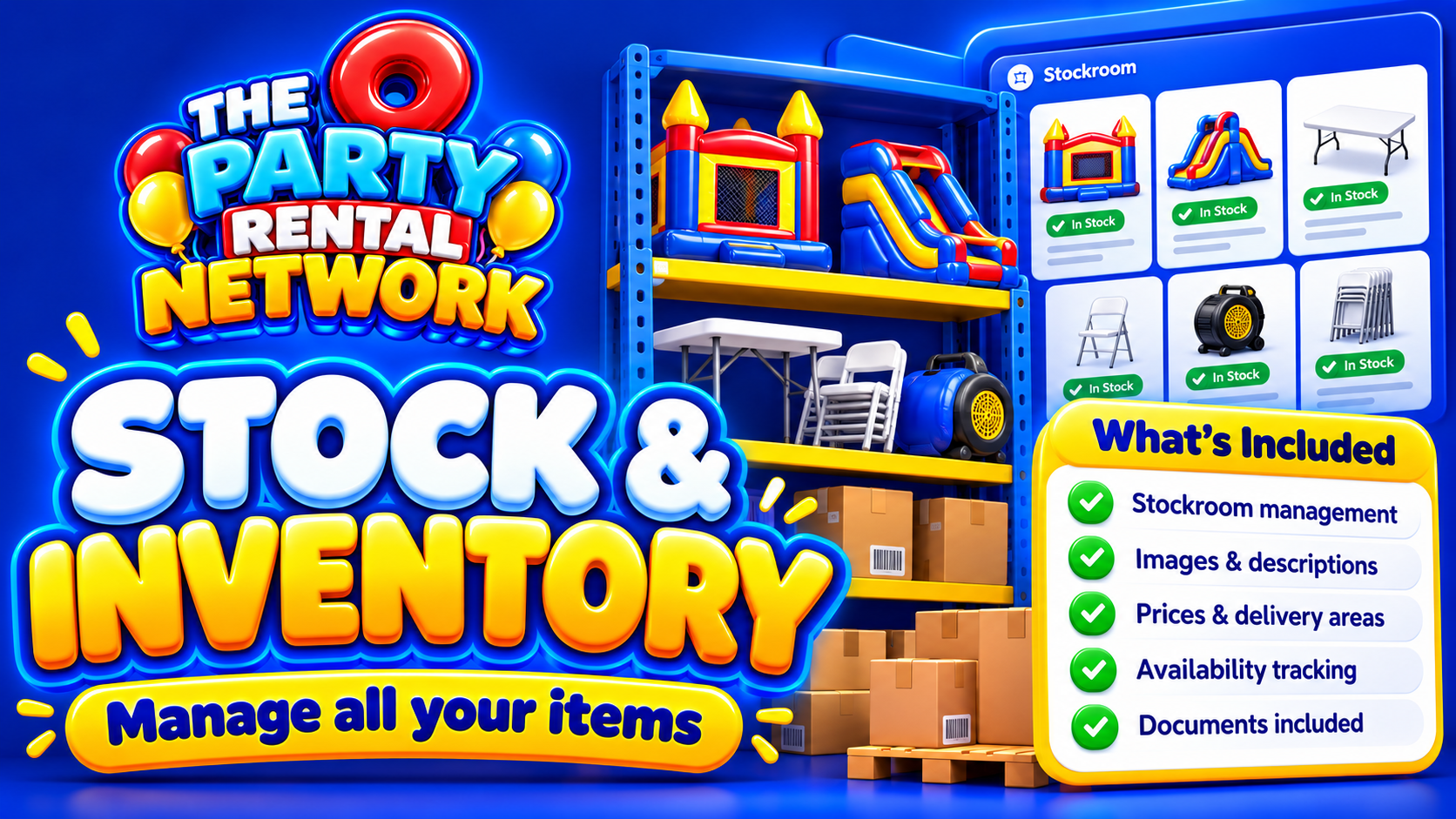
Party Rental Network provides built-in tools tailored directly to the demands of UK hire operations. Through our integrated stock-inventory module, operators gain total visibility over their fleet, connecting customer hires with physical asset status in real time. This ensures units requiring maintenance or safety reviews are automatically withheld from active availability, preventing double bookings and embarrassing last-minute cancellations.
The platform bridges your warehouse shelves directly to the loading bay through coordinated route-planning-loading workflows. Warehouse staff can view digital pick lists that account for every single ancillary item needed for each drop, including specific blower horsepowers, cable reels, and appropriate anchor pegs. Furthermore, our dedicated business tools allow your team to flag stock issues instantly via our AI assistant, Yodo, ensuring continuous communication between warehouse staff, drivers, and office management.
Beyond basic kit tracking, the platform harmonises stock movements with your wider commercial schedule. When you record repairs or annual testing milestones, our comprehensive bouncy castle booking software adjusts your hire availability without manual recalculations. Operators can easily book a demo to see how our bespoke hire architecture streamlines everyday stockroom handling from drop-off to pack-down.
Safety Compliance, Testing Schedules, and Inflatable Inspections
Adhering to British Standard BS EN 14960 is essential for reputable hire businesses operating throughout the UK. Every commercial inflatable designed for bouncing or sliding must undergo an annual inspection by a competent person, typically certified under the PIPA scheme or an RPII inspector. Within the stockroom, these certifications must govern asset readiness; an expired tag should immediately halt dispatch until the unit is re-certified by a qualified professional.
Integrating compliance into physical warehouse routines ensures no operator inadvertently sends out compromised equipment. Implementing distinct quarantine zones for untested or uncertified assets prevents them from being loaded in early-morning departures. Pairing physical zone segregation with dedicated party rental risk assessment software provides a documented audit trail that demonstrates due diligence to insurance underwriters, local authority inspectors, and corporate clients.
Tracking Blowers, Mats, Pegs, and Ancillary Kit
While inflatables receive the main commercial focus, missing accessories are the primary cause of lost time and site setup headaches. High-output fans, crash mats, 380mm steel anchor stakes, water weights, and PAT-tested extension cables must be managed with identical discipline. Assigning dedicated racking, clear labelling, and numbered asset tags prevents the slow attrition of accessories that silently drains annual operational budgets.
An effective stockroom strategy groups accessories by compatibility rather than mixing items indiscriminately. Storing standard 1.5hp blowers separately from specialized 2.0hp units ensures drivers do not deliver underpowered fans to massive assault courses. Storing anchor kits in durable, colour-coded crates keeps heavy stakes and ratchet straps contained, safe to handle, and simple to audit during van loading.
Damage Management, Cleaning Routines, and Repair Logs
Unpredictable British weather makes drying and cleaning workflows central to stockroom layout. Inflatables returned from muddy fields or rainstorms must be inflated promptly in an indoor drying bay or hung using purpose-built dehumidification setups. Rolling damp units and leaving them on pallets invites black mould and fabric rot, ruining expensive equipment within days.
When seam stress, bed stitching wear, or anchor point damage occurs, swift quarantine is essential. Using inflatable damage tracking software enables warehouse staff to record photographic evidence, log the exact location of the defect, and commission repairs before the inflatable is reassigned. Maintaining detailed maintenance logs also provides verifiable evidence should a manufacturer warranty claim or customer damage dispute arise.
Space Optimisation and Seasonal Storage Workflow
Maximising square footage in a commercial unit or industrial lockup requires deliberate warehouse ergonomics. Pallet racking, heavy-duty sack trucks, and electric hoists transform floor-bound clutter into a multi-tiered, efficient storage hub. High-demand bouncy castles and combo units should occupy lower, easily accessible bays, while seasonal winter assets like indoor soft play or festive grottos can be safely stored on higher racking during peak summer months.
Transitioning between the peak summer season and quiet winter months requires a methodical deep-clean and storage ritual. Inflatables must be thoroughly cleaned with appropriate PVC solutions, dried completely, and wrapped in breathable tarpaulins. Rodent control and damp monitoring must be actively maintained throughout winter to ensure your fleet emerges in pristine condition for the spring hire season.
Frequently Asked Questions
How should I organise bouncy castles inside a small warehouse or lockup unit?
Prioritise vertical storage using certified pallet racking or heavy-duty ground bays, keeping your most frequently hired units nearest the loading shutter. Ensure every bay is clearly marked with the castle name, dimensions, and weight so staff can quickly retrieve and pack kit using pallet trucks or sack barrows without moving unrelated equipment.
How do I manage PIPA test renewals across dozens of inflatables?
Maintain a shared compliance calendar that alerts you sixty days before any inspection certificate expires under BS EN 14960 standards. Grouping your fleet into batches for inspector visits during the quieter spring months saves call-out fees and ensures your entire inventory is certified before the summer rush begins.
What is the best way to handle wet bouncy castles on a busy Sunday evening?
Establish a designated wet drop zone inside your unit so damp inflatables are never stacked on top of dry stock. If indoor inflation space is limited, unroll wet units loosely and use industrial air blowers and commercial dehumidifiers to circulate air until they can be properly dried, inspected, and packed away.
How often should ancillary equipment like blowers and cables be inspected?
Electrical equipment should receive formal Portable Appliance Testing in line with UK health and safety recommendations, alongside visual checks before every single dispatch. Look for frayed cables, damaged plug casings, and cracked fan housings on every return, immediately retiring any component that fails a visual safety inspection.
Can stockroom software prevent double-booking specific inflatables?
Modern hire software connects warehouse availability directly with your live customer booking engine. When an item is flagged for routine maintenance, PIPA re-testing, or fabric repair in the stockroom, the system automatically removes it from hire availability to prevent conflicting reservations.
What is the most effective method to stop anchor stakes and straps from going missing?
Create standard accessory crates containing the exact number of stakes, straps, and mallet required for each specific size of inflatable. Make drivers and collection crews sign off equipment checklists during morning departures and evening returns so missing pieces are identified and retrieved immediately.
Helping Party Rental Businesses Across the UK
England: London | Birmingham | Manchester | Liverpool | Leeds | Sheffield | Bristol | Nottingham | Leicester | Coventry | Bradford | Newcastle upon Tyne | Southampton | Portsmouth | Plymouth | Derby | Wolverhampton | Stoke-on-Trent | Norwich | Oxford | Cambridge | York | Peterborough | Sunderland | Brighton and Hove | Milton Keynes | Preston | Hull | Gloucester | Exeter | Bath | Chester | Carlisle | Durham | Lancaster | Lincoln | Worcester | Hereford | Canterbury | Winchester | Chelmsford | Colchester | Southend-on-Sea | Salford | Wakefield | Doncaster | Westminster | St Albans | Salisbury | Chichester | Truro | Wells | Ripon | Ely | Lichfield
Wales: Cardiff | Swansea | Newport | Wrexham | Bangor | St Asaph | St Davids
Scotland: Glasgow | Edinburgh | Aberdeen | Dundee | Inverness | Stirling | Perth | Dunfermline
Northern Ireland: Belfast | Derry/Londonderry | Lisburn | Newry | Armagh | Bangor (County Down)